Big Eye
monotaxis grandoculis
In Stock
Common stock
Wild Caught
Moderate care
With Caution
SKU: ML-MF-0340
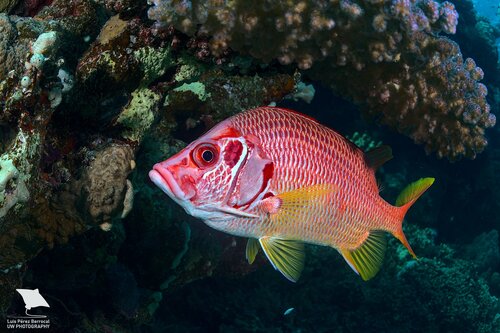
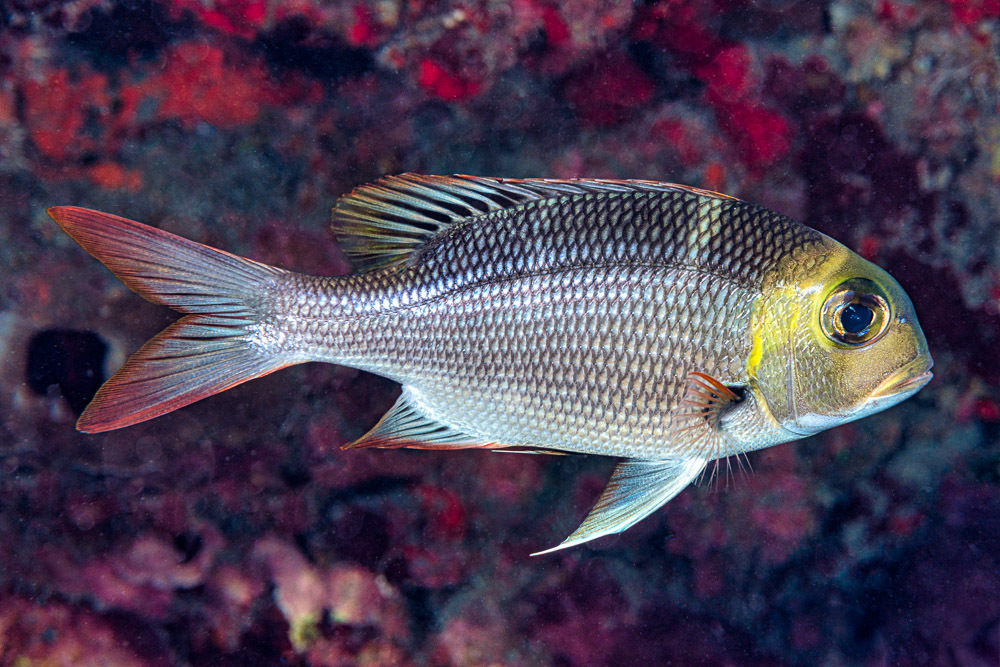
The Big Eye (monotaxis grandoculis) captivates with its striking appearance and lively behavior.
Pricing for Verified Importers
Log in to see wholesale prices and order.
Export Size
up to 30.0 cm
Origin
Indo-Pacific
Temperature
24.0–28.0°C
Min. Tank Size
200 L
Salinity
1.020–1.025 ppt
pH
8.10–8.40
Diet
carnivore
The Big Eye, scientifically known as monotaxis grandoculis, is a fascinating marine fish native to the coral reefs of the Indo-Pacific region. Characterized by its large, expressive eyes and elongated body, this species showcases a distinctive coloration with vibrant hues of blue and yellow, making it a popular choice among aquarium enthusiasts. Adults typically reach sizes of up to 30 cm, making them a noticeable presence in any marine setup.
In their natural habitat, Big Eyes are often found in shallow waters, where they inhabit rocky and coral-rich environments. They are known for their strong social behavior, frequently forming small schools that exhibit coordinated swimming patterns. This schooling behavior not only enhances their safety from predators but also makes them a dynamic and engaging species for aquarium displays.
Big Eyes are primarily carnivorous, feeding on small invertebrates and zooplankton in the wild. Their feeding habits also reflect their active nature, as they are constantly on the move, foraging for food. The species has developed a unique hunting strategy, often using their keen eyesight to spot prey from a distance, which adds an interesting aspect to their behavior in captivity.
Overall, the Big Eye is not just a visually stunning fish but also a marvel of adaptation and social interaction, making it an excellent addition to any marine aquarium focused on showcasing the beauty of ocean life.
In their natural habitat, Big Eyes are often found in shallow waters, where they inhabit rocky and coral-rich environments. They are known for their strong social behavior, frequently forming small schools that exhibit coordinated swimming patterns. This schooling behavior not only enhances their safety from predators but also makes them a dynamic and engaging species for aquarium displays.
Big Eyes are primarily carnivorous, feeding on small invertebrates and zooplankton in the wild. Their feeding habits also reflect their active nature, as they are constantly on the move, foraging for food. The species has developed a unique hunting strategy, often using their keen eyesight to spot prey from a distance, which adds an interesting aspect to their behavior in captivity.
Overall, the Big Eye is not just a visually stunning fish but also a marvel of adaptation and social interaction, making it an excellent addition to any marine aquarium focused on showcasing the beauty of ocean life.
When caring for Big Eyes, it is essential to maintain optimal water parameters to ensure their health and well-being. The ideal temperature range for this species is between 24°C to 28°C, with a salinity between 1.020 and 1.025 ppt. A pH level of 8.1 to 8.4 is recommended to mimic their natural environment. It is crucial to provide a minimum tank size of 200 liters, allowing ample space for swimming and social interaction.
Feeding Big Eyes requires a varied diet, primarily consisting of high-quality marine flakes, pellets, and frozen foods such as brine shrimp and mysis shrimp. This carnivorous diet supports their active lifestyle and vibrant coloration. Compatibility is generally good with other peaceful marine species, although caution should be taken when introducing them to aggressive tank mates.
Acclimation is key when introducing Big Eyes to a new aquarium. A slow drip acclimation method over several hours is advised to minimize stress. Quarantine procedures should also be implemented for new arrivals to prevent the introduction of pathogens into established tanks. Regular monitoring of water quality and fish behavior will help ensure a thriving environment for these captivating fish.
Feeding Big Eyes requires a varied diet, primarily consisting of high-quality marine flakes, pellets, and frozen foods such as brine shrimp and mysis shrimp. This carnivorous diet supports their active lifestyle and vibrant coloration. Compatibility is generally good with other peaceful marine species, although caution should be taken when introducing them to aggressive tank mates.
Acclimation is key when introducing Big Eyes to a new aquarium. A slow drip acclimation method over several hours is advised to minimize stress. Quarantine procedures should also be implemented for new arrivals to prevent the introduction of pathogens into established tanks. Regular monitoring of water quality and fish behavior will help ensure a thriving environment for these captivating fish.
Big Eyes are suitable for shipping due to their robust nature, but care must be taken to ensure they are packed securely with adequate water volume. A packing density of 1 fish per 5 liters is recommended to reduce stress. Temperature sensitivity requires maintaining water temperatures between 24°C and 28°C during transit. This species is not listed under CITES, making shipping regulations more straightforward.
Species Parameters
Max Adult Size
30.0 cm
Origin
Indo-Pacific
Diet
carnivore
Temp Min
24.0 °C
Temp Max
28.0 °C
Salinity Min
1.020
Salinity Max
1.025
pH Min
8.10
pH Max
8.40
Min Tank
200 L