Blue-Spotted Stingray
Taeniura lymma
In Stock
Common stock
Wild Caught
Moderate care
With Caution
SKU: CB-MF-0395
The Blue-Spotted Stingray captivates with its vibrant blue spots and is a key species in coral reef ecosystems.
Pricing for Verified Importers
Log in to see wholesale prices and order.
Export Size
up to 35.0 cm
Origin
Indo-Pacific
Temperature
24.0–28.0°C
Min. Tank Size
300 L
Salinity
30.000–35.000 ppt
pH
8.10–8.40
Diet
carnivore
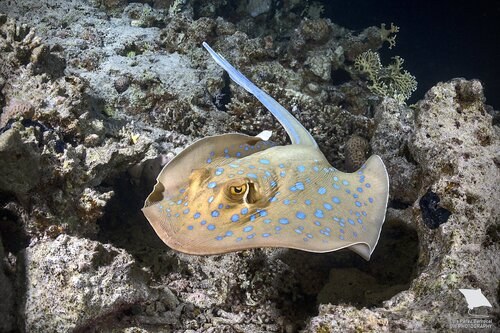
The Blue-Spotted Stingray (Taeniura lymma) is a stunning marine species belonging to the family Dasyatidae, prominently found in the tropical Indian and western Pacific Oceans. This species typically inhabits nearshore coral reef environments, thriving in depths ranging from the intertidal zone to about 30 meters (100 feet). Known for its striking appearance, it features an oval pectoral fin disc adorned with a pattern of electric blue spots against a yellowish background, along with distinctive blue stripes on its tail. These visual characteristics not only make it a favorite among aquarists but also play a role in its behavior and interactions within its habitat.
In terms of natural history, the Blue-Spotted Stingray is a relatively small species, reaching a maximum width of about 35 cm (14 inches). Its body structure includes a smooth disc and large protruding eyes, which enhance its ability to navigate its environment effectively. This species is primarily benthic, preferring to rest on the ocean floor while using its keen eyesight to hunt for food. The ray feeds on a variety of invertebrates and small fish, showcasing its role as both predator and prey in the aquatic ecosystem.
Behaviorally, the Blue-Spotted Stingray is known for its shy disposition, often hiding under substrates or within crevices in the reef. This behavior not only provides protection from larger predators but also creates opportunities for symbiotic relationships with other marine organisms. The species is generally solitary, though it may be found in small groups during mating seasons. Its unique coloration serves as a form of camouflage among the vibrant hues of coral, allowing it to blend seamlessly into its environment.
Overall, the Blue-Spotted Stingray is an essential component of coral reef ecosystems, contributing to the biodiversity and health of marine habitats. Its distinctive appearance and fascinating behaviors make it a sought-after species for aquarists and marine enthusiasts alike.
In terms of natural history, the Blue-Spotted Stingray is a relatively small species, reaching a maximum width of about 35 cm (14 inches). Its body structure includes a smooth disc and large protruding eyes, which enhance its ability to navigate its environment effectively. This species is primarily benthic, preferring to rest on the ocean floor while using its keen eyesight to hunt for food. The ray feeds on a variety of invertebrates and small fish, showcasing its role as both predator and prey in the aquatic ecosystem.
Behaviorally, the Blue-Spotted Stingray is known for its shy disposition, often hiding under substrates or within crevices in the reef. This behavior not only provides protection from larger predators but also creates opportunities for symbiotic relationships with other marine organisms. The species is generally solitary, though it may be found in small groups during mating seasons. Its unique coloration serves as a form of camouflage among the vibrant hues of coral, allowing it to blend seamlessly into its environment.
Overall, the Blue-Spotted Stingray is an essential component of coral reef ecosystems, contributing to the biodiversity and health of marine habitats. Its distinctive appearance and fascinating behaviors make it a sought-after species for aquarists and marine enthusiasts alike.
When caring for the Blue-Spotted Stingray, it is crucial to maintain optimal water parameters to ensure their health and well-being. Ideal water temperature ranges from 24°C to 28°C, with a salinity level between 30-35 ppt. The pH should be maintained between 8.1 and 8.4, reflecting the natural conditions of their coral reef habitat. A minimum tank size of 300 liters is recommended to provide ample space for swimming and hiding, as these rays require both open areas and sheltered spots in their environment.
Feeding the Blue-Spotted Stingray involves a carnivorous diet, primarily consisting of small fish, crustaceans, and mollusks. They thrive on a varied diet that mimics their natural feeding habits, so offering a mix of high-quality frozen or live food is essential. Compatibility with other tank mates should be considered carefully; it is advisable to avoid aggressive species that may stress or harm the stingray.
Acclimation is critical when introducing these rays to a new environment. A slow acclimation process is recommended, allowing the stingray to adjust to water conditions gradually. Quarantine is also essential to prevent the introduction of diseases into established tanks. A quarantine period of at least two weeks can help ensure the health of the specimen before it is introduced to a display aquarium.
Feeding the Blue-Spotted Stingray involves a carnivorous diet, primarily consisting of small fish, crustaceans, and mollusks. They thrive on a varied diet that mimics their natural feeding habits, so offering a mix of high-quality frozen or live food is essential. Compatibility with other tank mates should be considered carefully; it is advisable to avoid aggressive species that may stress or harm the stingray.
Acclimation is critical when introducing these rays to a new environment. A slow acclimation process is recommended, allowing the stingray to adjust to water conditions gradually. Quarantine is also essential to prevent the introduction of diseases into established tanks. A quarantine period of at least two weeks can help ensure the health of the specimen before it is introduced to a display aquarium.
The Blue-Spotted Stingray is suitable for shipping under controlled conditions to ensure its well-being during transit. It is essential to maintain a stable temperature between 24°C and 28°C during shipping. Packing density should allow for adequate space to prevent stress and injury. As a CITES Appendix II species, proper documentation and adherence to regulations are required for international shipping to ensure sustainability and legal compliance.
Species Parameters
Max Adult Size
35.0 cm
Origin
Indo-Pacific
Diet
carnivore
Temp Min
24.0 °C
Temp Max
28.0 °C
Salinity Min
30.000
Salinity Max
35.000
pH Min
8.10
pH Max
8.40
Min Tank
300 L