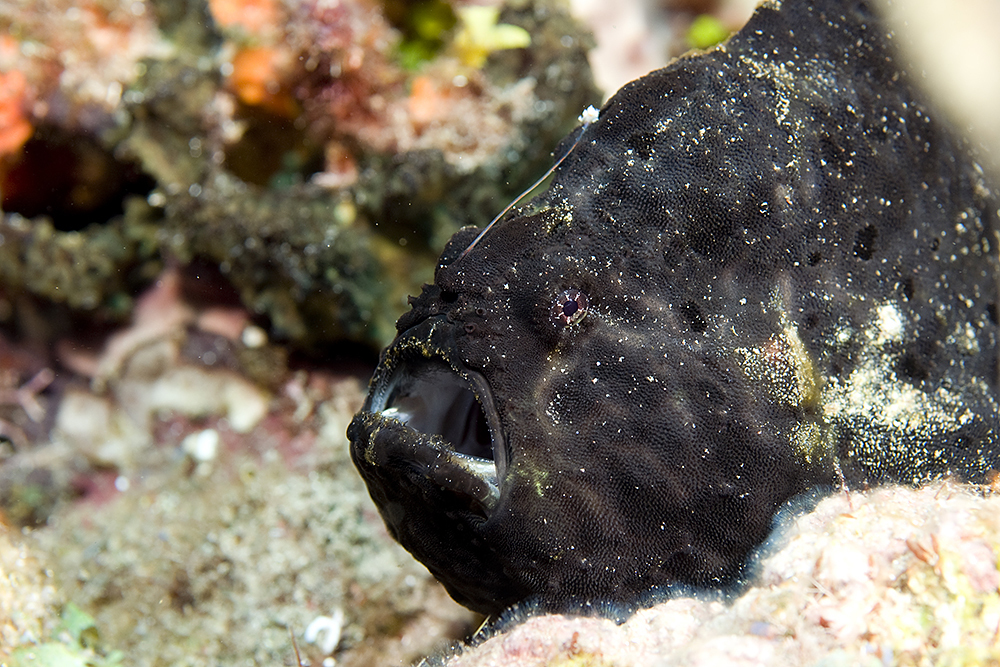
Longlure frogfish/Leoparden Anglerfisch
antennarius multiocellatus
In Stock
Common stock
Wild Caught
Moderate care
With Caution
SKU: ML-MF-0287
The Longlure frogfish is a master of disguise, captivating aquarists with its unique appearance and fascinating behavior.
Pricing for Verified Importers
Log in to see wholesale prices and order.
Export Size
up to 15.0 cm
Origin
Indo-Pacific
Temperature
24.0–28.0°C
Min. Tank Size
100 L
Salinity
1.020–1.025 ppt
pH
8.10–8.40
Diet
carnivore
The Longlure frogfish (Antennarius multiocellatus), also known as the Leoparden Anglerfisch, is a remarkable marine species found primarily in the coral reefs of the Indo-Pacific region. This fish is renowned for its exceptional camouflage capabilities, allowing it to blend seamlessly into its surroundings, which helps it ambush prey. With a body adorned with various patterns of spots and a long lure that mimics a worm, the Longlure frogfish is both a predator and a marvel of nature.
Physically, the Longlure frogfish can reach a maximum size of about 15 cm. Its body is robust and globular, with a broad, flattened head and a mouth that can expand dramatically to engulf prey. The colors and patterns on its skin can vary widely, providing excellent camouflage among the corals and rocky substrates. The lure, or illicium, extends from its forehead and is tipped with a small, fleshy bait that attracts unsuspecting fish closer.
Behaviorally, the Longlure frogfish is a sit-and-wait predator, relying on its exceptional disguise to catch prey. It can remain motionless for extended periods, waiting for small fish or crustaceans to come within striking distance. Once the prey is close enough, it utilizes a rapid suction feeding technique to capture its meal. This fascinating feeding behavior makes it a unique addition to any marine aquarium.
In terms of habitat, the Longlure frogfish is typically found in shallow waters, often among coral reefs or rocky outcrops where it can easily conceal itself. This species prefers environments that offer plenty of hiding spots and is often found at depths ranging from 1 to 30 meters. Its preference for these habitats highlights the ecological importance of coral reefs in supporting diverse marine life.
Physically, the Longlure frogfish can reach a maximum size of about 15 cm. Its body is robust and globular, with a broad, flattened head and a mouth that can expand dramatically to engulf prey. The colors and patterns on its skin can vary widely, providing excellent camouflage among the corals and rocky substrates. The lure, or illicium, extends from its forehead and is tipped with a small, fleshy bait that attracts unsuspecting fish closer.
Behaviorally, the Longlure frogfish is a sit-and-wait predator, relying on its exceptional disguise to catch prey. It can remain motionless for extended periods, waiting for small fish or crustaceans to come within striking distance. Once the prey is close enough, it utilizes a rapid suction feeding technique to capture its meal. This fascinating feeding behavior makes it a unique addition to any marine aquarium.
In terms of habitat, the Longlure frogfish is typically found in shallow waters, often among coral reefs or rocky outcrops where it can easily conceal itself. This species prefers environments that offer plenty of hiding spots and is often found at depths ranging from 1 to 30 meters. Its preference for these habitats highlights the ecological importance of coral reefs in supporting diverse marine life.
For importers and retailers, proper care of the Longlure frogfish is essential to ensure their health and well-being. Water parameters should be maintained at a temperature between 24-28°C, with a salinity level of 1.020-1.025 ppt. The pH should ideally be within the range of 8.1 to 8.4. A minimum tank size of 100 liters is recommended to accommodate their territorial nature and ensure ample space for movement.
Feeding the Longlure frogfish requires a carnivorous diet, as they primarily consume live foods. Suitable options include small fish, shrimp, and other meaty foods. It is crucial to offer a varied diet to promote health and vitality. Compatibility with other species can be tricky; they are best housed alone or with larger, non-aggressive tank mates to prevent stress and territorial disputes.
Acclimation is vital when introducing them to a new environment; a slow drip acclimation method is recommended to reduce stress. Quarantine procedures should also be implemented for at least two weeks prior to adding them to a display tank, as these fish can be susceptible to various marine diseases.
Feeding the Longlure frogfish requires a carnivorous diet, as they primarily consume live foods. Suitable options include small fish, shrimp, and other meaty foods. It is crucial to offer a varied diet to promote health and vitality. Compatibility with other species can be tricky; they are best housed alone or with larger, non-aggressive tank mates to prevent stress and territorial disputes.
Acclimation is vital when introducing them to a new environment; a slow drip acclimation method is recommended to reduce stress. Quarantine procedures should also be implemented for at least two weeks prior to adding them to a display tank, as these fish can be susceptible to various marine diseases.
The Longlure frogfish is suitable for shipping, provided that proper precautions are taken. Ideal packing density should be low to minimize stress during transport. It's important to maintain a stable temperature between 24-27°C during shipping, as they are sensitive to temperature fluctuations. This species is not currently listed under CITES, but it's always advisable to check local regulations regarding marine exports.
Species Parameters
Max Adult Size
15.0 cm
Origin
Indo-Pacific
Diet
carnivore
Temp Min
24.0 °C
Temp Max
28.0 °C
Salinity Min
1.020
Salinity Max
1.025
pH Min
8.10
pH Max
8.40
Min Tank
100 L