Blue Ribbon Eel
Rhinomuraena quaesita
In Stock
Common stock
Wild Caught
Moderate care
With Caution
SKU: CB-MF-0385
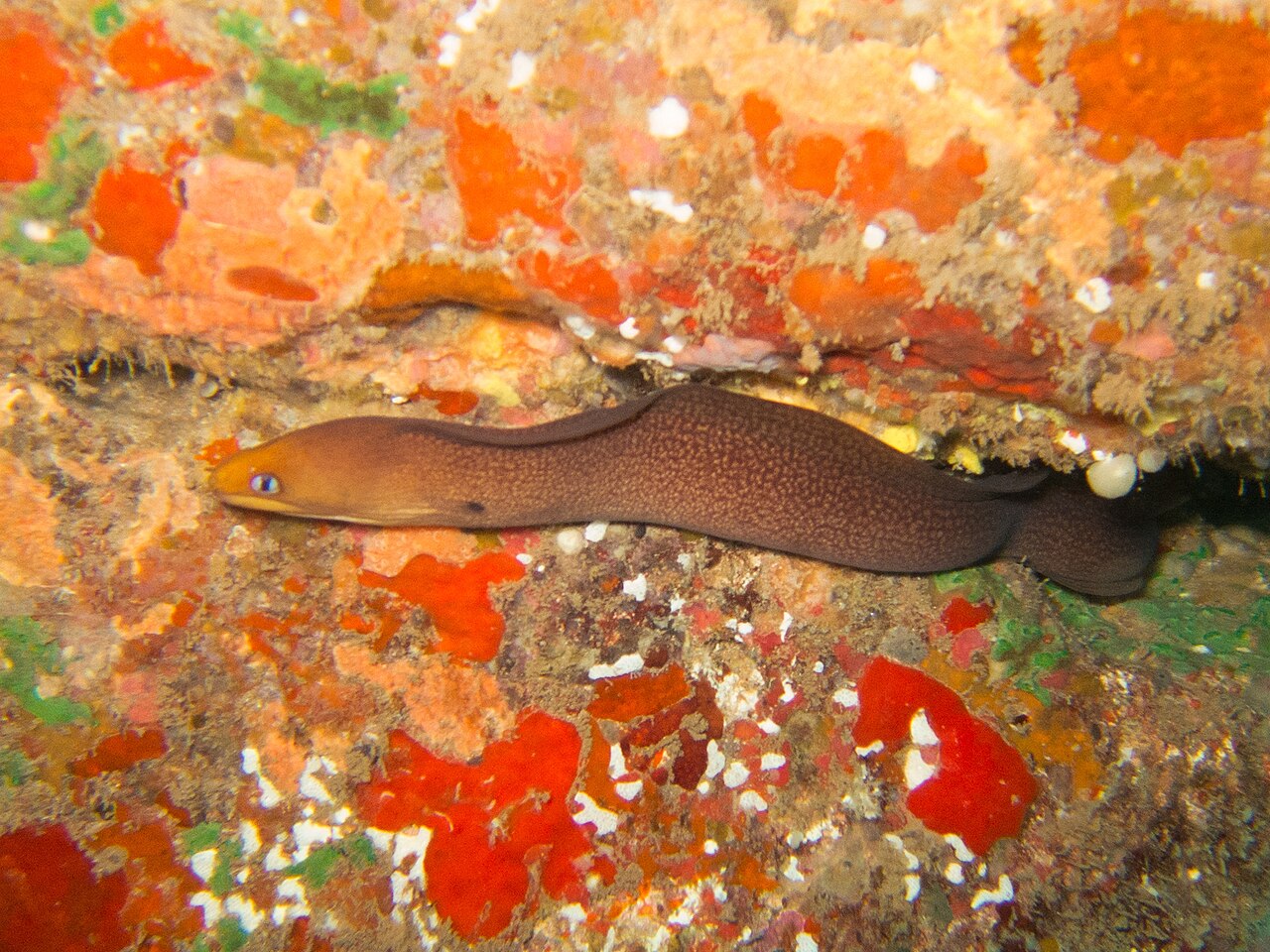
The Blue Ribbon Eel is a striking marine species known for its vibrant coloration and unique behavior.
Pricing for Verified Importers
Log in to see wholesale prices and order.
Export Size
up to 150.0 cm
Origin
Indo-Pacific
Temperature
24.0–28.0°C
Min. Tank Size
300 L
Salinity
30.000–35.000 ppt
pH
8.10–8.40
Diet
carnivore
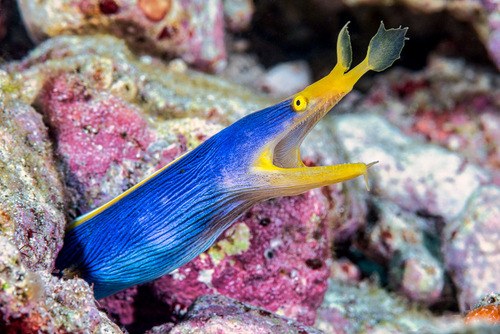
The Blue Ribbon Eel (Rhinomuraena quaesita) is a captivating marine fish that is native to the coral reefs of the Indo-Pacific region. This species is renowned for its stunning appearance, featuring a brilliant blue body with striking yellow markings along its dorsal fin and face. As an elongated eel, it can grow up to 150 cm in length, making it one of the larger members of its family. Its vibrant coloration serves as both camouflage and a warning to potential predators, as it is known to possess venomous spines.
In terms of behavior, the Blue Ribbon Eel is primarily a solitary creature. It is often found nestled within crevices and holes in the reef, using its elongated body to navigate the complex structures of its habitat. The species is primarily nocturnal, becoming more active during the night when it hunts for small fish and crustaceans. Its predatory nature is complemented by its exceptional agility, allowing it to strike quickly and efficiently.
The natural habitat of the Blue Ribbon Eel includes shallow coral reefs where it can find ample hiding spots and hunting grounds. These eels prefer areas with abundant live rock and plenty of cover, as this helps them evade larger predators and increases their chances of successful hunting. The Blue Ribbon Eel is often seen in pairs during mating season, demonstrating a fascinating aspect of their reproductive behavior.
Overall, the Blue Ribbon Eel is not only a visually striking species but also an integral part of the marine ecosystem, contributing to the health of coral reef environments through its predatory role.
In terms of behavior, the Blue Ribbon Eel is primarily a solitary creature. It is often found nestled within crevices and holes in the reef, using its elongated body to navigate the complex structures of its habitat. The species is primarily nocturnal, becoming more active during the night when it hunts for small fish and crustaceans. Its predatory nature is complemented by its exceptional agility, allowing it to strike quickly and efficiently.
The natural habitat of the Blue Ribbon Eel includes shallow coral reefs where it can find ample hiding spots and hunting grounds. These eels prefer areas with abundant live rock and plenty of cover, as this helps them evade larger predators and increases their chances of successful hunting. The Blue Ribbon Eel is often seen in pairs during mating season, demonstrating a fascinating aspect of their reproductive behavior.
Overall, the Blue Ribbon Eel is not only a visually striking species but also an integral part of the marine ecosystem, contributing to the health of coral reef environments through its predatory role.
When caring for the Blue Ribbon Eel in captivity, it is crucial to replicate its natural habitat as closely as possible. A minimum tank size of 300 liters is recommended to provide ample space for swimming and hiding. The ideal water parameters include a temperature range of 24-28°C, salinity between 30-35 ppt, and a pH level of 8.1-8.4. Regular monitoring of these conditions is essential to ensure the health and well-being of the eel.
Feeding a Blue Ribbon Eel should consist of a varied diet, primarily focusing on meaty foods. High-quality frozen or live foods such as shrimp, small fish, and crustaceans are ideal. It is essential to feed them multiple times a week to maintain proper nutrition. Compatibility with other tank mates can be challenging, as they can exhibit aggressive behavior towards smaller fish or other eels. Therefore, it's best to house them with larger, non-aggressive species.
Acclimation of the Blue Ribbon Eel should be done gradually, allowing it to adjust to new water conditions slowly, ideally over several hours. Quarantine procedures are also recommended for new arrivals to prevent the introduction of diseases. Regular maintenance and monitoring of tank conditions will help ensure a successful and thriving environment for this stunning species.
Feeding a Blue Ribbon Eel should consist of a varied diet, primarily focusing on meaty foods. High-quality frozen or live foods such as shrimp, small fish, and crustaceans are ideal. It is essential to feed them multiple times a week to maintain proper nutrition. Compatibility with other tank mates can be challenging, as they can exhibit aggressive behavior towards smaller fish or other eels. Therefore, it's best to house them with larger, non-aggressive species.
Acclimation of the Blue Ribbon Eel should be done gradually, allowing it to adjust to new water conditions slowly, ideally over several hours. Quarantine procedures are also recommended for new arrivals to prevent the introduction of diseases. Regular maintenance and monitoring of tank conditions will help ensure a successful and thriving environment for this stunning species.
The Blue Ribbon Eel is suitable for shipping, but it requires careful handling to maintain its health. Packing density should be moderate to minimize stress during transit. It is sensitive to temperature fluctuations, so maintaining a stable temperature between 24-26°C is crucial during shipping. There are no specific CITES restrictions for this species, but compliance with local export regulations is essential.
Species Parameters
Max Adult Size
150.0 cm
Origin
Indo-Pacific
Diet
carnivore
Temp Min
24.0 °C
Temp Max
28.0 °C
Salinity Min
30.000
Salinity Max
35.000
pH Min
8.10
pH Max
8.40
Min Tank
300 L