Red star
echinaster purpureus
In Stock
Common stock
Wild Caught
Moderate care
With Caution
SKU: ML-MF-0500
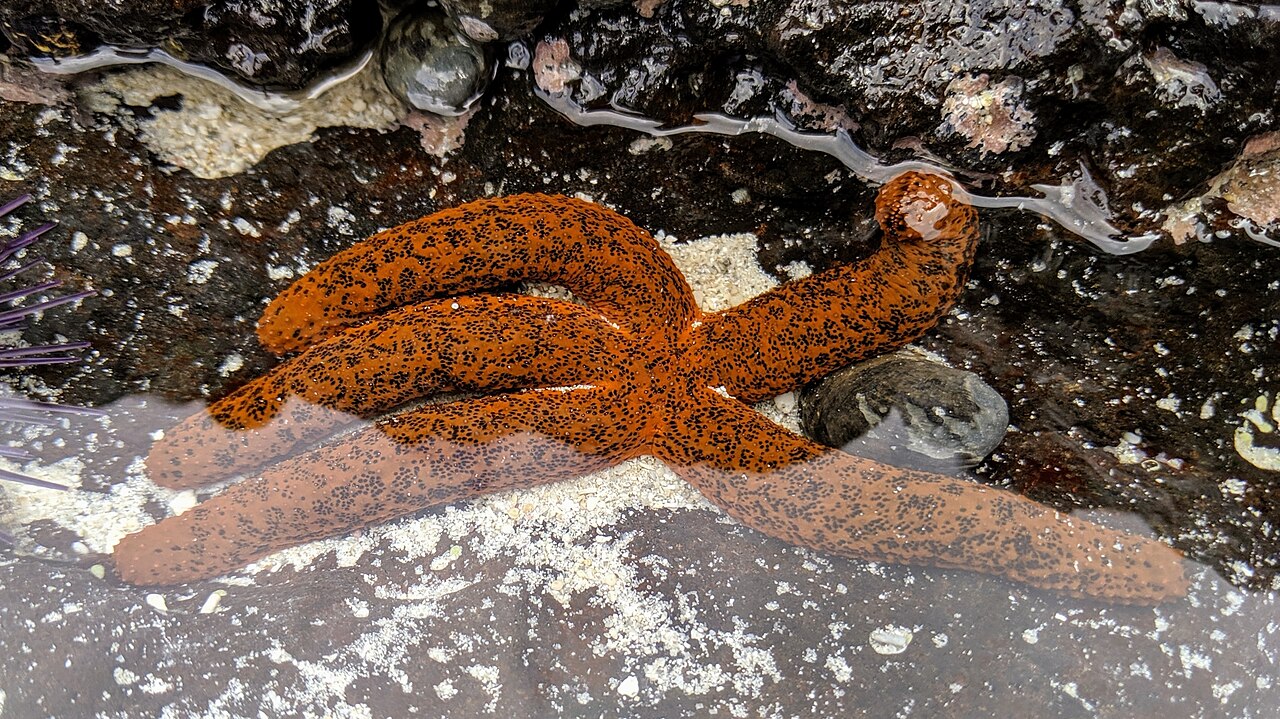
The Red Star (Echinaster purpureus) is a stunning marine starfish known for its vibrant red coloration and unique star shape.
Pricing for Verified Importers
Log in to see wholesale prices and order.
Export Size
up to 30.0 cm
Origin
Indo-Pacific
Temperature
24.0–28.0°C
Min. Tank Size
100 L
Salinity
30.000–35.000 ppt
pH
8.10–8.40
Diet
omnivore
The Red Star, scientifically known as Echinaster purpureus, is a striking marine starfish characterized by its vivid red hue and star-shaped body. This species can be found in various coastal habitats, primarily inhabiting coral reefs and rocky substrates across the Indo-Pacific region. Echinaster purpureus is notable not only for its vibrant appearance but also for its essential role in the marine ecosystem, where it contributes to the health and balance of reef environments.
In terms of physical characteristics, the Red Star can reach a maximum size of approximately 30 cm across its arms. Its body is composed of a central disc surrounded by five distinct arms, each adorned with tiny spines and a rough texture that aids in camouflage against the rocky seabed. The bright red coloration serves as an eye-catching display, making it a sought-after species for aquarium enthusiasts.
Behaviorally, the Red Star is relatively sedentary, often found resting on the substrate during the day and becoming more active at night when it feeds. This species primarily feeds on detritus and small invertebrates, utilizing its tube feet to capture food particles. This feeding habit helps maintain the ecological balance of its habitat by recycling nutrients.
The Red Star thrives in warm, shallow waters, typically found at depths ranging from 1 to 30 meters. Its preference for coral reefs means it is often associated with diverse marine life, making it an integral part of the underwater community. Importers and retailers can expect high demand for this visually appealing starfish in the ornamental aquarium trade.
In terms of physical characteristics, the Red Star can reach a maximum size of approximately 30 cm across its arms. Its body is composed of a central disc surrounded by five distinct arms, each adorned with tiny spines and a rough texture that aids in camouflage against the rocky seabed. The bright red coloration serves as an eye-catching display, making it a sought-after species for aquarium enthusiasts.
Behaviorally, the Red Star is relatively sedentary, often found resting on the substrate during the day and becoming more active at night when it feeds. This species primarily feeds on detritus and small invertebrates, utilizing its tube feet to capture food particles. This feeding habit helps maintain the ecological balance of its habitat by recycling nutrients.
The Red Star thrives in warm, shallow waters, typically found at depths ranging from 1 to 30 meters. Its preference for coral reefs means it is often associated with diverse marine life, making it an integral part of the underwater community. Importers and retailers can expect high demand for this visually appealing starfish in the ornamental aquarium trade.
When caring for the Red Star (Echinaster purpureus), it is crucial to replicate its natural habitat as closely as possible. Ideal water parameters include a temperature range of 24-28°C, salinity between 30-35 ppt, and a pH of 8.1-8.4. A minimum tank size of 100 liters is recommended to provide ample space for movement and grazing.
Feeding should consist of a varied diet, including high-quality marine pellets, small pieces of fish, and detritus. It is essential to ensure that the starfish is provided with enough food to satisfy its dietary needs, as they can be sensitive to starvation.
In terms of compatibility, the Red Star is generally peaceful but should be housed with non-aggressive tank mates. Care should be taken to avoid keeping them with larger predatory fish. Acclimation should be conducted slowly, ideally over a few hours, to minimize stress. Quarantine is also recommended before introducing the starfish to a display tank to prevent the introduction of potential pathogens.
Feeding should consist of a varied diet, including high-quality marine pellets, small pieces of fish, and detritus. It is essential to ensure that the starfish is provided with enough food to satisfy its dietary needs, as they can be sensitive to starvation.
In terms of compatibility, the Red Star is generally peaceful but should be housed with non-aggressive tank mates. Care should be taken to avoid keeping them with larger predatory fish. Acclimation should be conducted slowly, ideally over a few hours, to minimize stress. Quarantine is also recommended before introducing the starfish to a display tank to prevent the introduction of potential pathogens.
The Red Star is suitable for shipping, provided that appropriate measures are taken to ensure its safety during transport. Packing density should allow for sufficient space to prevent stress and injury. Temperature sensitivity is a concern; therefore, maintaining a stable temperature between 24-28°C during shipping is crucial. This species is not listed under CITES, making it easier to export legally.
Species Parameters
Max Adult Size
30.0 cm
Origin
Indo-Pacific
Diet
omnivore
Temp Min
24.0 °C
Temp Max
28.0 °C
Salinity Min
30.000
Salinity Max
35.000
pH Min
8.10
pH Max
8.40
Min Tank
100 L