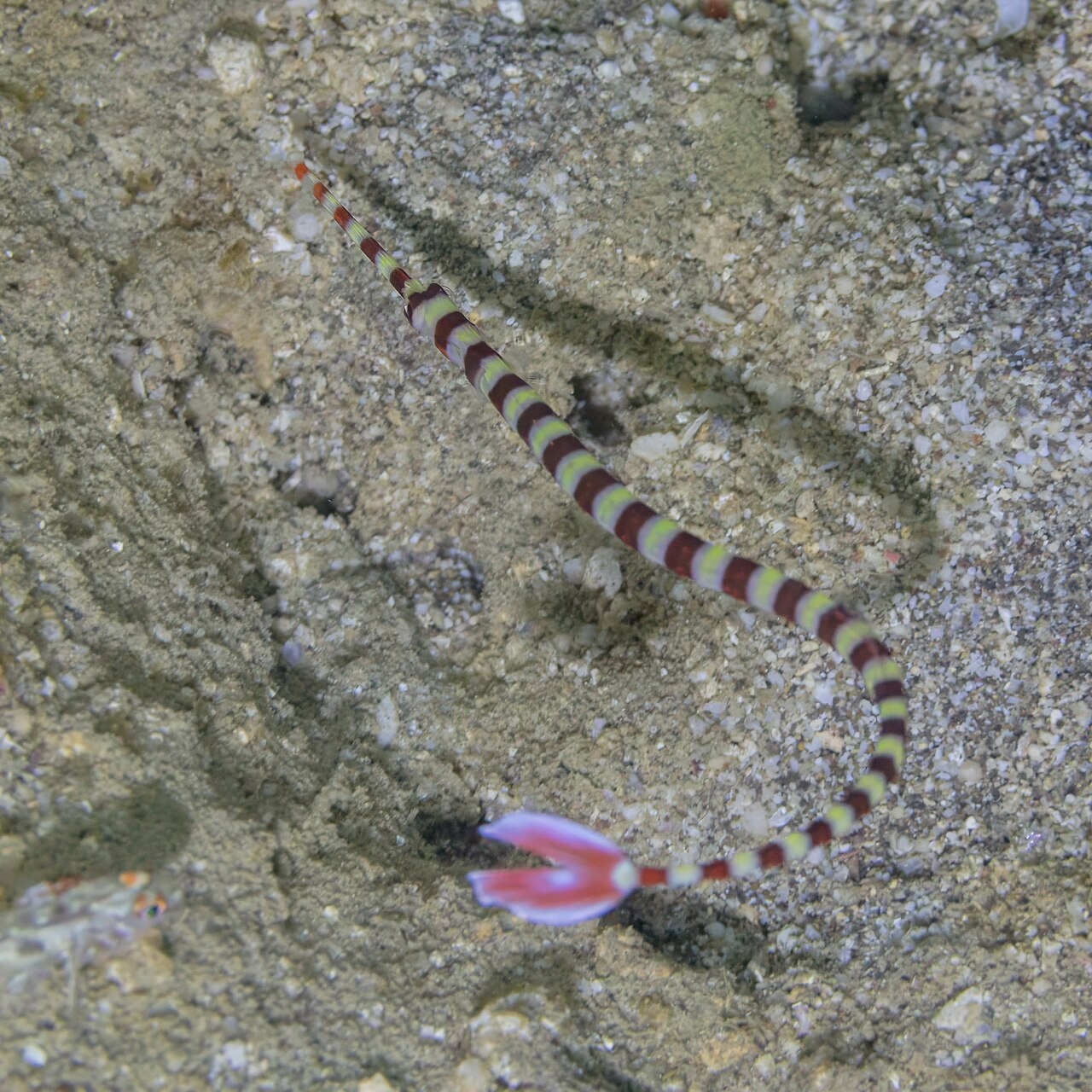
Ringed pipefish/Banded Pipefish
dunckerocampus dactyliophorus
In Stock
Common stock
Wild Caught
Moderate care
With Caution
SKU: ML-MF-0243
The Ringed pipefish captivates with its unique banded appearance and fascinating behaviors.
Pricing for Verified Importers
Log in to see wholesale prices and order.
Export Size
up to 15.0 cm
Origin
Coral Triangle
Temperature
24.0–28.0°C
Min. Tank Size
100 L
Salinity
30.000–35.000 ppt
pH
8.10–8.40
Diet
carnivore
The Ringed pipefish, scientifically known as Dunckerocampus dactyliophorus, is a captivating marine fish found primarily in the shallow waters of the Coral Triangle. This species is notable for its elongated body, adorned with distinct banding patterns that provide excellent camouflage amidst the seagrass and coral habitats it frequents. Its remarkable design not only offers protection from predators but also gives it a unique aesthetic appeal that attracts both hobbyists and researchers alike.
In terms of behavior, Ringed pipefish are generally found in pairs, engaging in various social interactions that include intricate courtship displays. They are known to exhibit a fascinating reproductive strategy, where males carry the fertilized eggs in a specialized brood pouch, similar to seahorses. This unique reproductive feature makes them particularly interesting to study and observe in both natural and aquarium settings.
The natural habitat of the Ringed pipefish is typically characterized by shallow marine environments, including seagrass beds, coral reefs, and mangroves. These areas provide both food and shelter, as the pipefish primarily feeds on small crustaceans and zooplankton. Their dependence on specific habitats underscores the importance of environmental conservation efforts in maintaining their populations in the wild.
Overall, the Ringed pipefish is not only a striking addition to any marine aquarium but also serves as a reminder of the delicate ecosystems that support such unique species. Its combination of beauty and intriguing behavior makes it a desirable choice for both marine enthusiasts and professional aquarists alike.
In terms of behavior, Ringed pipefish are generally found in pairs, engaging in various social interactions that include intricate courtship displays. They are known to exhibit a fascinating reproductive strategy, where males carry the fertilized eggs in a specialized brood pouch, similar to seahorses. This unique reproductive feature makes them particularly interesting to study and observe in both natural and aquarium settings.
The natural habitat of the Ringed pipefish is typically characterized by shallow marine environments, including seagrass beds, coral reefs, and mangroves. These areas provide both food and shelter, as the pipefish primarily feeds on small crustaceans and zooplankton. Their dependence on specific habitats underscores the importance of environmental conservation efforts in maintaining their populations in the wild.
Overall, the Ringed pipefish is not only a striking addition to any marine aquarium but also serves as a reminder of the delicate ecosystems that support such unique species. Its combination of beauty and intriguing behavior makes it a desirable choice for both marine enthusiasts and professional aquarists alike.
For successful care of the Ringed pipefish in aquarium settings, maintaining stable water parameters is crucial. The ideal temperature range is between 24°C to 28°C, with a salinity level of 30-35 ppt. The pH should be kept between 8.1 and 8.4 to mimic their natural habitat. A minimum tank size of 100 liters is recommended to ensure adequate space for swimming and hiding.
Feeding the Ringed pipefish requires a diet rich in live or frozen foods, such as brine shrimp, small mysis shrimp, and other zooplankton. Regular feeding 2-3 times a day is essential for maintaining their health and vitality. Compatibility should be considered, as they can be shy and may require peaceful tankmates to avoid stress. Ideal companions include small, non-aggressive fish and invertebrates that won't compete for food.
Acclimation is a vital process when introducing Ringed pipefish to a new environment. It is best to use a slow drip acclimation method to minimize stress and ensure a smooth transition. Quarantine is also recommended for new arrivals to prevent the introduction of diseases into established tanks. Monitoring their health closely during this period can help ensure a successful integration into the aquarium community.
Feeding the Ringed pipefish requires a diet rich in live or frozen foods, such as brine shrimp, small mysis shrimp, and other zooplankton. Regular feeding 2-3 times a day is essential for maintaining their health and vitality. Compatibility should be considered, as they can be shy and may require peaceful tankmates to avoid stress. Ideal companions include small, non-aggressive fish and invertebrates that won't compete for food.
Acclimation is a vital process when introducing Ringed pipefish to a new environment. It is best to use a slow drip acclimation method to minimize stress and ensure a smooth transition. Quarantine is also recommended for new arrivals to prevent the introduction of diseases into established tanks. Monitoring their health closely during this period can help ensure a successful integration into the aquarium community.
The Ringed pipefish is suitable for shipping due to its hardiness; however, careful packing is essential to minimize stress. A packing density of 1 fish per 2 liters of water is recommended to ensure adequate space during transit. Temperature sensitivity should be observed, maintaining a shipping temperature between 24°C and 28°C. As a species not currently listed under CITES, it is crucial to ensure compliance with local regulations during export.
Species Parameters
Max Adult Size
15.0 cm
Origin
Coral Triangle
Diet
carnivore
Temp Min
24.0 °C
Temp Max
28.0 °C
Salinity Min
30.000
Salinity Max
35.000
pH Min
8.10
pH Max
8.40
Min Tank
100 L