Sea Apple
pseudocolochirus axiologus
In Stock
Common stock
Wild Caught
Moderate care
With Caution
SKU: ML-MF-0541
The Sea Apple is a stunning marine invertebrate known for its vibrant colors and unique appearance.
Pricing for Verified Importers
Log in to see wholesale prices and order.
Export Size
up to 20.0 cm
Origin
Indo-Pacific
Temperature
24.0–28.0°C
Min. Tank Size
100 L
Salinity
35.000–37.000 ppt
pH
8.00–8.40
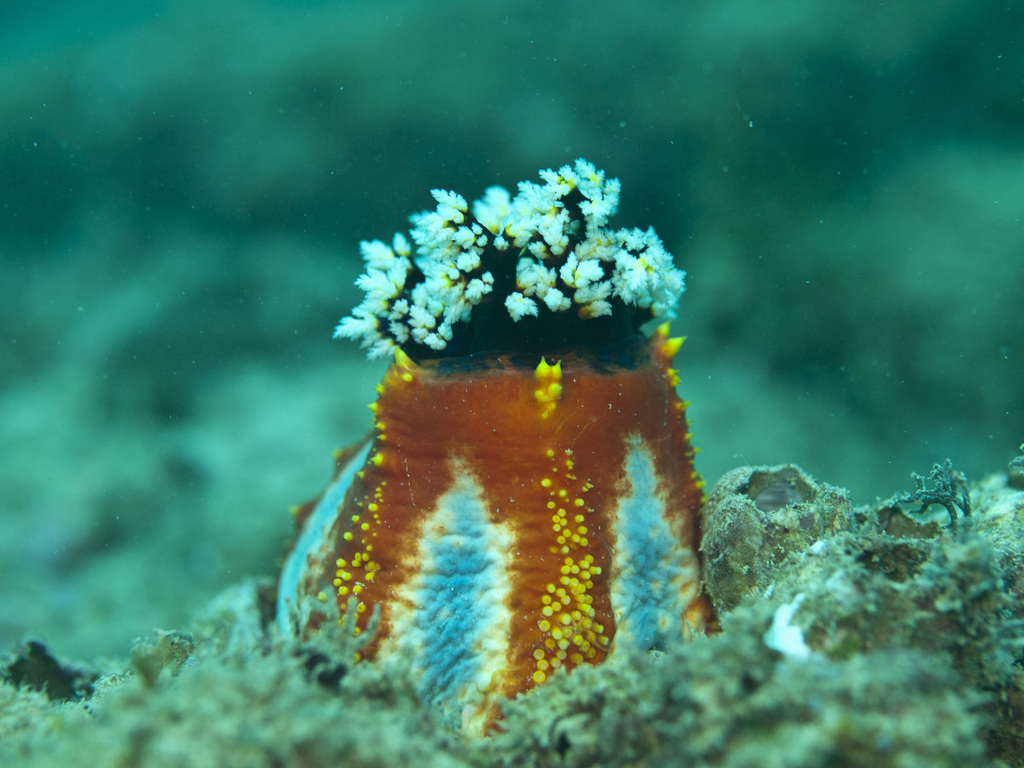
The Sea Apple (Pseudocolochirus axiologus) is a fascinating marine invertebrate found primarily in the coral reefs of the Indo-Pacific region. This species is renowned for its striking coloration, which ranges from bright orange to deep red, speckled with shades of purple, making it a captivating addition to any marine aquarium. Its unique form, resembling an apple, is characterized by a central mouth surrounded by a crown of feathery tentacles that it uses for feeding and respiration.
In terms of behavior, the Sea Apple is a relatively passive organism. It is a filter feeder, drawing in water through its tentacles, where it captures plankton and other small particles for nourishment. This feeding mechanism is not only effective but also adds a dynamic visual element to aquariums, as the Sea Apple expands and contracts its tentacles, creating a mesmerizing flow.
The natural habitat of the Sea Apple includes shallow reef areas, where it thrives in sandy substrates and among coral formations. This species prefers areas with moderate water movement, which aids in its feeding and overall health. The Sea Apple's symbiotic relationship with its environment is crucial, as it contributes to the overall health of the reef ecosystem by filtering water and providing habitat for various marine organisms.
As a marine invertebrate, the Sea Apple plays a vital role in maintaining the ecological balance of its habitat. Its striking appearance and unique characteristics make it a sought-after species for aquarium enthusiasts and retailers alike, while its ecological contributions underscore the importance of preserving its natural environment.
In terms of behavior, the Sea Apple is a relatively passive organism. It is a filter feeder, drawing in water through its tentacles, where it captures plankton and other small particles for nourishment. This feeding mechanism is not only effective but also adds a dynamic visual element to aquariums, as the Sea Apple expands and contracts its tentacles, creating a mesmerizing flow.
The natural habitat of the Sea Apple includes shallow reef areas, where it thrives in sandy substrates and among coral formations. This species prefers areas with moderate water movement, which aids in its feeding and overall health. The Sea Apple's symbiotic relationship with its environment is crucial, as it contributes to the overall health of the reef ecosystem by filtering water and providing habitat for various marine organisms.
As a marine invertebrate, the Sea Apple plays a vital role in maintaining the ecological balance of its habitat. Its striking appearance and unique characteristics make it a sought-after species for aquarium enthusiasts and retailers alike, while its ecological contributions underscore the importance of preserving its natural environment.
To successfully care for the Sea Apple, aquarium importers and retailers should maintain specific water parameters. Ideal temperatures range from 24°C to 28°C, with a salinity level between 35-37 ppt. The pH should be maintained between 8.0 and 8.4 to ensure optimal health. It is essential to provide a minimum tank size of 100 liters to accommodate its needs adequately.
Feeding the Sea Apple is crucial for its health; it thrives on a diet of fine plankton, phytoplankton, and other small particulate foods. Regular feeding should be done to ensure it receives sufficient nutrition, especially in a captive environment. Compatibility with tank mates is important; the Sea Apple is generally peaceful but can be sensitive to aggressive species. Careful selection of tank mates is recommended to avoid stress.
Acclimation is vital when introducing the Sea Apple to a new environment. Gradual acclimation over several hours is recommended to minimize shock. Additionally, a quarantine period of at least two weeks is advisable for new arrivals to monitor for potential diseases or parasites before introducing them to the main display tank. This will help maintain the health and well-being of both the Sea Apple and other inhabitants of the aquarium.
Feeding the Sea Apple is crucial for its health; it thrives on a diet of fine plankton, phytoplankton, and other small particulate foods. Regular feeding should be done to ensure it receives sufficient nutrition, especially in a captive environment. Compatibility with tank mates is important; the Sea Apple is generally peaceful but can be sensitive to aggressive species. Careful selection of tank mates is recommended to avoid stress.
Acclimation is vital when introducing the Sea Apple to a new environment. Gradual acclimation over several hours is recommended to minimize shock. Additionally, a quarantine period of at least two weeks is advisable for new arrivals to monitor for potential diseases or parasites before introducing them to the main display tank. This will help maintain the health and well-being of both the Sea Apple and other inhabitants of the aquarium.
The Sea Apple is suitable for shipping under controlled conditions. It requires careful packing to ensure minimal movement and avoid stress during transit. Temperature sensitivity is a concern, with a preferred shipping temperature of 24°C to 26°C. Packing density should be low to reduce stress. As of now, the Sea Apple is not listed under CITES regulations, making it easier for exporters to ship without the need for special permits.
Species Parameters
Max Adult Size
20.0 cm
Origin
Indo-Pacific
Temp Min
24.0 °C
Temp Max
28.0 °C
Salinity Min
35.000
Salinity Max
37.000
pH Min
8.00
pH Max
8.40
Min Tank
100 L