White Eyed Moray
Siderea prosopeion
Limited
Scarce stock
Wild Caught
Moderate care
With Caution
SKU: D198G
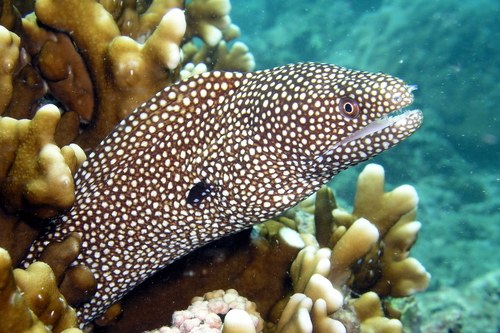
The White Eyed Moray is a striking marine fish known for its unique coloration and intriguing behavior.
Pricing for Verified Importers
Log in to see wholesale prices and order.
Export Size
up to 60.0 cm
Origin
Indo-Pacific
Temperature
24.0–28.0°C
Min. Tank Size
200 L
Salinity
32.000–36.000 ppt
pH
8.10–8.40
Diet
carnivore
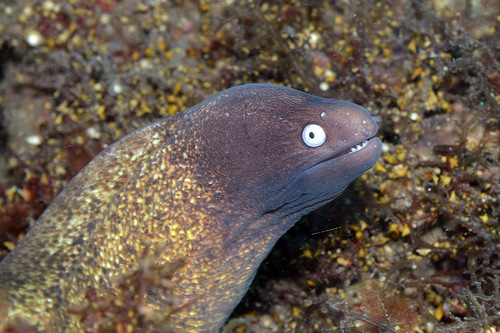
The White Eyed Moray (Siderea prosopeion) is a fascinating species found predominantly in the coral reefs of the Indo-Pacific region, especially around Bali, Indonesia. This moray eel is distinguished by its striking white eyes, which contrast sharply with its dark, mottled body. Typically, the coloration varies from deep brown to greenish hues, adorned with lighter spots, providing excellent camouflage among the rocky crevices of its habitat.
Natural history reveals that these eels are primarily nocturnal, emerging from their hiding spots at night to hunt for prey. Their diet mainly consists of small fish, crustaceans, and other marine invertebrates. With their exceptional sense of smell, they can detect prey from a distance, making them efficient hunters. White Eyed Morays are known for their unique behavior; they often exhibit a curious disposition, peeking out from their shelters and displaying a degree of sociability with other marine species.
Habitat-wise, White Eyed Morays prefer shallow coastal waters, particularly in coral reef environments where they can find ample shelter. They are often seen resting in crevices or under ledges during the day. This species thrives in environments with substantial structural complexity, which provides both hunting grounds and protective refuge from larger predators. Conservation-wise, the health of their populations is closely linked to the overall health of coral reefs, making them valuable indicators of marine ecosystem health.
Given their beauty and unique behaviors, White Eyed Morays are gaining popularity in the aquarium trade, attracting both hobbyists and commercial importers alike. Their striking appearance and fascinating lifestyle make them a prized addition to marine displays.
Natural history reveals that these eels are primarily nocturnal, emerging from their hiding spots at night to hunt for prey. Their diet mainly consists of small fish, crustaceans, and other marine invertebrates. With their exceptional sense of smell, they can detect prey from a distance, making them efficient hunters. White Eyed Morays are known for their unique behavior; they often exhibit a curious disposition, peeking out from their shelters and displaying a degree of sociability with other marine species.
Habitat-wise, White Eyed Morays prefer shallow coastal waters, particularly in coral reef environments where they can find ample shelter. They are often seen resting in crevices or under ledges during the day. This species thrives in environments with substantial structural complexity, which provides both hunting grounds and protective refuge from larger predators. Conservation-wise, the health of their populations is closely linked to the overall health of coral reefs, making them valuable indicators of marine ecosystem health.
Given their beauty and unique behaviors, White Eyed Morays are gaining popularity in the aquarium trade, attracting both hobbyists and commercial importers alike. Their striking appearance and fascinating lifestyle make them a prized addition to marine displays.
To successfully care for the White Eyed Moray, it is essential to maintain optimal water parameters. The ideal temperature range is between 24°C to 28°C, with a salinity of 32-36 ppt. A pH level between 8.1 and 8.4 is recommended for their health and well-being. A minimum tank size of 200 liters is advisable, providing ample space for them to explore and establish territory.
Feeding should consist of a varied diet, primarily composed of meaty foods such as shrimp, fish, and mollusks to meet their carnivorous dietary needs. Regular feeding will encourage healthy growth and a thriving disposition. Compatibility with other marine species can be tricky; while they can coexist with larger fish, they may exhibit aggressive behavior towards smaller tank mates, so careful selection is essential.
Acclimation is crucial when introducing White Eyed Morays to a new tank. A slow acclimatization process over several hours is recommended to minimize stress and ensure a smooth transition. Additionally, a quarantine period of at least two weeks is advisable for new arrivals to monitor for any signs of disease before adding them to a display tank.
Feeding should consist of a varied diet, primarily composed of meaty foods such as shrimp, fish, and mollusks to meet their carnivorous dietary needs. Regular feeding will encourage healthy growth and a thriving disposition. Compatibility with other marine species can be tricky; while they can coexist with larger fish, they may exhibit aggressive behavior towards smaller tank mates, so careful selection is essential.
Acclimation is crucial when introducing White Eyed Morays to a new tank. A slow acclimatization process over several hours is recommended to minimize stress and ensure a smooth transition. Additionally, a quarantine period of at least two weeks is advisable for new arrivals to monitor for any signs of disease before adding them to a display tank.
White Eyed Morays are suitable for export, requiring careful packing to ensure their safety during transport. A packing density of 1-2 fish per liter is recommended to prevent stress. It is critical to maintain temperatures between 24°C and 28°C during shipping to avoid thermal shock. As a species not listed under CITES, they do not face regulatory shipping restrictions, but adherence to local export laws is essential.
Species Parameters
Max Adult Size
60.0 cm
Origin
Indo-Pacific
Habitat
reef
Diet
carnivore
Temp Min
24.0 °C
Temp Max
28.0 °C
Salinity Min
32.000
Salinity Max
36.000
pH Min
8.10
pH Max
8.40
Min Tank
200 L