Yellow Goatfish
Parupeneus cyclostomus
In Stock
Common stock
Wild Caught
Moderate care
With Caution
SKU: CB-MF-0269
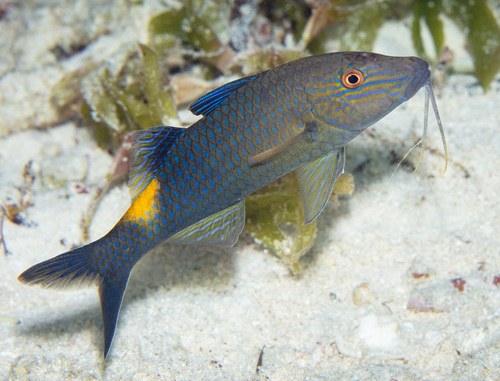
The Yellow Goatfish (Parupeneus cyclostomus) is a striking addition to marine aquariums, known for its vibrant coloration and unique foraging behavior.
Pricing for Verified Importers
Log in to see wholesale prices and order.
Export Size
up to 30.0 cm
Origin
Indo-Pacific
Temperature
24.0–28.0°C
Min. Tank Size
200 L
Salinity
30.000–35.000 ppt
pH
8.10–8.40
Diet
carnivore
The Yellow Goatfish, scientifically known as Parupeneus cyclostomus, is a popular marine species found predominantly in the Indo-Pacific region. This fish thrives in sandy substrates, often inhabiting coral reefs and lagoons, making it an essential part of the marine ecosystem. Its distinctive yellow body, complemented by elongated barbels on its chin, helps it detect food buried in the sand, showcasing its unique foraging abilities.
Measuring up to 30 cm in length, the Yellow Goatfish exhibits a vibrant coloration that ranges from yellow to pale pink, often with distinct dark spots along its body. This coloration not only adds beauty to aquariums but also serves as a camouflage against predators in its natural habitat. The Yellow Goatfish is known for its social behavior and can often be seen swimming in small schools, enhancing its visual appeal when displayed in home aquariums.
Behaviorally, the Yellow Goatfish is a diurnal species, actively foraging during the day for small invertebrates and crustaceans. It uses its barbels to sense food beneath the substrate, demonstrating a unique adaptation for survival. In captivity, these fish are known to exhibit curious and interactive behavior, often engaging with their environment and the aquarist.
In terms of habitat, the Yellow Goatfish prefers shallow waters, typically found at depths of 1 to 30 meters. Its reliance on sandy or muddy substrates makes it a vital species for the health of reef ecosystems, as it helps in maintaining the balance of marine life. The Yellow Goatfish's presence in an aquarium not only enhances biodiversity but also provides educational value about marine ecosystems.
Measuring up to 30 cm in length, the Yellow Goatfish exhibits a vibrant coloration that ranges from yellow to pale pink, often with distinct dark spots along its body. This coloration not only adds beauty to aquariums but also serves as a camouflage against predators in its natural habitat. The Yellow Goatfish is known for its social behavior and can often be seen swimming in small schools, enhancing its visual appeal when displayed in home aquariums.
Behaviorally, the Yellow Goatfish is a diurnal species, actively foraging during the day for small invertebrates and crustaceans. It uses its barbels to sense food beneath the substrate, demonstrating a unique adaptation for survival. In captivity, these fish are known to exhibit curious and interactive behavior, often engaging with their environment and the aquarist.
In terms of habitat, the Yellow Goatfish prefers shallow waters, typically found at depths of 1 to 30 meters. Its reliance on sandy or muddy substrates makes it a vital species for the health of reef ecosystems, as it helps in maintaining the balance of marine life. The Yellow Goatfish's presence in an aquarium not only enhances biodiversity but also provides educational value about marine ecosystems.
To ensure the optimal health of Yellow Goatfish in an aquarium setting, maintaining proper water parameters is crucial. They thrive in temperatures ranging from 24°C to 28°C, with a salinity level between 30 to 35 ppt. The pH should ideally be maintained between 8.1 and 8.4. Given their active nature, a minimum tank size of 200 liters is recommended to provide ample space for swimming and foraging.
Feeding Yellow Goatfish requires a varied diet rich in protein. They are primarily carnivorous, eating small invertebrates and crustaceans. In captivity, they can be offered high-quality pellets, frozen or live foods such as brine shrimp, and mysis shrimp to mimic their natural foraging behavior. Regular feeding, ideally 2-3 times a day, will promote their health and vibrant coloration.
Compatibility wise, Yellow Goatfish generally coexist well with a variety of marine species but may exhibit territorial behavior towards similar-sized fish. It's advisable to monitor their interactions and provide plenty of hiding spots in the aquarium.
Acclimation is essential when introducing them to a new environment. Gradually acclimatizing them over several hours to match the water parameters of their new tank will minimize stress. A quarantine period of at least two weeks is also recommended to observe for any signs of illness before introducing them to the main display tank.
Feeding Yellow Goatfish requires a varied diet rich in protein. They are primarily carnivorous, eating small invertebrates and crustaceans. In captivity, they can be offered high-quality pellets, frozen or live foods such as brine shrimp, and mysis shrimp to mimic their natural foraging behavior. Regular feeding, ideally 2-3 times a day, will promote their health and vibrant coloration.
Compatibility wise, Yellow Goatfish generally coexist well with a variety of marine species but may exhibit territorial behavior towards similar-sized fish. It's advisable to monitor their interactions and provide plenty of hiding spots in the aquarium.
Acclimation is essential when introducing them to a new environment. Gradually acclimatizing them over several hours to match the water parameters of their new tank will minimize stress. A quarantine period of at least two weeks is also recommended to observe for any signs of illness before introducing them to the main display tank.
Yellow Goatfish are suitable for shipping due to their hardiness, but care must be taken to maintain stable water temperatures during transit. Packing density should allow for adequate oxygen flow, with individual fish ideally packed in 5-10 liters of water each. They are sensitive to temperature fluctuations, so maintaining a range of 24°C to 28°C during shipping is critical. Currently, there are no CITES restrictions for this species.
Species Parameters
Max Adult Size
30.0 cm
Origin
Indo-Pacific
Diet
carnivore
Temp Min
24.0 °C
Temp Max
28.0 °C
Salinity Min
30.000
Salinity Max
35.000
pH Min
8.10
pH Max
8.40
Min Tank
200 L