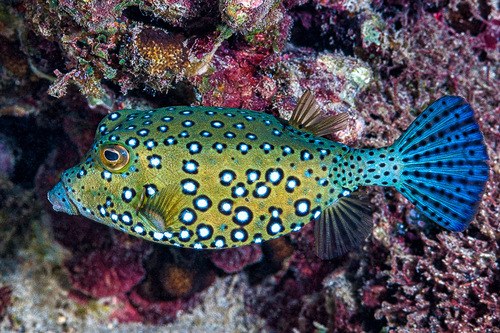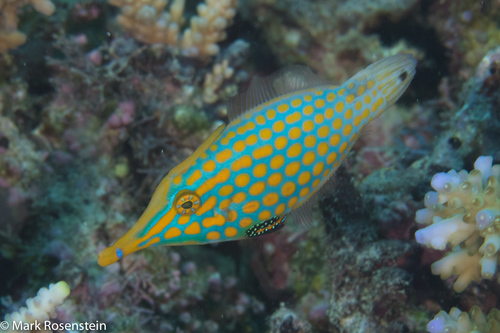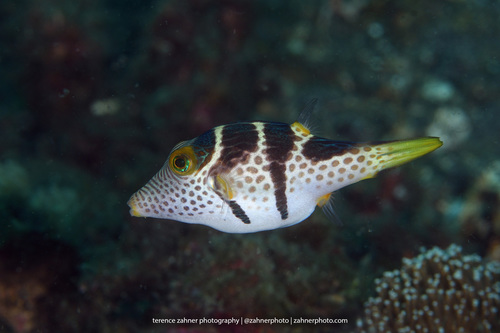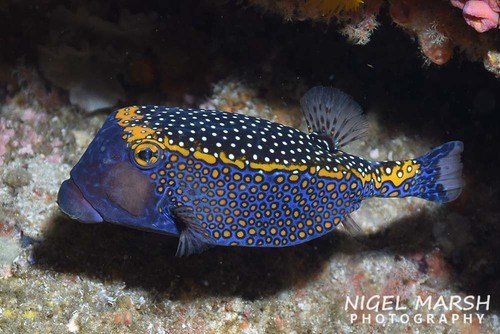
Thornback Boxfish
Lactoria penthacantha
In Stock
Common stock
Wild Caught
Moderate care
With Caution
SKU: CB-MF-0184
The Thornback Boxfish's unique shape and vibrant colors make it a captivating addition to marine aquariums.
Pricing for Verified Importers
Log in to see wholesale prices and order.
Export Size
up to 30.0 cm
Origin
Indo-Pacific
Temperature
24.0–28.0°C
Min. Tank Size
200 L
Salinity
30.000–35.000 ppt
pH
8.10–8.40
Diet
omnivore
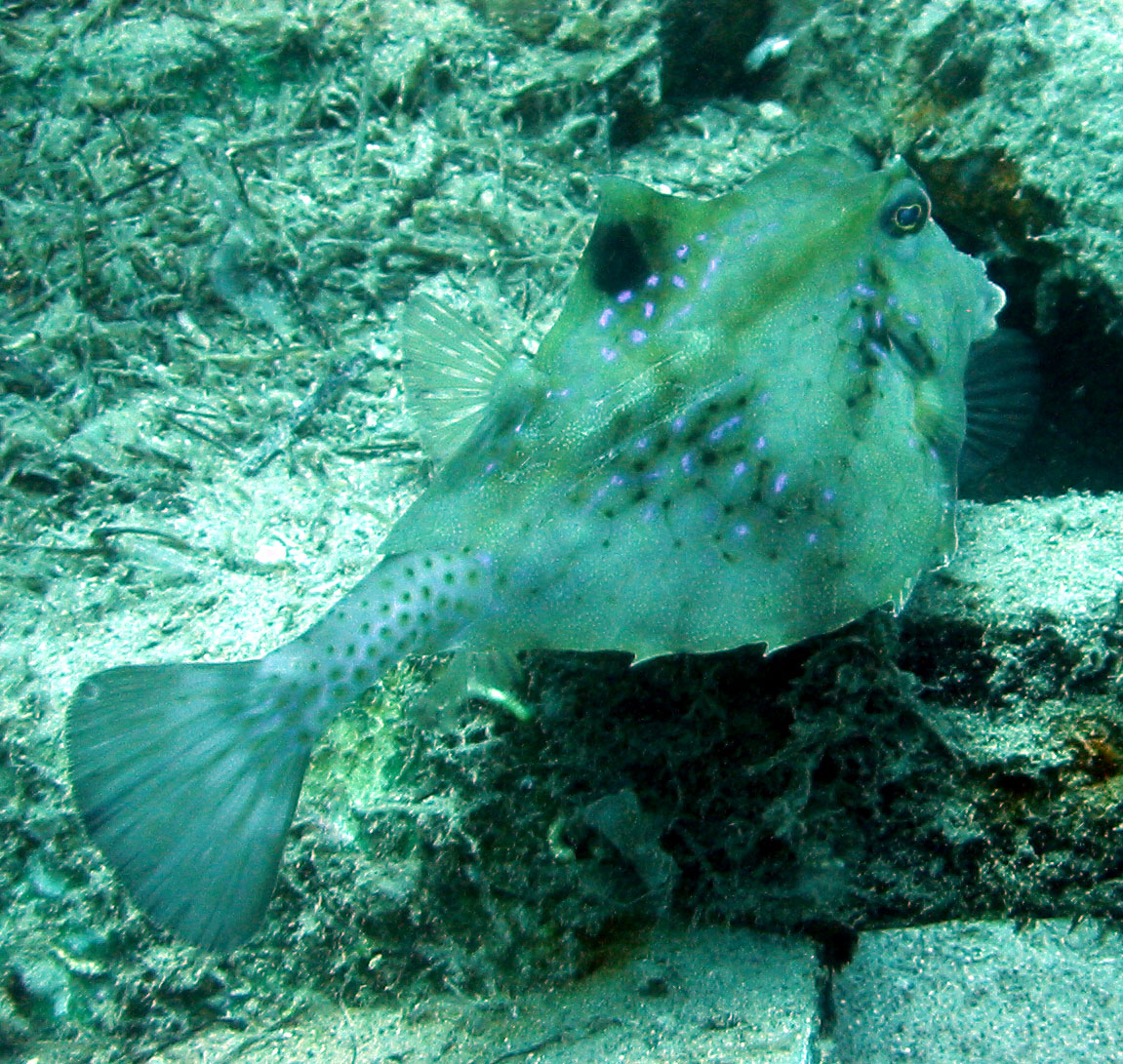
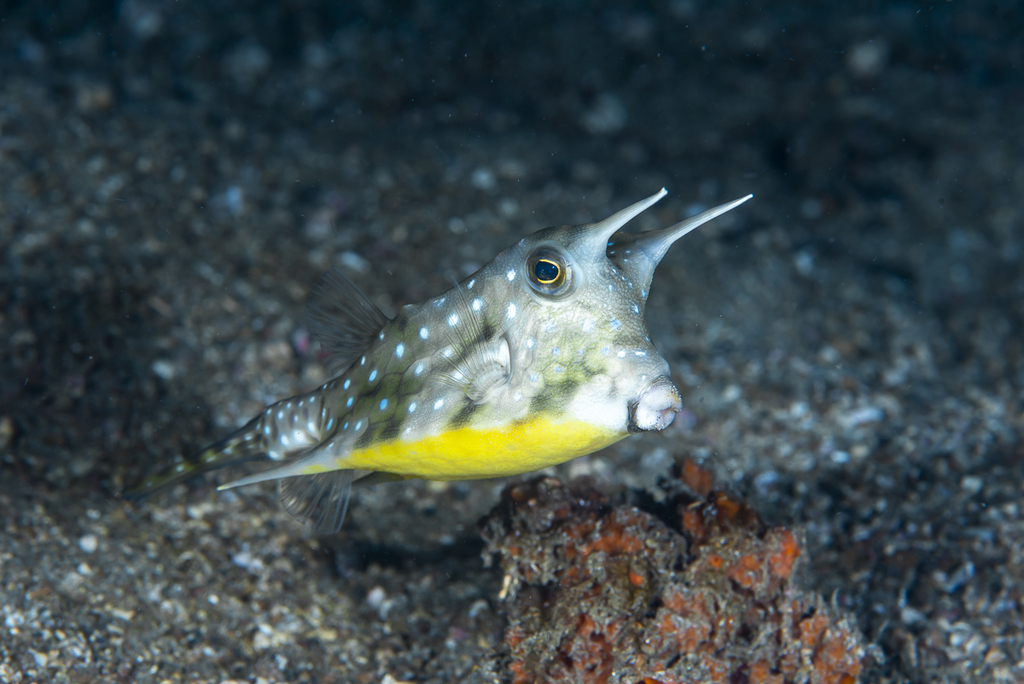
The Thornback Boxfish (Lactoria penthacantha) is a striking marine fish known for its distinctive hexagonal shape and vibrant coloration. This species exhibits a unique armor-like exterior made up of hexagonal bony plates, giving it a boxy appearance that sets it apart from more traditional fish shapes. The coloration can vary from bright yellow to greenish hues, often adorned with intricate patterns that provide both camouflage and aesthetic appeal in the aquatic environment.
Inhabiting the shallow coastal waters of the Indo-Pacific region, particularly around coral reefs, the Thornback Boxfish prefers sandy substrates where it can forage for food. Its diet mainly consists of small invertebrates and algae, which it finds among the reef structures. This species is relatively solitary and is often observed hovering around coral formations, using its excellent camouflage to evade predators.
Behaviorally, the Thornback Boxfish is known for its unique swimming style; it employs its small fins to maneuver gracefully through the water. When threatened, it can release a toxic substance from its skin, providing a defense mechanism against predators. This toxicity makes it essential for aquarists to handle them with care, as exposure can be harmful to other tank inhabitants.
The Thornback Boxfish thrives in warm, shallow marine environments, typically in depths of less than 30 meters. It is often found in association with coral reefs, where it plays a role in the ecosystem by helping control algae populations and serving as prey for larger fish species.
Inhabiting the shallow coastal waters of the Indo-Pacific region, particularly around coral reefs, the Thornback Boxfish prefers sandy substrates where it can forage for food. Its diet mainly consists of small invertebrates and algae, which it finds among the reef structures. This species is relatively solitary and is often observed hovering around coral formations, using its excellent camouflage to evade predators.
Behaviorally, the Thornback Boxfish is known for its unique swimming style; it employs its small fins to maneuver gracefully through the water. When threatened, it can release a toxic substance from its skin, providing a defense mechanism against predators. This toxicity makes it essential for aquarists to handle them with care, as exposure can be harmful to other tank inhabitants.
The Thornback Boxfish thrives in warm, shallow marine environments, typically in depths of less than 30 meters. It is often found in association with coral reefs, where it plays a role in the ecosystem by helping control algae populations and serving as prey for larger fish species.
When importing Thornback Boxfish, it is crucial to maintain stable water parameters to ensure their health and well-being. The ideal temperature range for this species is between 24°C and 28°C, with a salinity level of 30-35 ppt. The pH should be kept between 8.1 and 8.4 to mimic their natural habitat.
Feeding should consist primarily of a varied diet of high-quality marine flakes, pellets, and occasional frozen foods such as brine shrimp or mysis shrimp. Regular feeding will help maintain their health and vibrant coloration. Compatibility should be carefully considered, as their toxic nature can pose a risk to more sensitive tank mates; thus, it is advisable to house them with robust fish species that can coexist without risk.
Acclimation should be gradual to minimize stress, ideally over a period of several hours, allowing them to adjust to the new water conditions. Quarantine is highly recommended for at least two weeks before introducing them to a display tank, monitoring for any signs of disease or distress during this period.
Feeding should consist primarily of a varied diet of high-quality marine flakes, pellets, and occasional frozen foods such as brine shrimp or mysis shrimp. Regular feeding will help maintain their health and vibrant coloration. Compatibility should be carefully considered, as their toxic nature can pose a risk to more sensitive tank mates; thus, it is advisable to house them with robust fish species that can coexist without risk.
Acclimation should be gradual to minimize stress, ideally over a period of several hours, allowing them to adjust to the new water conditions. Quarantine is highly recommended for at least two weeks before introducing them to a display tank, monitoring for any signs of disease or distress during this period.
The Thornback Boxfish is suitable for shipping, but it requires careful handling due to its sensitivity to temperature changes. Optimal shipping temperatures should be maintained between 24°C and 28°C. Packing density should allow for adequate space to avoid stress during transit. This species is not listed under CITES, making export regulations more straightforward but still requires adherence to local export laws.
Species Parameters
Max Adult Size
30.0 cm
Origin
Indo-Pacific
Diet
omnivore
Temp Min
24.0 °C
Temp Max
28.0 °C
Salinity Min
30.000
Salinity Max
35.000
pH Min
8.10
pH Max
8.40
Min Tank
200 L