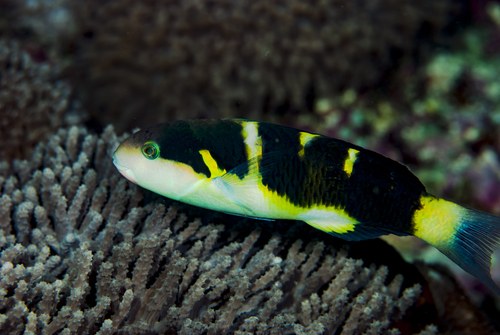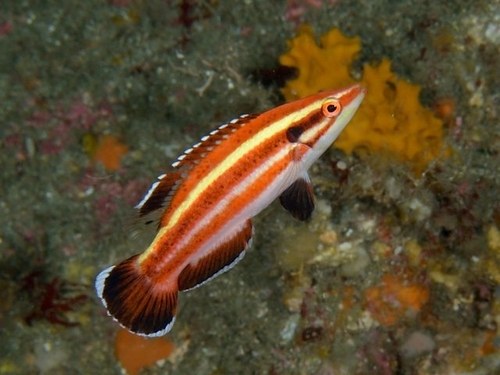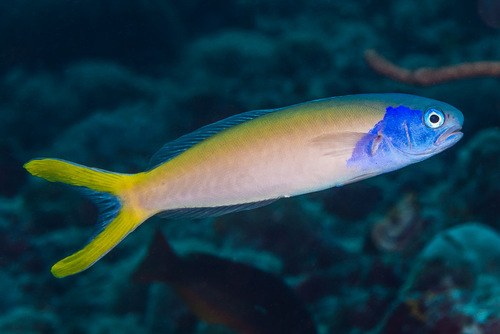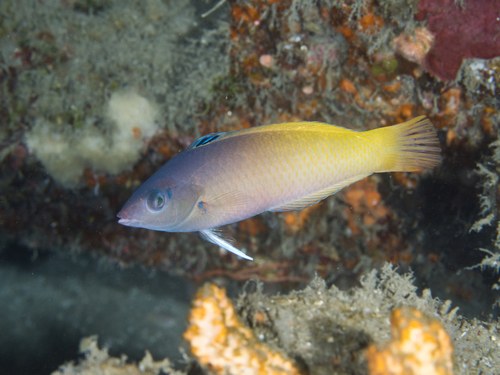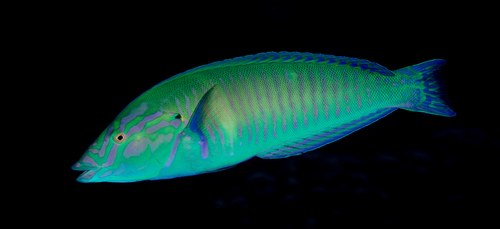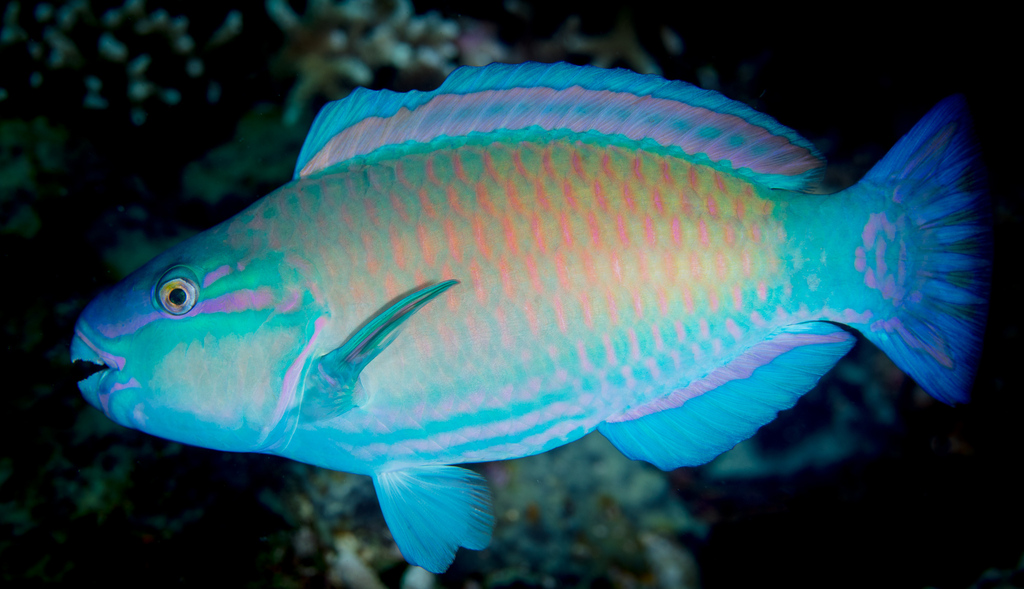
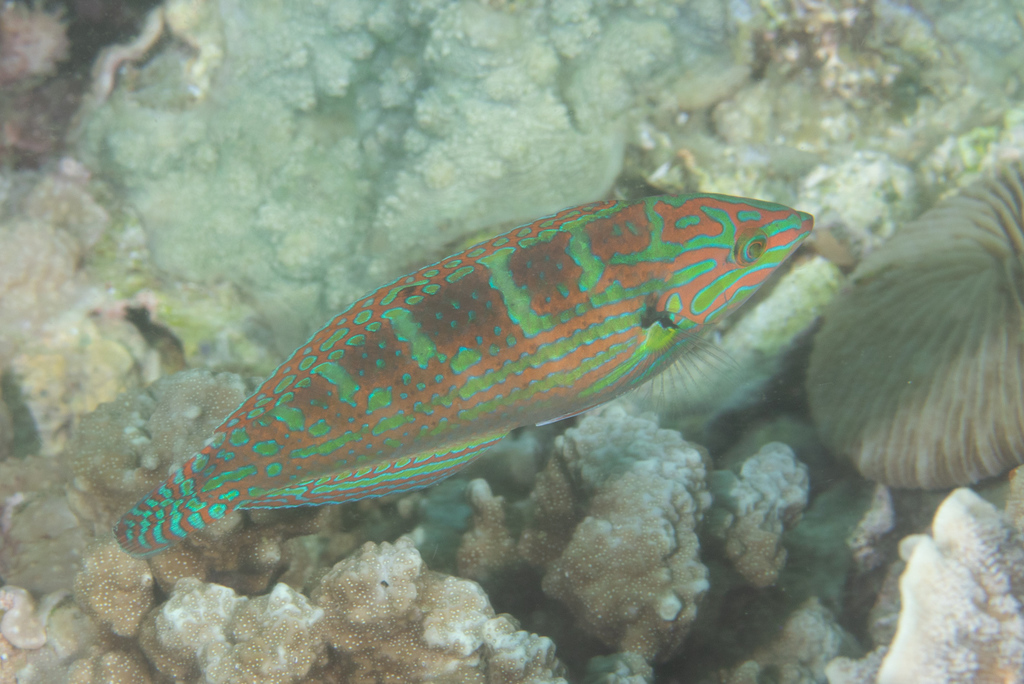
Saowisata Wrasse
halichoeres binotopsis
In Stock
Common stock
Wild Caught
Moderate care
With Caution
SKU: ML-MF-0434
The Saowisata Wrasse is a vibrant marine fish, known for its striking coloration and active behavior.
Pricing for Verified Importers
Log in to see wholesale prices and order.
Export Size
up to 15.0 cm
Origin
Indo-Pacific
Temperature
24.0–28.0°C
Min. Tank Size
200 L
Salinity
1.020–1.025 ppt
pH
8.10–8.40
Diet
carnivore
The Saowisata Wrasse (Halichoeres binotopsis) is a captivating marine fish native to the coral reefs of the Indo-Pacific region. With its intricate patterns and vivid colors, this species adds a splash of life to any aquarium. Adult Saowisata Wrasses typically exhibit a combination of greens, yellows, and blues, making them a visually stunning addition. Their elongated bodies and distinctive dorsal fin structure further enhance their appeal to aquarists and marine enthusiasts alike.
Natural history reveals that the Saowisata Wrasse is predominantly found in shallow reef environments, where it plays a crucial role in the marine ecosystem. They are often seen darting among coral formations in search of food, demonstrating their active and inquisitive nature. These wrasses are known for their territorial behavior, particularly during breeding seasons when males will display vibrant colors to attract females and ward off rivals.
Behaviorally, the Saowisata Wrasse is characterized by its social interactions within its habitat. They tend to form loose schools, but can also exhibit solitary tendencies. Their diet mainly consists of small invertebrates, making them important for controlling pest populations on the reef. Observing their feeding habits in a home aquarium can provide an engaging experience for aquarists, as they display unique foraging behaviors.
In terms of habitat, the Saowisata Wrasse thrives in sandy and rocky substrates near coral reefs. This species prefers areas with ample cover, allowing it to hide from predators and ambush prey. Its preference for complex environments makes it an ideal candidate for well-structured marine tanks that mimic its natural habitat.
Natural history reveals that the Saowisata Wrasse is predominantly found in shallow reef environments, where it plays a crucial role in the marine ecosystem. They are often seen darting among coral formations in search of food, demonstrating their active and inquisitive nature. These wrasses are known for their territorial behavior, particularly during breeding seasons when males will display vibrant colors to attract females and ward off rivals.
Behaviorally, the Saowisata Wrasse is characterized by its social interactions within its habitat. They tend to form loose schools, but can also exhibit solitary tendencies. Their diet mainly consists of small invertebrates, making them important for controlling pest populations on the reef. Observing their feeding habits in a home aquarium can provide an engaging experience for aquarists, as they display unique foraging behaviors.
In terms of habitat, the Saowisata Wrasse thrives in sandy and rocky substrates near coral reefs. This species prefers areas with ample cover, allowing it to hide from predators and ambush prey. Its preference for complex environments makes it an ideal candidate for well-structured marine tanks that mimic its natural habitat.
When caring for the Saowisata Wrasse, it is essential to replicate its natural environment as closely as possible. Ideal water parameters include a temperature range of 24-28°C, a salinity level between 1.020-1.025 ppt, and a pH level of 8.1-8.4. Providing ample hiding spots with live rock and sandy substrates will help reduce stress and encourage natural behaviors.
Feeding the Saowisata Wrasse requires a varied diet to ensure optimal health. They thrive on a mix of high-quality pellets, frozen or live foods such as brine shrimp, mysis shrimp, and other small invertebrates. It is important to feed them multiple times a day to mimic their natural foraging habits.
In terms of compatibility, Saowisata Wrasses generally do well with other peaceful marine species but may exhibit aggression towards similar-looking fish. When introducing them to a community tank, ensure plenty of space and hiding spots to minimize territorial disputes. Acclimation should be done slowly to reduce stress, typically over several hours using the drip acclimation method.
Quarantine is recommended before adding the Saowisata Wrasse to an established tank. This process helps prevent the introduction of potential diseases and parasites. A quarantine period of at least two weeks is advisable, allowing for observation and treatment if necessary.
Feeding the Saowisata Wrasse requires a varied diet to ensure optimal health. They thrive on a mix of high-quality pellets, frozen or live foods such as brine shrimp, mysis shrimp, and other small invertebrates. It is important to feed them multiple times a day to mimic their natural foraging habits.
In terms of compatibility, Saowisata Wrasses generally do well with other peaceful marine species but may exhibit aggression towards similar-looking fish. When introducing them to a community tank, ensure plenty of space and hiding spots to minimize territorial disputes. Acclimation should be done slowly to reduce stress, typically over several hours using the drip acclimation method.
Quarantine is recommended before adding the Saowisata Wrasse to an established tank. This process helps prevent the introduction of potential diseases and parasites. A quarantine period of at least two weeks is advisable, allowing for observation and treatment if necessary.
The Saowisata Wrasse is suitable for shipping due to its resilience during transport. Packing density should be moderate to ensure adequate water quality during shipping. It is crucial to maintain a stable temperature between 24-26°C during transit to minimize stress. This species is not listed under CITES, making it easier for exporters and importers to facilitate trade.
Species Parameters
Max Adult Size
15.0 cm
Origin
Indo-Pacific
Diet
carnivore
Temp Min
24.0 °C
Temp Max
28.0 °C
Salinity Min
1.020
Salinity Max
1.025
pH Min
8.10
pH Max
8.40
Min Tank
200 L