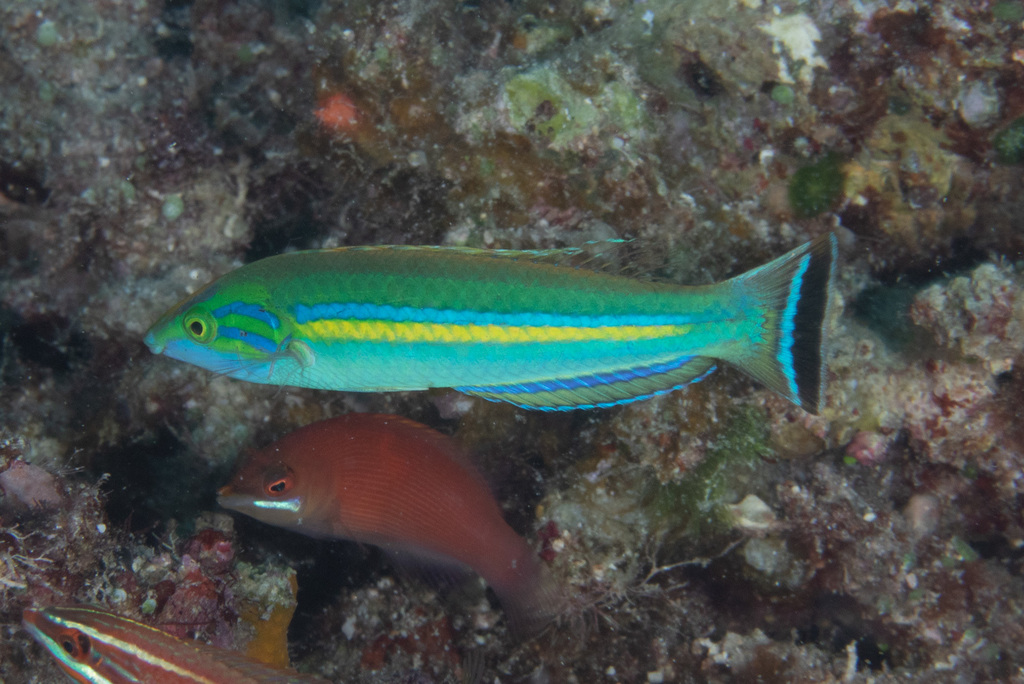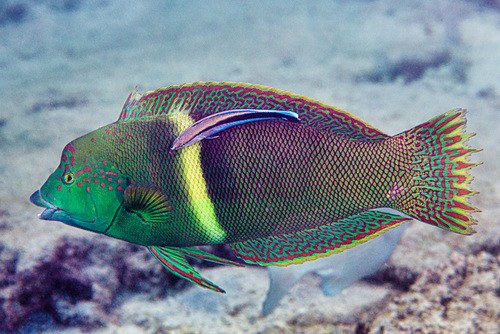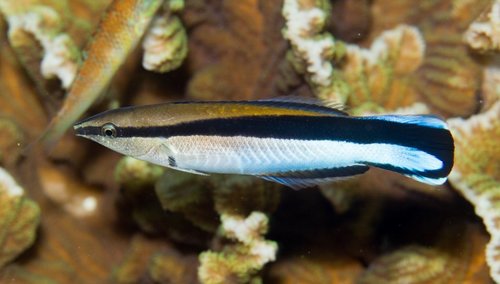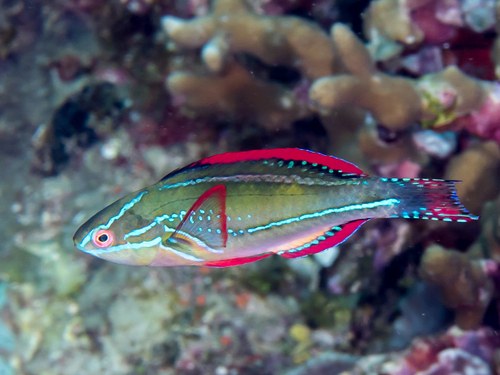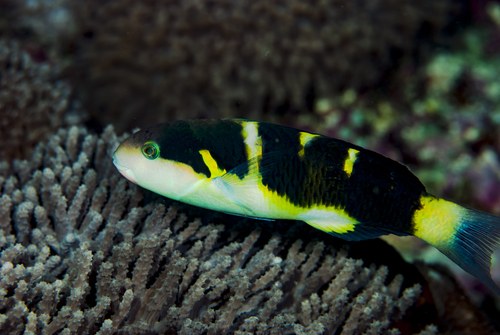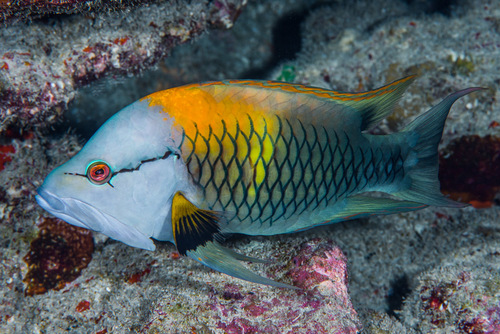
Slingjaw Wrasse
Epibulus insidiator
Limited
Scarce stock
Wild Caught
Moderate care
With Caution
SKU: D094B
The Slingjaw Wrasse is renowned for its unique jaw structure, perfect for feeding in coral reefs.
Pricing for Verified Importers
Log in to see wholesale prices and order.
Export Size
up to 25.0 cm
Origin
Indo-Pacific
Temperature
24.0–28.0°C
Min. Tank Size
200 L
Salinity
20.000–25.000 ppt
pH
8.10–8.40
Diet
carnivore
The Slingjaw Wrasse (Epibulus insidiator) is a captivating marine fish belonging to the Labridae family, found predominantly in the tropical waters of the Indo-Pacific region. This species thrives around coral reefs, where its striking appearance and remarkable feeding adaptations make it a notable inhabitant of these vibrant ecosystems. The most distinctive feature of the Slingjaw Wrasse is its highly protrusible jaw, which allows it to reach into crevices and extract prey with remarkable precision. This adaptation is particularly advantageous in complex aquatic environments, enabling the fish to feed on a variety of small invertebrates and planktonic organisms.
Slingjaw Wrasses exhibit a slender body shape and can display a range of colors, typically showcasing shades of green, blue, and yellow, which help them blend seamlessly into their coral surroundings. Adult individuals can grow up to 25 centimeters in length, and they are often seen darting among the corals, displaying curious and agile behavior. Their social structure is quite interesting, as they can often be found in small groups or pairs, showing complex interactions with one another and their environment.
In terms of habitat, the Slingjaw Wrasse prefers shallow lagoons and reef slopes, where it can find abundant food sources and suitable hiding spots. They are known to inhabit depths of up to 30 meters, making them accessible to both divers and aquarium enthusiasts. Their presence in the aquarium trade is growing, as hobbyists seek to replicate their natural habitat and enjoy their unique behaviors.
As a species of minor importance to local fisheries, the Slingjaw Wrasse is not heavily exploited, making it a sustainable choice for aquarium importers and retailers. Their adaptability and striking appearance make them an attractive addition to marine aquariums, where they can thrive if provided the right conditions.
Slingjaw Wrasses exhibit a slender body shape and can display a range of colors, typically showcasing shades of green, blue, and yellow, which help them blend seamlessly into their coral surroundings. Adult individuals can grow up to 25 centimeters in length, and they are often seen darting among the corals, displaying curious and agile behavior. Their social structure is quite interesting, as they can often be found in small groups or pairs, showing complex interactions with one another and their environment.
In terms of habitat, the Slingjaw Wrasse prefers shallow lagoons and reef slopes, where it can find abundant food sources and suitable hiding spots. They are known to inhabit depths of up to 30 meters, making them accessible to both divers and aquarium enthusiasts. Their presence in the aquarium trade is growing, as hobbyists seek to replicate their natural habitat and enjoy their unique behaviors.
As a species of minor importance to local fisheries, the Slingjaw Wrasse is not heavily exploited, making it a sustainable choice for aquarium importers and retailers. Their adaptability and striking appearance make them an attractive addition to marine aquariums, where they can thrive if provided the right conditions.
To successfully care for the Slingjaw Wrasse, aquarium importers and retailers should ensure stable water parameters. The ideal temperature range for this species is between 24°C to 28°C, with a salinity level of 1.020 to 1.025 ppt. The pH should be maintained between 8.1 and 8.4, as these conditions closely mimic their natural habitat. A minimum tank size of 200 liters is recommended to provide ample swimming space and hiding spots, which are crucial for reducing stress.
In terms of diet, the Slingjaw Wrasse is primarily carnivorous. They should be fed a varied diet consisting of high-quality frozen or live foods, such as brine shrimp, mysis shrimp, and small pieces of fish. Regular feeding will help maintain their health and vibrant colors. When introducing new Slingjaw Wrasses to a tank, it is important to acclimate them slowly to avoid shock. A quarantine period of at least two weeks is also advisable to monitor for any signs of disease before introducing them to the main display tank.
Compatibility with other tank inhabitants is generally good, but care should be taken when housing them with more aggressive species. Providing ample hiding places, such as live rock and coral structures, will help them feel secure and reduce territorial disputes.
In terms of diet, the Slingjaw Wrasse is primarily carnivorous. They should be fed a varied diet consisting of high-quality frozen or live foods, such as brine shrimp, mysis shrimp, and small pieces of fish. Regular feeding will help maintain their health and vibrant colors. When introducing new Slingjaw Wrasses to a tank, it is important to acclimate them slowly to avoid shock. A quarantine period of at least two weeks is also advisable to monitor for any signs of disease before introducing them to the main display tank.
Compatibility with other tank inhabitants is generally good, but care should be taken when housing them with more aggressive species. Providing ample hiding places, such as live rock and coral structures, will help them feel secure and reduce territorial disputes.
Slingjaw Wrasses are suitable for shipping due to their hardy nature, but care should be taken to maintain stable temperatures during transport, ideally between 24°C and 28°C. Packing density should allow for adequate space to minimize stress. CITES status is not applicable, as this species is not listed under CITES regulations.
Species Parameters
Max Adult Size
25.0 cm
Origin
Indo-Pacific
Habitat
reef
Diet
carnivore
Temp Min
24.0 °C
Temp Max
28.0 °C
Salinity Min
20.000
Salinity Max
25.000
pH Min
8.10
pH Max
8.40
Min Tank
200 L