Feather stars
lamprometra palmata
In Stock
Common stock
Wild Caught
Moderate care
With Caution
SKU: ML-MF-0552
Discover the elegance of Feather Stars, unique marine echinoderms from Bali.
Pricing for Verified Importers
Log in to see wholesale prices and order.
Export Size
up to 30.0 cm
Origin
Indo-Pacific
Temperature
24.0–28.0°C
Min. Tank Size
200 L
Salinity
30.000–35.000 ppt
pH
8.10–8.40
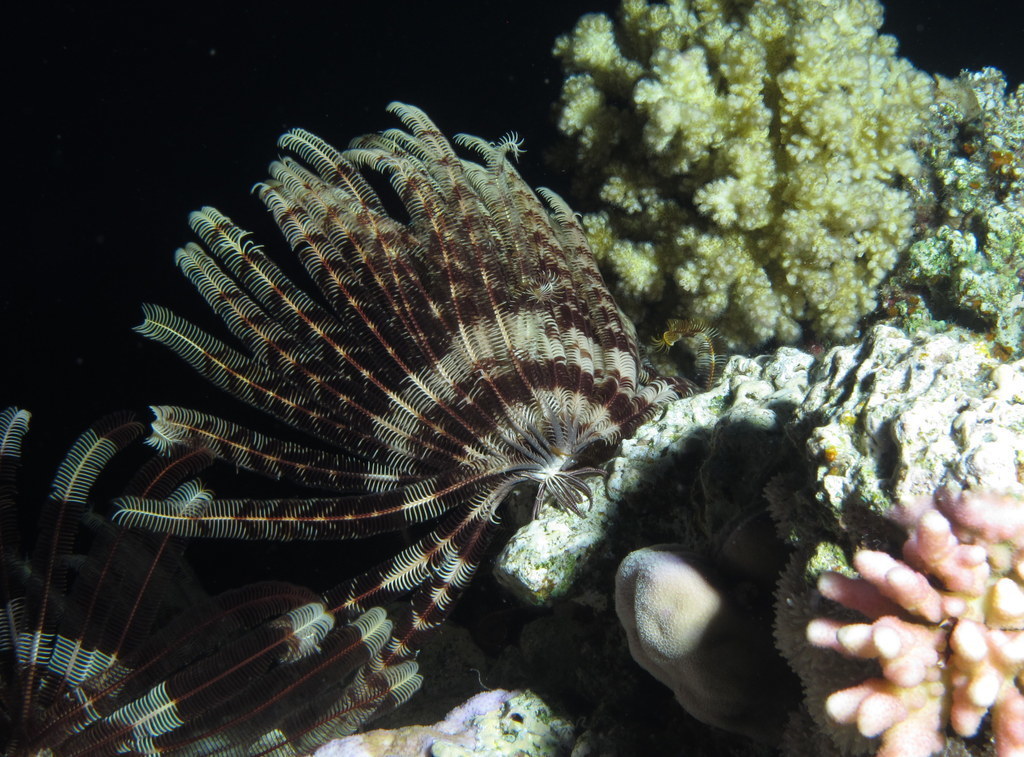
Feather stars, scientifically known as Lamprometra palmata, are captivating marine echinoderms that belong to the crinoid family. These stunning creatures are characterized by their feathery, branched arms that extend gracefully from a central disc. They are commonly found in shallow coral reefs and rocky substrates throughout the Indo-Pacific region, where they play a vital role in the marine ecosystem by filtering plankton from the water. Their vibrant colors, which can range from deep reds to bright yellows, make them a popular choice among aquarium enthusiasts.
In terms of appearance, Feather stars can grow to a maximum size of around 30 cm across their arms. Their bodies are covered in a hard calcareous skeleton, providing both structure and protection. The arms are lined with fine, feather-like structures known as pinnules, which aid in feeding and respiration. Behaviorally, Feather stars are known for their ability to grasp onto substrates with their cirri, enabling them to remain anchored in strong currents. They are predominantly nocturnal, extending their arms during the night to capture food while retracting them during the day.
Feather stars thrive in diverse habitats, typically found in areas with strong water movement where plankton is abundant. They prefer clear, warm waters with plenty of sunlight, allowing them to flourish in symbiotic relationships with surrounding coral reefs. Their presence in these ecosystems contributes to the overall health and biodiversity of marine environments, making them a critical species for conservation efforts.
Despite their delicate appearance, Feather stars are resilient and can adapt to various environmental conditions. Their unique morphology and ecological role make them an intriguing subject for study and display in aquariums, providing an excellent opportunity for importers and retailers to offer something truly special to their customers.
In terms of appearance, Feather stars can grow to a maximum size of around 30 cm across their arms. Their bodies are covered in a hard calcareous skeleton, providing both structure and protection. The arms are lined with fine, feather-like structures known as pinnules, which aid in feeding and respiration. Behaviorally, Feather stars are known for their ability to grasp onto substrates with their cirri, enabling them to remain anchored in strong currents. They are predominantly nocturnal, extending their arms during the night to capture food while retracting them during the day.
Feather stars thrive in diverse habitats, typically found in areas with strong water movement where plankton is abundant. They prefer clear, warm waters with plenty of sunlight, allowing them to flourish in symbiotic relationships with surrounding coral reefs. Their presence in these ecosystems contributes to the overall health and biodiversity of marine environments, making them a critical species for conservation efforts.
Despite their delicate appearance, Feather stars are resilient and can adapt to various environmental conditions. Their unique morphology and ecological role make them an intriguing subject for study and display in aquariums, providing an excellent opportunity for importers and retailers to offer something truly special to their customers.
Feather stars require specific water parameters to thrive in captivity, making them suitable for experienced aquarists. The ideal temperature range is between 24°C to 28°C, with a salinity level of 30-35 ppt. Maintaining stable pH levels between 8.1 and 8.4 is crucial for their health. For feeding, Feather stars are filter feeders, primarily consuming small planktonic organisms. It is essential to provide a well-established tank with plenty of live rock and a high flow rate to ensure they capture food efficiently.
When it comes to tank compatibility, Feather stars can coexist with a variety of peaceful marine species but should be kept away from aggressive fish that may disturb them. Acclimation is vital; introduce them slowly to minimize stress, ideally using a drip acclimation method. Quarantine new arrivals for at least two weeks to monitor for any signs of disease before adding them to a display tank.
Regular water quality checks and maintenance will help ensure a healthy environment. Additionally, providing a diverse diet supplemented with liquid foods designed for filter feeders can enhance their health and longevity in captivity.
When it comes to tank compatibility, Feather stars can coexist with a variety of peaceful marine species but should be kept away from aggressive fish that may disturb them. Acclimation is vital; introduce them slowly to minimize stress, ideally using a drip acclimation method. Quarantine new arrivals for at least two weeks to monitor for any signs of disease before adding them to a display tank.
Regular water quality checks and maintenance will help ensure a healthy environment. Additionally, providing a diverse diet supplemented with liquid foods designed for filter feeders can enhance their health and longevity in captivity.
Feather stars are sensitive to temperature fluctuations and require careful handling during shipping. It is recommended to pack them individually in breathable bags to minimize stress and ensure proper water flow. The ideal shipping temperature should be maintained between 24°C to 26°C. CITES status is not applicable, but ensure compliance with local regulations. Proper packing density is crucial to prevent damage during transit.
Species Parameters
Max Adult Size
30.0 cm
Origin
Indo-Pacific
Temp Min
24.0 °C
Temp Max
28.0 °C
Salinity Min
30.000
Salinity Max
35.000
pH Min
8.10
pH Max
8.40
Min Tank
200 L