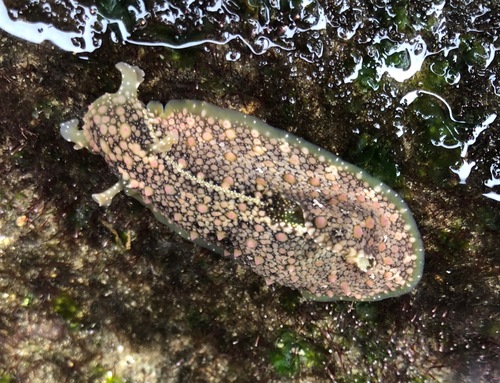
Sea Hare Nudibranch
Dolabrifera dolabrifera
In Stock
Occasional stock
Wild Caught
Moderate care
With Caution
SKU: E298
The Sea Hare Nudibranch is a vibrant, fascinating mollusk known for its unique appearance and intriguing behavior.
Pricing for Verified Importers
Log in to see wholesale prices and order.
Export Size
up to 15.0 cm
Origin
Coral Triangle
Temperature
24.0–28.0°C
Min. Tank Size
100 L
Salinity
30.000–35.000 ppt
pH
7.80–8.50
Diet
herbivore
The Sea Hare Nudibranch (Dolabrifera dolabrifera) is a remarkable marine invertebrate found primarily in the shallow waters of the Coral Triangle, particularly around Bali, Indonesia. This species is notable for its large, soft-bodied appearance, which can exhibit a variety of colors, including shades of green, brown, and purple. The Sea Hare's body is covered in a unique texture that resembles a velvety surface, making it both visually striking and a subject of interest for marine enthusiasts and researchers alike.
In terms of natural history, Sea Hares are herbivorous grazers, typically feeding on various types of algae. They play a crucial role in their ecosystem by helping to control algal growth on coral reefs. Their feeding behavior is quite fascinating; they use their radula, a specialized feeding organ, to scrape algae off surfaces. Additionally, they have developed a unique defense mechanism: when threatened, Sea Hares can release a purple ink as a deterrent, similar to their cephalopod relatives.
The preferred habitat of the Sea Hare Nudibranch includes shallow coastal waters, seagrass beds, and coral reefs, where they can easily access their food sources. They are generally found at depths of up to 15 meters, often hiding under rocks or within crevices to avoid predators. Their ability to blend into their surroundings enhances their survival in these environments.
Behaviorally, Sea Hares exhibit a slow-moving lifestyle, often seen gliding along the substrate. They can also engage in interesting social behaviors, such as mating displays, where they intertwine their bodies during reproduction. This species' unique characteristics make it a captivating addition to marine aquariums, contributing to biodiversity and educational value in captive environments.
In terms of natural history, Sea Hares are herbivorous grazers, typically feeding on various types of algae. They play a crucial role in their ecosystem by helping to control algal growth on coral reefs. Their feeding behavior is quite fascinating; they use their radula, a specialized feeding organ, to scrape algae off surfaces. Additionally, they have developed a unique defense mechanism: when threatened, Sea Hares can release a purple ink as a deterrent, similar to their cephalopod relatives.
The preferred habitat of the Sea Hare Nudibranch includes shallow coastal waters, seagrass beds, and coral reefs, where they can easily access their food sources. They are generally found at depths of up to 15 meters, often hiding under rocks or within crevices to avoid predators. Their ability to blend into their surroundings enhances their survival in these environments.
Behaviorally, Sea Hares exhibit a slow-moving lifestyle, often seen gliding along the substrate. They can also engage in interesting social behaviors, such as mating displays, where they intertwine their bodies during reproduction. This species' unique characteristics make it a captivating addition to marine aquariums, contributing to biodiversity and educational value in captive environments.
To successfully care for the Sea Hare Nudibranch, importers and retailers should maintain specific water parameters. Ideal temperatures range from 24°C to 28°C, with a pH level between 7.8 and 8.5. As a marine invertebrate, it thrives in saltwater conditions, making a salinity of 30-35 ppt essential. A minimum tank size of 100 liters is recommended to provide ample grazing space and stable water conditions.
Feeding the Sea Hare is straightforward, as they primarily consume macroalgae. Importers should ensure a steady supply of fresh algae, such as Caulerpa or other green algae, to meet their dietary needs. Compatibility-wise, Sea Hares generally do well in community tanks but should be housed with peaceful species, avoiding aggressive fish that may harass them.
Acclimation is crucial when introducing Sea Hares to a new environment. Gradual acclimation over several hours is recommended to minimize stress. Quarantine prior to introduction to the main tank is also advised to prevent potential disease transfer. By following these guidelines, retailers can ensure the health and vitality of the Sea Hare Nudibranch in their care.
Feeding the Sea Hare is straightforward, as they primarily consume macroalgae. Importers should ensure a steady supply of fresh algae, such as Caulerpa or other green algae, to meet their dietary needs. Compatibility-wise, Sea Hares generally do well in community tanks but should be housed with peaceful species, avoiding aggressive fish that may harass them.
Acclimation is crucial when introducing Sea Hares to a new environment. Gradual acclimation over several hours is recommended to minimize stress. Quarantine prior to introduction to the main tank is also advised to prevent potential disease transfer. By following these guidelines, retailers can ensure the health and vitality of the Sea Hare Nudibranch in their care.
The Sea Hare Nudibranch is suitable for shipping, but care must be taken to ensure their well-being during transit. Packing density should be low to avoid stress, with adequate cushioning to prevent damage. Temperature sensitivity requires maintaining a stable temperature between 24°C to 28°C during shipping. This species is not listed under CITES, making export regulations more straightforward.
Species Parameters
Max Adult Size
15.0 cm
Origin
Coral Triangle
Habitat
reef
Diet
herbivore
Temp Min
24.0 °C
Temp Max
28.0 °C
Salinity Min
30.000
Salinity Max
35.000
pH Min
7.80
pH Max
8.50
Min Tank
100 L