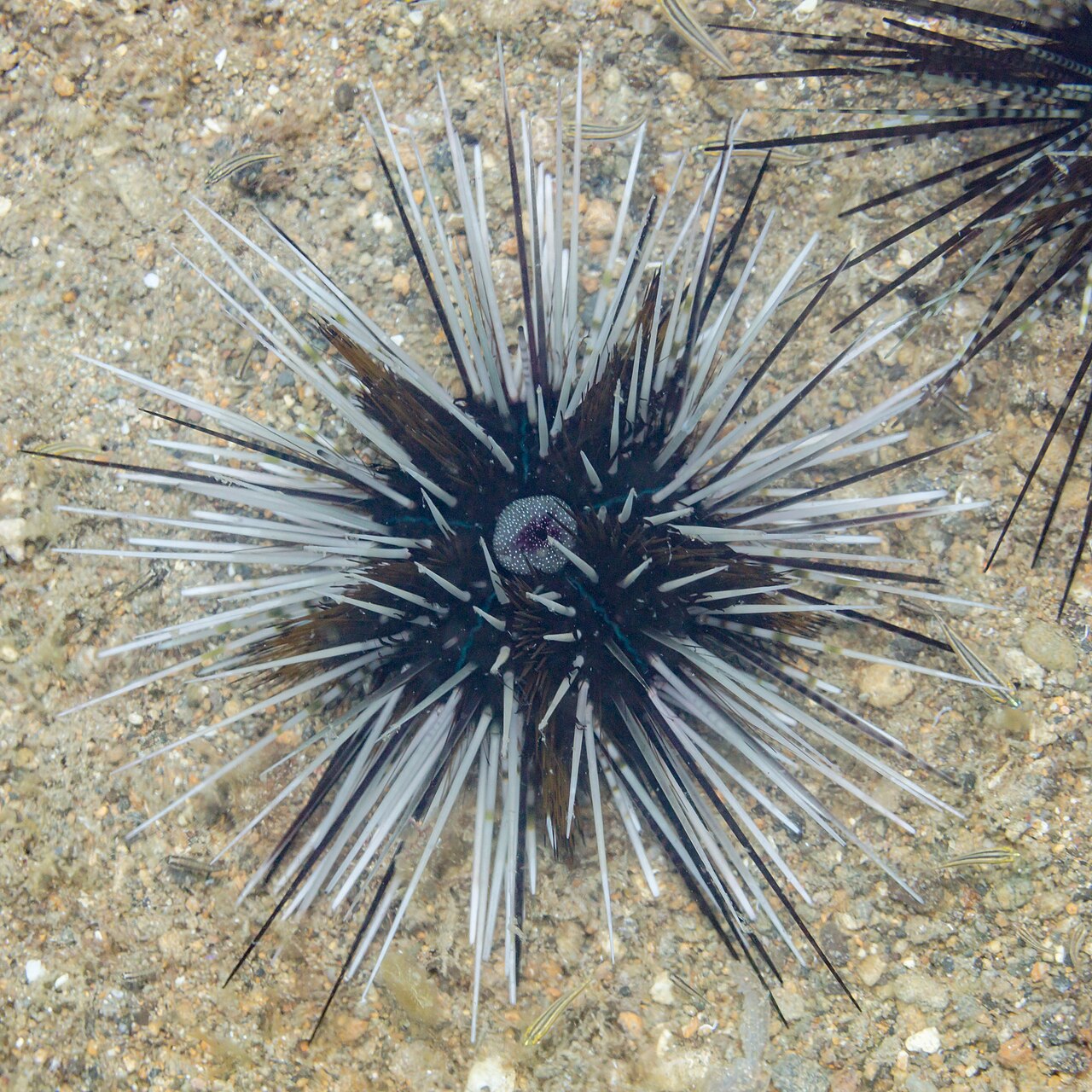
Variable Sea Urchin
echinothrix calamaris
In Stock
Common stock
Wild Caught
Moderate care
With Caution
SKU: ML-MF-0528
The Variable Sea Urchin stands out with its vibrant colors and unique spiny structure, making it a captivating addition to marine displays.
Pricing for Verified Importers
Log in to see wholesale prices and order.
Export Size
up to 15.0 cm
Origin
Coral Triangle
Temperature
24.0–28.0°C
Min. Tank Size
100 L
Salinity
30.000–35.000 ppt
pH
8.10–8.40
Diet
herbivore
Echinothrix calamaris, commonly known as the Variable Sea Urchin, is a fascinating marine echinoderm found primarily in the shallow waters of the Coral Triangle. This species is characterized by its strikingly variable coloration, which can range from bright hues of red, green, and purple, to more muted tones, allowing it to blend seamlessly with its rocky surroundings. Its robust, spiny exterior serves not only as a protective mechanism against predators but also as a beautiful display that attracts aquarists and marine enthusiasts alike.
In terms of behavior, the Variable Sea Urchin is primarily nocturnal, foraging for food during the night while resting in crevices or under rocks during the day. This behavior helps it evade potential threats and conserve energy. The diet of this sea urchin mainly consists of algae, detritus, and small invertebrates, which it grazes from the substrate using its specialized feeding apparatus known as Aristotle's lantern.
The natural habitat of Echinothrix calamaris includes coral reefs, rocky shores, and seagrass beds, where it thrives in diverse marine environments. These areas provide ample food sources and shelter, allowing the sea urchin to flourish. The presence of Echinothrix calamaris is often indicative of a healthy reef ecosystem, contributing to its overall biodiversity.
Due to its unique appearance and ecological importance, the Variable Sea Urchin is increasingly sought after in the aquarium trade. Its adaptability to various marine environments makes it a viable candidate for both home aquariums and larger public displays. However, understanding its natural history and habitat is crucial for successful care and maintenance in captivity.
In terms of behavior, the Variable Sea Urchin is primarily nocturnal, foraging for food during the night while resting in crevices or under rocks during the day. This behavior helps it evade potential threats and conserve energy. The diet of this sea urchin mainly consists of algae, detritus, and small invertebrates, which it grazes from the substrate using its specialized feeding apparatus known as Aristotle's lantern.
The natural habitat of Echinothrix calamaris includes coral reefs, rocky shores, and seagrass beds, where it thrives in diverse marine environments. These areas provide ample food sources and shelter, allowing the sea urchin to flourish. The presence of Echinothrix calamaris is often indicative of a healthy reef ecosystem, contributing to its overall biodiversity.
Due to its unique appearance and ecological importance, the Variable Sea Urchin is increasingly sought after in the aquarium trade. Its adaptability to various marine environments makes it a viable candidate for both home aquariums and larger public displays. However, understanding its natural history and habitat is crucial for successful care and maintenance in captivity.
Importers and retailers should ensure that the Variable Sea Urchin is kept in well-maintained marine environments with stable water parameters. Ideal water temperature ranges from 24°C to 28°C, with a salinity level between 30-35 ppt. Maintaining a pH level between 8.1 and 8.4 is also essential for their well-being. Regular water quality testing is recommended to prevent any fluctuations that could stress the sea urchin.
Feeding Echinothrix calamaris involves providing a diet rich in algae, commercial marine foods, and occasional supplements of finely chopped seafood. A balanced diet is crucial for their health and vibrant coloration. When introducing them to a new aquarium, gradual acclimation is vital; this can be achieved by floating the bag in the tank for 15-20 minutes before releasing them into the water. Quarantine procedures should be followed to prevent the introduction of any pathogens into established tanks.
Compatibility with other marine species is generally favorable, as the Variable Sea Urchin is peaceful and does not exhibit aggressive behavior. However, caution should be taken with predatory fish that may see them as a food source. Providing ample hiding places can help reduce stress and encourage natural behaviors.
Feeding Echinothrix calamaris involves providing a diet rich in algae, commercial marine foods, and occasional supplements of finely chopped seafood. A balanced diet is crucial for their health and vibrant coloration. When introducing them to a new aquarium, gradual acclimation is vital; this can be achieved by floating the bag in the tank for 15-20 minutes before releasing them into the water. Quarantine procedures should be followed to prevent the introduction of any pathogens into established tanks.
Compatibility with other marine species is generally favorable, as the Variable Sea Urchin is peaceful and does not exhibit aggressive behavior. However, caution should be taken with predatory fish that may see them as a food source. Providing ample hiding places can help reduce stress and encourage natural behaviors.
The Variable Sea Urchin is suitable for shipping, provided that proper care is taken in packing. It is important to maintain a stable temperature between 24°C and 28°C during transit to minimize stress. A packing density of one sea urchin per 2-5 liters of water is recommended to ensure adequate space and oxygen. Echinothrix calamaris is not listed under CITES, making it easier for exporters to handle without additional regulatory concerns.
Species Parameters
Max Adult Size
15.0 cm
Origin
Coral Triangle
Diet
herbivore
Temp Min
24.0 °C
Temp Max
28.0 °C
Salinity Min
30.000
Salinity Max
35.000
pH Min
8.10
pH Max
8.40
Min Tank
100 L