Pom-pom Crab
Lybia edmondsoni
In Stock
Common stock
Wild Caught
Moderate care
With Caution
SKU: CB-MF-0449
The Pom-pom Crab is a unique species known for its anemone-carrying behavior, making it a fascinating addition to any marine aquarium.
Pricing for Verified Importers
Log in to see wholesale prices and order.
Export Size
up to 5.0 cm
Origin
Hawaiian Islands
Temperature
24.0–28.0°C
Min. Tank Size
50 L
Salinity
30.000–35.000 ppt
pH
8.10–8.40
Diet
omnivore
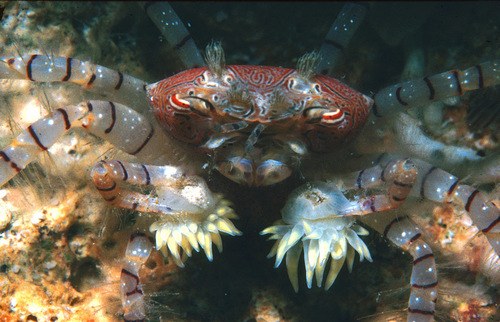
The Pom-pom Crab, scientifically known as Lybia edmondsoni, is a small, colorful crab that belongs to the family Xanthidae and is endemic to the Hawaiian Islands. This species is particularly notable for its striking appearance and behavior, as it carries a sea anemone in each of its claws, resembling pom-poms or boxing gloves. This unique adaptation not only provides camouflage from predators but also serves as a mutualistic relationship where the anemones benefit from the crab's mobility while providing defense with their stinging cells.
In terms of appearance, Pom-pom Crabs feature a small, rounded carapace adorned with vibrant colors and patterns that enhance their visual appeal. They typically reach a maximum size of about 5 cm. Their claws are disproportionately large compared to their body size, and they are the primary means by which these crabs interact with their environment. When threatened, they can retract into their shells or use their anemones as a defense mechanism against larger predators.
Pom-pom Crabs inhabit shallow coral reefs and sandy substrates, typically at depths of 1-15 meters. They are often found in close association with their chosen anemones, which they transport and tend to throughout their lives. This crab's behavior is a remarkable example of symbiosis within marine ecosystems, showcasing the intricate relationships that exist in coral reef habitats.
Socially, these crabs are somewhat territorial and may exhibit aggressive behaviors towards others of their kind. Despite this, they can coexist with various reef fish and other invertebrates, making them suitable for community tanks that mimic their natural habitat.
In terms of appearance, Pom-pom Crabs feature a small, rounded carapace adorned with vibrant colors and patterns that enhance their visual appeal. They typically reach a maximum size of about 5 cm. Their claws are disproportionately large compared to their body size, and they are the primary means by which these crabs interact with their environment. When threatened, they can retract into their shells or use their anemones as a defense mechanism against larger predators.
Pom-pom Crabs inhabit shallow coral reefs and sandy substrates, typically at depths of 1-15 meters. They are often found in close association with their chosen anemones, which they transport and tend to throughout their lives. This crab's behavior is a remarkable example of symbiosis within marine ecosystems, showcasing the intricate relationships that exist in coral reef habitats.
Socially, these crabs are somewhat territorial and may exhibit aggressive behaviors towards others of their kind. Despite this, they can coexist with various reef fish and other invertebrates, making them suitable for community tanks that mimic their natural habitat.
Importers and retailers should maintain specific water parameters to ensure the health and well-being of Pom-pom Crabs. Ideal water temperature ranges from 24°C to 28°C, with salinity levels between 30 to 35 ppt. The pH should be maintained between 8.1 and 8.4. A minimum tank size of 50 liters is recommended to provide adequate space for these crabs to roam and establish territory.
Feeding Pom-pom Crabs involves providing a varied diet, including finely chopped seafood, high-quality pellets, and algae-based foods. They are omnivorous and will benefit from a mix of protein-rich and plant-based foods. It is essential to ensure that they have access to their preferred anemones, as these are crucial for their defense and overall health.
When introducing Pom-pom Crabs to a new aquarium, a slow acclimation process is vital to reduce stress. They should be quarantined for at least two weeks before being added to the main tank to prevent any potential disease transmission. Compatibility is generally good with reef-safe fish and invertebrates; however, caution should be exercised with aggressive species that may pose a threat to the crabs.
Feeding Pom-pom Crabs involves providing a varied diet, including finely chopped seafood, high-quality pellets, and algae-based foods. They are omnivorous and will benefit from a mix of protein-rich and plant-based foods. It is essential to ensure that they have access to their preferred anemones, as these are crucial for their defense and overall health.
When introducing Pom-pom Crabs to a new aquarium, a slow acclimation process is vital to reduce stress. They should be quarantined for at least two weeks before being added to the main tank to prevent any potential disease transmission. Compatibility is generally good with reef-safe fish and invertebrates; however, caution should be exercised with aggressive species that may pose a threat to the crabs.
Pom-pom Crabs are suitable for shipping, provided they are packed securely to minimize movement during transit. Optimal packing density should allow for adequate water exchange while avoiding overcrowding. Sensitivity to temperature changes necessitates maintaining a stable temperature between 24°C and 28°C during shipping. This species is not listed under CITES, simplifying export procedures.
Species Parameters
Max Adult Size
5.0 cm
Origin
Hawaiian Islands
Diet
omnivore
Temp Min
24.0 °C
Temp Max
28.0 °C
Salinity Min
30.000
Salinity Max
35.000
pH Min
8.10
pH Max
8.40
Min Tank
50 L