Bigfin Squid
sepioteuthis lessoniana
In Stock
Common stock
Wild Caught
Moderate care
With Caution
SKU: ML-MF-0544
The Bigfin Squid captivates with its striking appearance and unique behaviors.
Pricing for Verified Importers
Log in to see wholesale prices and order.
Export Size
up to 40.0 cm
Origin
Indo-Pacific
Temperature
24.0–30.0°C
Min. Tank Size
200 L
Salinity
30.000–35.000 ppt
pH
7.80–8.40
Diet
carnivore
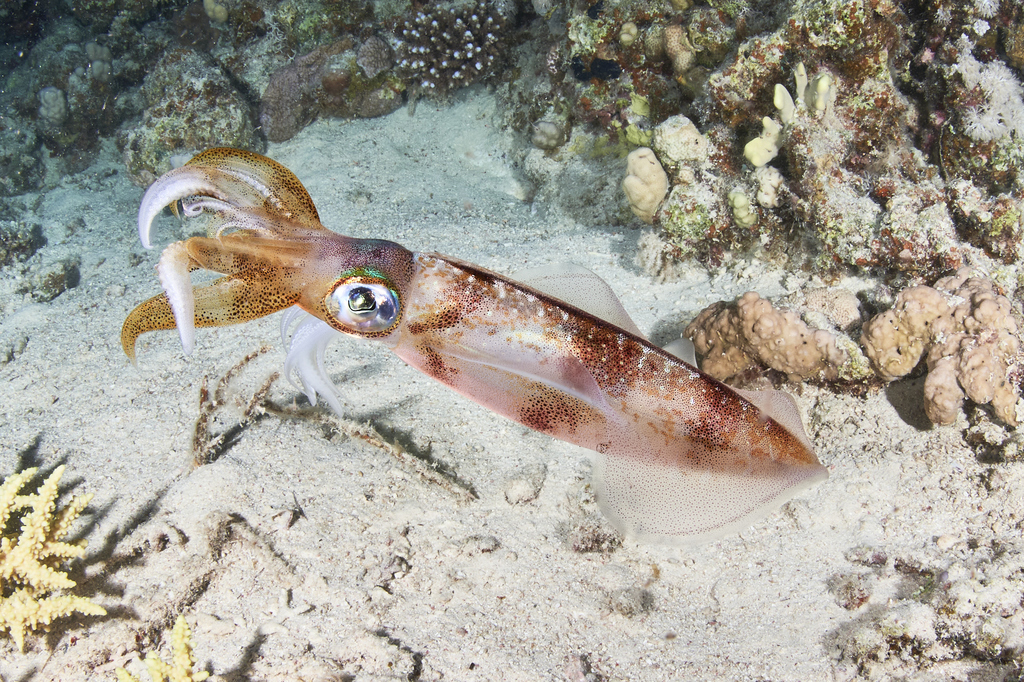
The Bigfin Squid, scientifically known as Sepioteuthis lessoniana, is a fascinating marine cephalopod that inhabits the warm, shallow waters of the Indo-Pacific region, particularly around coral reefs and sandy bottoms. This species is easily recognized by its long, slender body and large fins that extend from the sides, giving it a distinctive appearance that sets it apart from other squids. With its iridescent skin that can change color, the Bigfin Squid is not only a visual delight but also employs this ability for communication and camouflage in its natural environment.
In terms of behavior, the Bigfin Squid is known for its agility and speed in the water, using jet propulsion to escape predators quickly. This species is primarily nocturnal, actively hunting for small fish and crustaceans during the night. Its diet consists mainly of small fish, shrimp, and other marine organisms, making it a carnivorous species that plays a role in balancing the marine ecosystem.
The Bigfin Squid prefers warm waters with temperatures ranging from 24 to 30 degrees Celsius and can be found at depths of up to 50 meters. They are often seen in schools, which provides them some protection from predators. Their habitat is typically characterized by rich biodiversity, where they can find ample food and breeding grounds.
As a species, the Bigfin Squid is not only important ecologically but also economically. It is harvested for food in various parts of the world, valued for its tender flesh and culinary versatility. Its unique characteristics and culinary appeal make it a sought-after species for aquarists and seafood enthusiasts alike.
In terms of behavior, the Bigfin Squid is known for its agility and speed in the water, using jet propulsion to escape predators quickly. This species is primarily nocturnal, actively hunting for small fish and crustaceans during the night. Its diet consists mainly of small fish, shrimp, and other marine organisms, making it a carnivorous species that plays a role in balancing the marine ecosystem.
The Bigfin Squid prefers warm waters with temperatures ranging from 24 to 30 degrees Celsius and can be found at depths of up to 50 meters. They are often seen in schools, which provides them some protection from predators. Their habitat is typically characterized by rich biodiversity, where they can find ample food and breeding grounds.
As a species, the Bigfin Squid is not only important ecologically but also economically. It is harvested for food in various parts of the world, valued for its tender flesh and culinary versatility. Its unique characteristics and culinary appeal make it a sought-after species for aquarists and seafood enthusiasts alike.
When caring for Bigfin Squid in an aquarium setting, it is crucial to replicate their natural habitat as closely as possible. The ideal water parameters include a temperature range of 24-30°C, a salinity level of 30-35 ppt, and a pH level between 7.8 and 8.4. A minimum tank size of 200 liters is recommended to provide ample space for swimming and hiding.
Feeding should consist of a varied diet of live or frozen foods, such as shrimp, small fish, and other marine protein sources, ensuring that they receive adequate nutrition. Compatibility with other species can be challenging, as Bigfin Squid may exhibit territorial behavior. It is advisable to pair them with larger, non-aggressive marine fish to avoid conflicts.
Acclimation is key when introducing Bigfin Squid to a new environment. A slow drip method is recommended to adjust them gradually to the new water conditions. Quarantine procedures should be followed to prevent the introduction of diseases, as these cephalopods can be sensitive to changes in their environment. Regular monitoring of water quality is essential for maintaining their health and well-being.
Feeding should consist of a varied diet of live or frozen foods, such as shrimp, small fish, and other marine protein sources, ensuring that they receive adequate nutrition. Compatibility with other species can be challenging, as Bigfin Squid may exhibit territorial behavior. It is advisable to pair them with larger, non-aggressive marine fish to avoid conflicts.
Acclimation is key when introducing Bigfin Squid to a new environment. A slow drip method is recommended to adjust them gradually to the new water conditions. Quarantine procedures should be followed to prevent the introduction of diseases, as these cephalopods can be sensitive to changes in their environment. Regular monitoring of water quality is essential for maintaining their health and well-being.
Bigfin Squid are sensitive to temperature fluctuations and should be shipped at a stable temperature of 24-26°C. Packing density should allow for adequate space to prevent stress during transport. It is essential to use insulated containers with oxygen to ensure their survival. Currently, there are no CITES restrictions on this species, making it suitable for export.
Species Parameters
Max Adult Size
40.0 cm
Origin
Indo-Pacific
Diet
carnivore
Temp Min
24.0 °C
Temp Max
30.0 °C
Salinity Min
30.000
Salinity Max
35.000
pH Min
7.80
pH Max
8.40
Min Tank
200 L