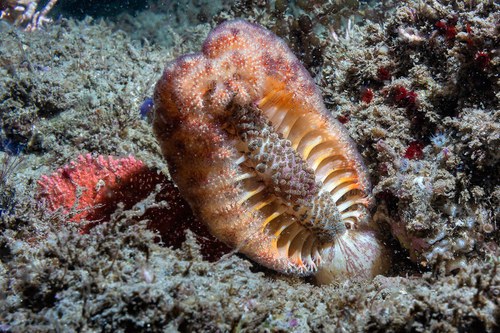
comb jelly
beroe cucumis
In Stock
Common stock
Wild Caught
Moderate care
With Caution
SKU: ML-MF-0575
The comb jelly (Beroe cucumis) is a fascinating marine organism known for its unique jelly-like body and captivating bioluminescence.
Pricing for Verified Importers
Log in to see wholesale prices and order.
Export Size
up to 15.0 cm
Origin
Indo-Pacific
Temperature
20.0–25.0°C
Min. Tank Size
50 L
Salinity
30.000–35.000 ppt
pH
7.80–8.40
Beroe cucumis, commonly known as the comb jelly, is a species of ctenophore found predominantly in the warm waters of the Indo-Pacific region. Characterized by its gelatinous, transparent body, this species can grow up to 15 cm in length. Its body is covered in rows of cilia, which create a shimmering effect when disturbed in the water, making it a mesmerizing sight for aquarists and researchers alike. The comb jelly lacks tentacles, setting it apart from many other jellyfish species, and instead has a specialized feeding structure that allows it to capture prey effectively.
In terms of behavior, Beroe cucumis is primarily a solitary organism, frequently observed drifting with ocean currents. It feeds on small zooplankton, primarily other ctenophores and larval fish, using its unique feeding apparatus to engulf its prey. This species exhibits a fascinating bioluminescent display when threatened, illuminating its body in a stunning array of colors, which can both deter predators and attract mates.
Habitat-wise, comb jellies thrive in a variety of marine environments, from coastal waters to deeper oceanic zones. They prefer warm, temperate waters and are often found in areas rich in plankton, which is essential for their diet. The presence of Beroe cucumis is an indicator of a healthy marine ecosystem, as they play a crucial role in the food web by controlling zooplankton populations.
Overall, the comb jelly is not only aesthetically pleasing but also ecologically significant, making it a valuable addition to marine aquariums seeking to showcase unique and diverse marine life.
In terms of behavior, Beroe cucumis is primarily a solitary organism, frequently observed drifting with ocean currents. It feeds on small zooplankton, primarily other ctenophores and larval fish, using its unique feeding apparatus to engulf its prey. This species exhibits a fascinating bioluminescent display when threatened, illuminating its body in a stunning array of colors, which can both deter predators and attract mates.
Habitat-wise, comb jellies thrive in a variety of marine environments, from coastal waters to deeper oceanic zones. They prefer warm, temperate waters and are often found in areas rich in plankton, which is essential for their diet. The presence of Beroe cucumis is an indicator of a healthy marine ecosystem, as they play a crucial role in the food web by controlling zooplankton populations.
Overall, the comb jelly is not only aesthetically pleasing but also ecologically significant, making it a valuable addition to marine aquariums seeking to showcase unique and diverse marine life.
Importers and retailers should ensure that Beroe cucumis is kept in stable marine conditions to thrive. The ideal water parameters include a temperature range of 20-25°C, with a salinity level between 30-35 ppt. Maintaining a pH level between 7.8 and 8.4 is also crucial for their well-being. The comb jelly is a filter feeder, primarily consuming small zooplankton, so providing a diet rich in live food such as copepods and other small marine organisms is essential for their health.
Compatibility is relatively straightforward, as Beroe cucumis is generally peaceful and can coexist with many marine species. However, care should be taken to avoid placing them with larger predatory fish that may see them as food. Acclimation is vital; gradual introduction to the aquarium environment is recommended to reduce stress. A drip acclimation method is ideal for this species.
Quarantine is also advised for new arrivals to prevent the introduction of potential pathogens into the main display tanks. A quarantine period of at least two weeks allows for close monitoring of the comb jelly's health and ensures it is free from diseases before being added to the main aquarium.
Compatibility is relatively straightforward, as Beroe cucumis is generally peaceful and can coexist with many marine species. However, care should be taken to avoid placing them with larger predatory fish that may see them as food. Acclimation is vital; gradual introduction to the aquarium environment is recommended to reduce stress. A drip acclimation method is ideal for this species.
Quarantine is also advised for new arrivals to prevent the introduction of potential pathogens into the main display tanks. A quarantine period of at least two weeks allows for close monitoring of the comb jelly's health and ensures it is free from diseases before being added to the main aquarium.
Beroe cucumis is sensitive to temperature fluctuations during shipping and should be packed with care. A standard packing density of 1 comb jelly per 2-3 liters of water is recommended to minimize stress. Ideal shipping temperatures should be maintained between 20-25°C. While this species is not listed under CITES, it is crucial to follow local regulations regarding marine life export to ensure sustainable practices.
Species Parameters
Max Adult Size
15.0 cm
Origin
Indo-Pacific
Temp Min
20.0 °C
Temp Max
25.0 °C
Salinity Min
30.000
Salinity Max
35.000
pH Min
7.80
pH Max
8.40
Min Tank
50 L