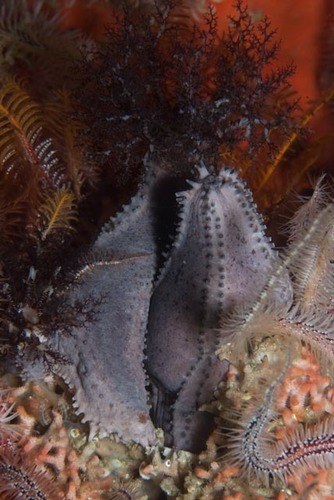
Red Sea Cucumber
Pentacta anceps
In Stock
Common stock
Wild Caught
Moderate care
SKU: CB-SC-0163
The Red Sea Cucumber (Pentacta anceps) is a unique invertebrate prized for its intriguing appearance and ecological role.
Pricing for Verified Importers
Log in to see wholesale prices and order.
Export Size
up to 30.0 cm
Origin
Indo-Pacific
Temperature
24.0–28.0°C
Min. Tank Size
200 L
pH
7.50–8.50
The Red Sea Cucumber, scientifically known as Pentacta anceps, is a fascinating marine invertebrate found primarily in the Indo-Pacific region. This species is characterized by its elongated body, which can display a variety of colors ranging from reddish-brown to vibrant red. Its distinctive pentamerous symmetry and soft, leathery skin make it easy to identify among other marine life. As a member of the echinoderm family, it plays a vital role in the marine ecosystem by recycling nutrients and contributing to the health of coral reefs.
In terms of behavior, the Red Sea Cucumber is primarily a benthic organism, dwelling on the ocean floor. It feeds on organic matter and detritus, playing a crucial role in substrate cleaning. Unlike many other marine organisms, it tends to be quite passive, often remaining buried in the sand or hiding among reef structures during the day. At night, it may emerge to forage, showcasing its adaptability in various environments.
The habitat of the Red Sea Cucumber typically includes sandy or muddy substrates in shallow coastal waters, often found in seagrass beds or coral reef systems. This species is known to thrive in a range of depths, from intertidal zones to deeper waters, which further enhances its ecological importance. Its presence indicates a healthy marine ecosystem, as it contributes to nutrient cycling and sediment turnover.
Overall, the Red Sea Cucumber is not only a visually striking addition to any aquatic exhibit but also a crucial component of marine biodiversity, making it an excellent choice for aquarium importers and wholesalers looking to enhance their offerings.
In terms of behavior, the Red Sea Cucumber is primarily a benthic organism, dwelling on the ocean floor. It feeds on organic matter and detritus, playing a crucial role in substrate cleaning. Unlike many other marine organisms, it tends to be quite passive, often remaining buried in the sand or hiding among reef structures during the day. At night, it may emerge to forage, showcasing its adaptability in various environments.
The habitat of the Red Sea Cucumber typically includes sandy or muddy substrates in shallow coastal waters, often found in seagrass beds or coral reef systems. This species is known to thrive in a range of depths, from intertidal zones to deeper waters, which further enhances its ecological importance. Its presence indicates a healthy marine ecosystem, as it contributes to nutrient cycling and sediment turnover.
Overall, the Red Sea Cucumber is not only a visually striking addition to any aquatic exhibit but also a crucial component of marine biodiversity, making it an excellent choice for aquarium importers and wholesalers looking to enhance their offerings.
For the successful care of the Red Sea Cucumber (Pentacta anceps), maintaining optimal water parameters is essential. The ideal temperature range is between 24°C to 28°C, with a pH level between 7.5 and 8.5. Although this species is primarily found in marine environments, it is important to ensure a stable salinity, which typically ranges from 30 to 34 ppt in natural habitats.
Feeding the Red Sea Cucumber should focus on a diet rich in detritus, including fine particles of algae, organic debris, and commercially available marine food. It is crucial to avoid overfeeding to prevent water quality issues. Compatibility with other marine life is relatively good, as they are generally peaceful; however, caution should be exercised when housing them with more aggressive species.
Acclimation is vital when introducing new individuals to a tank. Gradually acclimate them to the new environment over a few hours to minimize stress. Quarantine is recommended for new arrivals to prevent the introduction of diseases. A minimum tank size of 200 liters is advisable to provide ample space and stable conditions for these invertebrates, ensuring a healthy and thriving habitat.
Feeding the Red Sea Cucumber should focus on a diet rich in detritus, including fine particles of algae, organic debris, and commercially available marine food. It is crucial to avoid overfeeding to prevent water quality issues. Compatibility with other marine life is relatively good, as they are generally peaceful; however, caution should be exercised when housing them with more aggressive species.
Acclimation is vital when introducing new individuals to a tank. Gradually acclimate them to the new environment over a few hours to minimize stress. Quarantine is recommended for new arrivals to prevent the introduction of diseases. A minimum tank size of 200 liters is advisable to provide ample space and stable conditions for these invertebrates, ensuring a healthy and thriving habitat.
The Red Sea Cucumber is suitable for shipping due to its hardy nature, but care must be taken during transport to maintain stable temperatures between 24°C and 28°C. Packing density should be low to avoid stress and damage during transit. It is important to monitor humidity and oxygen levels in the shipping containers. Currently, there are no CITES restrictions on this species, making it easier for export.
Species Parameters
Max Adult Size
30.0 cm
Origin
Indo-Pacific
Temp Min
24.0 °C
Temp Max
28.0 °C
pH Min
7.50
pH Max
8.50
Min Tank
200 L