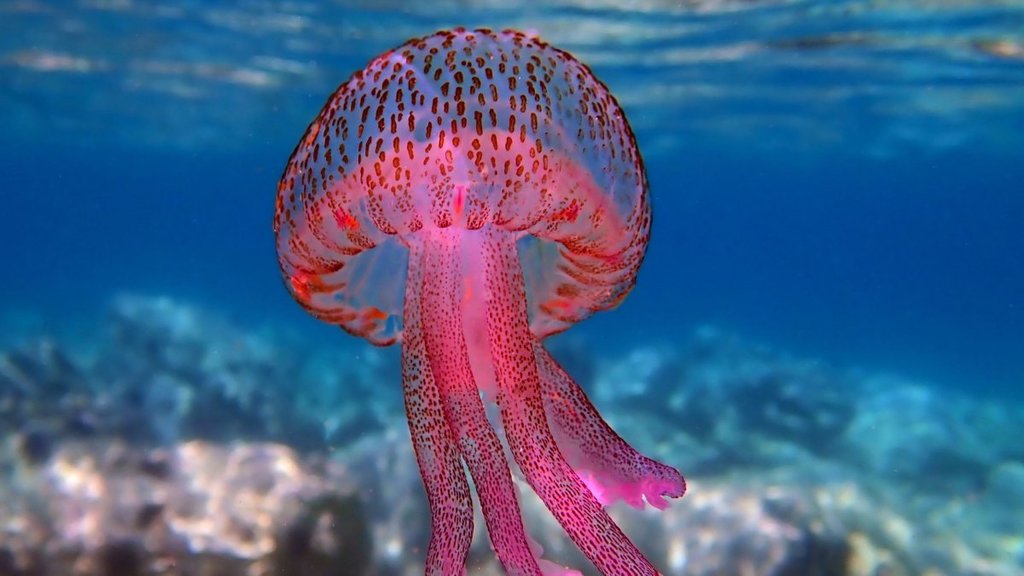

Aurelia Jellyfish
aurelia aurita
In Stock
Common stock
Wild Caught
Moderate care
With Caution
SKU: ML-MF-0576
The Aurelia Jellyfish captivates with its mesmerizing bell and graceful movements.
Pricing for Verified Importers
Log in to see wholesale prices and order.
Export Size
up to 40.0 cm
Origin
Indo-Pacific
Temperature
18.0–24.0°C
Salinity
30.000–35.000 ppt
pH
7.00–8.50
Aurelia aurita, commonly known as the moon jellyfish, is a fascinating marine species found in coastal waters worldwide, particularly in the Indo-Pacific region. This jellyfish is renowned for its translucent, umbrella-shaped bell that can measure up to 40 cm in diameter, featuring delicate, four-leaf clover-like patterns that are often visible against the light. The jellyfish's body consists primarily of a gelatinous substance, making it a unique and ethereal presence in the aquatic environment.
Moon jellyfish are typically found in shallow waters, often in bays and estuaries, where they thrive in both warm and temperate climates. They exhibit a fascinating behavior of pulsating their bell to propel themselves through the water, allowing them to drift with currents. This passive drifting nature means they often encounter a variety of marine organisms, feeding primarily on plankton, small fish larvae, and other microscopic life forms that are filtered through their tentacles.
In terms of behavior, Aurelia aurita is known for its tranquil and peaceful lifestyle. They are not aggressive and pose no threat to humans, making them a popular choice for aquariums. Their reproductive cycle involves both sexual and asexual reproduction, allowing them to adapt and thrive in varying environmental conditions. This adaptability plays a significant role in their widespread distribution across different marine habitats.
The moon jellyfish's unique beauty and peaceful demeanor make it a captivating addition to any aquarium, offering viewers a glimpse into the delicate balance of marine ecosystems. Their presence can enhance the aesthetic appeal of aquariums while also serving educational purposes about jellyfish biology and their role in ocean health.
Moon jellyfish are typically found in shallow waters, often in bays and estuaries, where they thrive in both warm and temperate climates. They exhibit a fascinating behavior of pulsating their bell to propel themselves through the water, allowing them to drift with currents. This passive drifting nature means they often encounter a variety of marine organisms, feeding primarily on plankton, small fish larvae, and other microscopic life forms that are filtered through their tentacles.
In terms of behavior, Aurelia aurita is known for its tranquil and peaceful lifestyle. They are not aggressive and pose no threat to humans, making them a popular choice for aquariums. Their reproductive cycle involves both sexual and asexual reproduction, allowing them to adapt and thrive in varying environmental conditions. This adaptability plays a significant role in their widespread distribution across different marine habitats.
The moon jellyfish's unique beauty and peaceful demeanor make it a captivating addition to any aquarium, offering viewers a glimpse into the delicate balance of marine ecosystems. Their presence can enhance the aesthetic appeal of aquariums while also serving educational purposes about jellyfish biology and their role in ocean health.
When caring for Aurelia aurita, it is crucial to maintain specific water parameters to ensure their health and longevity. The ideal temperature range for moon jellyfish is between 18°C to 24°C, with a salinity level of 30-35 ppt. It is essential to maintain stable pH levels between 7.0 and 8.5 to mimic their natural habitat. Given their delicate structure, they require gentle filtration systems to avoid damage from strong currents.
Feeding Aurelia jellyfish involves a diet primarily composed of live or frozen brine shrimp, zooplankton, and other small marine organisms. It is important to feed them in moderation to prevent water quality issues, as uneaten food can quickly degrade the water conditions. Compatibility with other marine species should be carefully considered, as their tentacles can be sensitive, and they may be outcompeted for food by more aggressive tank mates.
Acclimation is a vital process for newly imported jellyfish. They should be gradually introduced to their new environment over several hours to minimize stress. Quarantine is also recommended to monitor for any signs of disease before adding them to display tanks. By providing proper care and attention, Aurelia aurita can thrive in a captive setting, delighting aquarium enthusiasts for years to come.
Feeding Aurelia jellyfish involves a diet primarily composed of live or frozen brine shrimp, zooplankton, and other small marine organisms. It is important to feed them in moderation to prevent water quality issues, as uneaten food can quickly degrade the water conditions. Compatibility with other marine species should be carefully considered, as their tentacles can be sensitive, and they may be outcompeted for food by more aggressive tank mates.
Acclimation is a vital process for newly imported jellyfish. They should be gradually introduced to their new environment over several hours to minimize stress. Quarantine is also recommended to monitor for any signs of disease before adding them to display tanks. By providing proper care and attention, Aurelia aurita can thrive in a captive setting, delighting aquarium enthusiasts for years to come.
Aurelia jellyfish are sensitive to temperature fluctuations and should be shipped in temperature-controlled environments to prevent stress and mortality. Packing density should be low to allow ample space for movement during transit. A temperature range of 18°C to 22°C is ideal for shipping. Currently, Aurelia aurita is not listed under CITES, simplifying the shipping process. Proper handling and care during transport are crucial for ensuring their health upon arrival.
Species Parameters
Max Adult Size
40.0 cm
Origin
Indo-Pacific
Temp Min
18.0 °C
Temp Max
24.0 °C
Salinity Min
30.000
Salinity Max
35.000
pH Min
7.00
pH Max
8.50