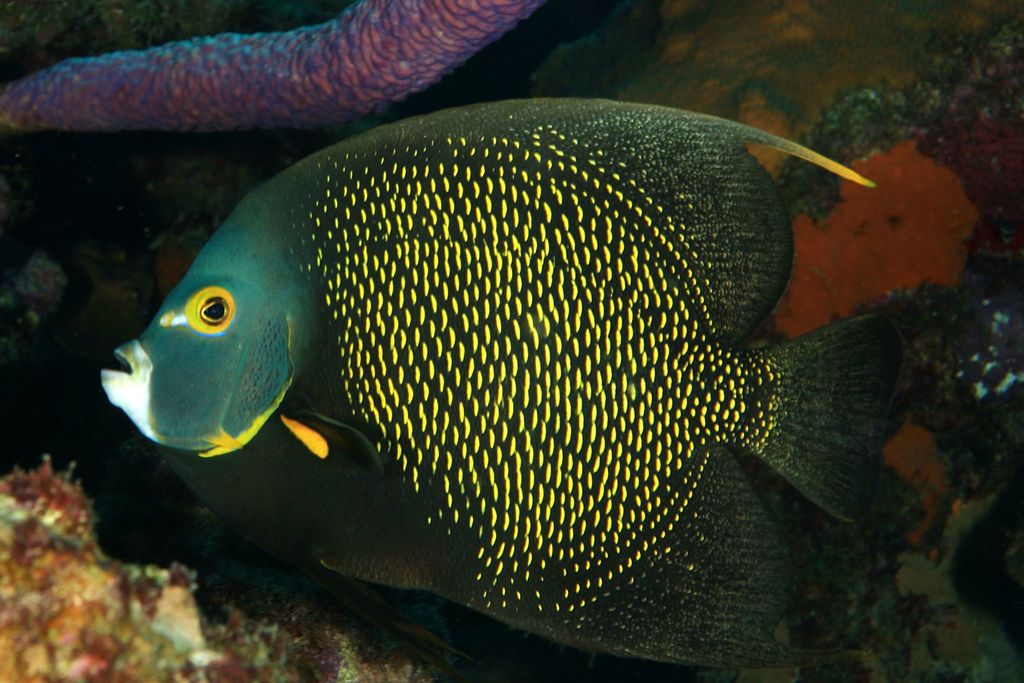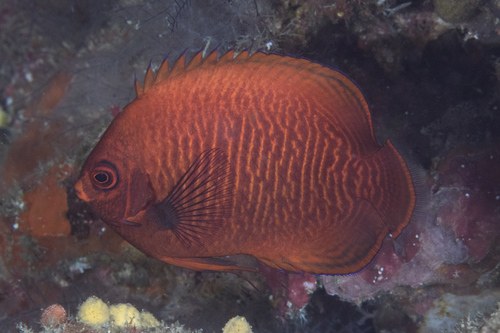
Golden Angel
Centropyge aurantia
In Stock
Common stock
Wild Caught
Moderate care
With Caution
SKU: CB-MF-0081
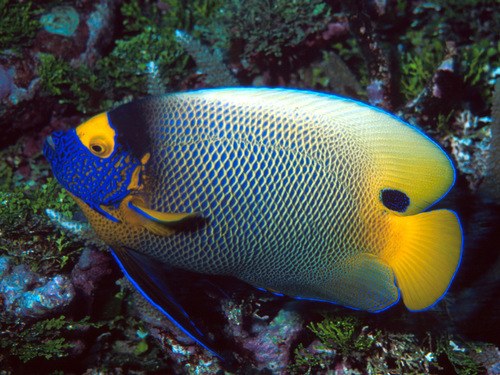
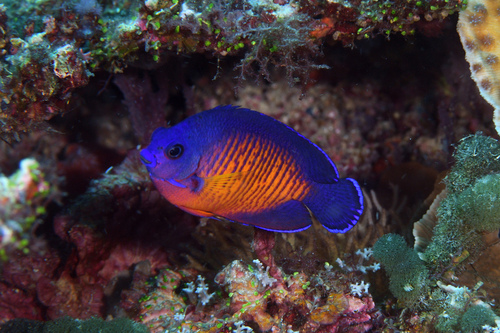
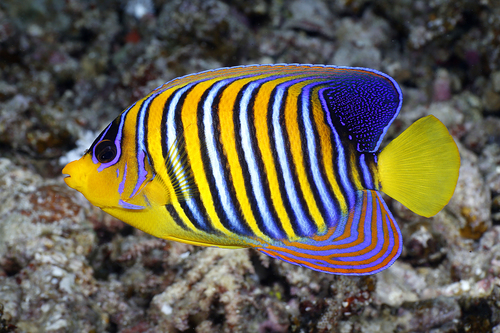
The Golden Angel is a stunning marine fish known for its vibrant orange and blue coloration.
Pricing for Verified Importers
Log in to see wholesale prices and order.
Export Size
up to 10.0 cm
Origin
Coral Triangle
Temperature
24.0–28.0°C
Min. Tank Size
200 L
Salinity
1.020–1.025 ppt
pH
8.10–8.40
Diet
herbivore
The Golden Angel (Centropyge aurantia) is a striking marine fish native to the coral reefs of the Coral Triangle in Southeast Asia, particularly around the islands of Bali, Indonesia. This dwarf angelfish species is renowned for its brilliant golden-yellow body accented with deep blue margins on its fins and face, making it a favorite among aquarists. Adult Golden Angels typically reach a maximum size of 10 cm, which makes them suitable for smaller reef tanks and community setups.
In its natural habitat, the Golden Angel is often found in shallow waters, typically inhabiting rocky reefs and coral gardens. They thrive in areas rich in coral cover, where they can find both shelter and food. These fish are known for their semi-aggressive demeanor, especially towards their own kind. Golden Angels often establish territories and can display territorial behavior as they mature. They are largely herbivorous, feeding on algae and detritus, which they graze from the surfaces of rocks and corals.
Behaviorally, Golden Angels are curious and active swimmers, often exploring their surroundings. They are also known to exhibit a unique social structure, often seen in pairs or small groups. Although they can be peaceful with smaller tank mates, caution should be exercised when housing them with other angelfish or similarly sized species, as they may become aggressive during feeding or territorial disputes. Providing ample hiding spots and open swimming areas in the aquarium is crucial for their well-being.
In terms of care, Golden Angels require stable water conditions and a well-maintained environment to thrive. They are best kept in an established reef tank with plenty of live rock to serve as both a food source and shelter. Their vibrant colors and engaging behavior make them a favorite choice for aquarists looking to add a touch of beauty to their marine setups.
In its natural habitat, the Golden Angel is often found in shallow waters, typically inhabiting rocky reefs and coral gardens. They thrive in areas rich in coral cover, where they can find both shelter and food. These fish are known for their semi-aggressive demeanor, especially towards their own kind. Golden Angels often establish territories and can display territorial behavior as they mature. They are largely herbivorous, feeding on algae and detritus, which they graze from the surfaces of rocks and corals.
Behaviorally, Golden Angels are curious and active swimmers, often exploring their surroundings. They are also known to exhibit a unique social structure, often seen in pairs or small groups. Although they can be peaceful with smaller tank mates, caution should be exercised when housing them with other angelfish or similarly sized species, as they may become aggressive during feeding or territorial disputes. Providing ample hiding spots and open swimming areas in the aquarium is crucial for their well-being.
In terms of care, Golden Angels require stable water conditions and a well-maintained environment to thrive. They are best kept in an established reef tank with plenty of live rock to serve as both a food source and shelter. Their vibrant colors and engaging behavior make them a favorite choice for aquarists looking to add a touch of beauty to their marine setups.
For optimal care of the Golden Angel, maintain water parameters within the following ranges: temperature should be kept between 24°C and 28°C, salinity around 1.020 to 1.025 ppt, and pH levels between 8.1 and 8.4. It’s crucial to perform regular water changes and monitor water quality to prevent stress and disease.
Feeding the Golden Angel should focus on a varied diet, including high-quality marine pellets, frozen foods, and fresh algae. They are primarily herbivores, so supplementing their diet with spirulina and other algae-based foods is essential for their health. Feeding them multiple times a day in small portions encourages their natural grazing behavior and maintains their coloration.
When introducing the Golden Angel to a new aquarium, acclimation is vital. Use the drip acclimation method to gradually introduce them to the tank's water conditions. Quarantine new arrivals for at least two weeks before adding them to the main display tank to prevent the spread of diseases. Compatibility should be considered carefully; while they can coexist with various reef-safe species, avoid keeping them with other dwarf angelfish to minimize aggressive interactions.
Feeding the Golden Angel should focus on a varied diet, including high-quality marine pellets, frozen foods, and fresh algae. They are primarily herbivores, so supplementing their diet with spirulina and other algae-based foods is essential for their health. Feeding them multiple times a day in small portions encourages their natural grazing behavior and maintains their coloration.
When introducing the Golden Angel to a new aquarium, acclimation is vital. Use the drip acclimation method to gradually introduce them to the tank's water conditions. Quarantine new arrivals for at least two weeks before adding them to the main display tank to prevent the spread of diseases. Compatibility should be considered carefully; while they can coexist with various reef-safe species, avoid keeping them with other dwarf angelfish to minimize aggressive interactions.
Golden Angels are suitable for shipping due to their resilient nature. Use suitable packing densities to ensure they have enough space to move but are not overcrowded. Maintain shipping temperatures between 24°C and 28°C to minimize stress during transport. This species is not listed on the CITES appendices, making export easier but still subject to local regulations.
Species Parameters
Max Adult Size
10.0 cm
Origin
Coral Triangle
Diet
herbivore
Temp Min
24.0 °C
Temp Max
28.0 °C
Salinity Min
1.020
Salinity Max
1.025
pH Min
8.10
pH Max
8.40
Min Tank
200 L