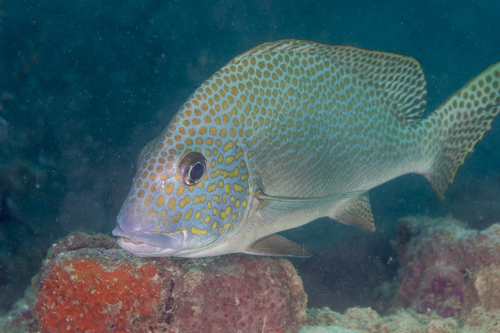
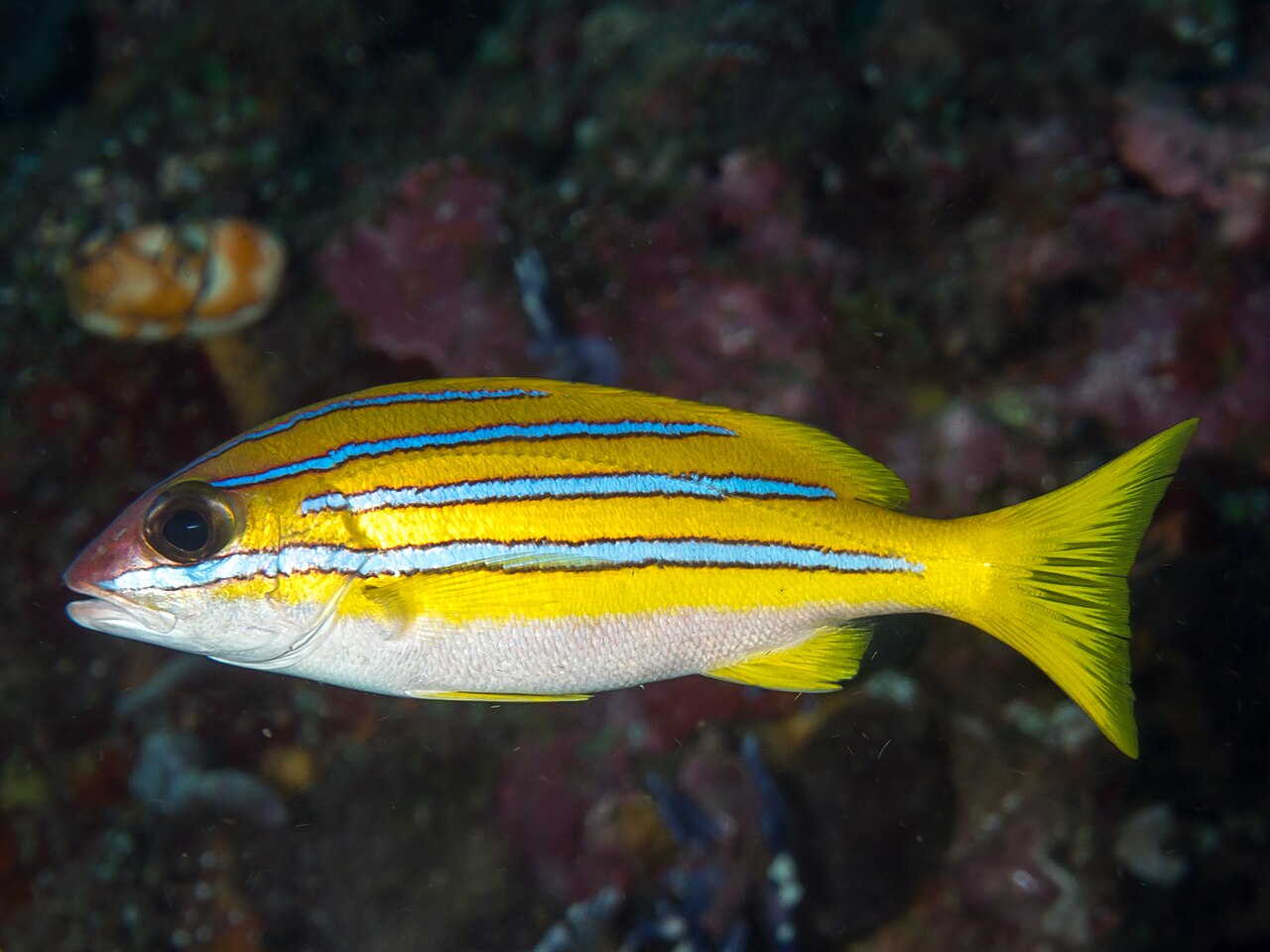
Blue Striped Snapper
lutjanus kasmira 10-15cm
In Stock
Common stock
Wild Caught
Moderate care
With Caution
SKU: ML-MF-0339
The Blue Striped Snapper captivates with its striking colors and robust presence in marine ecosystems.
Pricing for Verified Importers
Log in to see wholesale prices and order.
Export Size
up to 15.0 cm
Origin
Indo-Pacific
Temperature
22.0–26.0°C
Min. Tank Size
150 L
Salinity
30.000–35.000 ppt
pH
8.10–8.40
Diet
carnivore
The Blue Striped Snapper (Lutjanus kasmira) is a vibrant marine fish native to the tropical waters of the Indo-Pacific region. Known for its distinctive blue stripes that run along its body, this species typically grows to a length of 10-15 cm, making it an attractive addition to both home aquariums and commercial displays. The Blue Striped Snapper’s coloration not only serves an aesthetic purpose but also plays a crucial role in its social behaviors and interactions within its habitat.
In the wild, Blue Striped Snappers inhabit coral reefs and rocky structures, where they form schools, especially during their juvenile stages. These fish are opportunistic feeders, primarily preying on smaller fish and crustaceans. Their diet and hunting techniques are well-adapted to their habitat, allowing them to thrive in environments rich in biodiversity. As they mature, they may become more solitary while still exhibiting social behaviors during breeding seasons.
Behaviorally, Blue Striped Snappers are known for their curious nature and can often be seen darting between crevices and coral formations. They are relatively active and require a stimulating environment to maintain their health and well-being in captivity. The social dynamics within their groups contribute to a lively display, making them popular among aquarium enthusiasts.
Blue Striped Snappers prefer shallow waters where they can find ample cover and food resources. Their reliance on coral reefs and rocky outcrops makes them an important species for maintaining the ecological balance of their habitats. As such, conservation efforts are crucial to ensure their populations remain stable, particularly in areas facing environmental pressures.
In the wild, Blue Striped Snappers inhabit coral reefs and rocky structures, where they form schools, especially during their juvenile stages. These fish are opportunistic feeders, primarily preying on smaller fish and crustaceans. Their diet and hunting techniques are well-adapted to their habitat, allowing them to thrive in environments rich in biodiversity. As they mature, they may become more solitary while still exhibiting social behaviors during breeding seasons.
Behaviorally, Blue Striped Snappers are known for their curious nature and can often be seen darting between crevices and coral formations. They are relatively active and require a stimulating environment to maintain their health and well-being in captivity. The social dynamics within their groups contribute to a lively display, making them popular among aquarium enthusiasts.
Blue Striped Snappers prefer shallow waters where they can find ample cover and food resources. Their reliance on coral reefs and rocky outcrops makes them an important species for maintaining the ecological balance of their habitats. As such, conservation efforts are crucial to ensure their populations remain stable, particularly in areas facing environmental pressures.
When caring for Blue Striped Snappers in captivity, it’s essential to replicate their natural habitat as closely as possible. These fish thrive in water temperatures ranging from 24°C to 28°C, with a salinity level of 30-35 ppt. Maintaining stable water conditions is crucial; therefore, regular testing of pH levels (ideally between 8.1 and 8.4) is recommended. A minimum tank size of 150 liters is advisable to allow ample swimming space and to accommodate their social behaviors.
Feeding Blue Striped Snappers requires a varied diet that includes high-quality pellets, frozen foods like shrimp and fish, and live foods to encourage natural hunting behaviors. These fish are carnivorous and should be fed multiple times a day to ensure proper nutrition and growth. Compatibility with other species is generally good, but caution should be exercised when introducing them to smaller fish, as they may see them as prey.
Acclimating new Blue Striped Snappers to a tank should be done gradually, using drip acclimation techniques to minimize stress. A quarantine period of at least two weeks is recommended before introducing them to a display tank. This helps prevent the spread of diseases and allows the fish to adjust to their new environment safely. Regular monitoring for signs of stress or illness is essential to maintain a healthy aquarium ecosystem.
Feeding Blue Striped Snappers requires a varied diet that includes high-quality pellets, frozen foods like shrimp and fish, and live foods to encourage natural hunting behaviors. These fish are carnivorous and should be fed multiple times a day to ensure proper nutrition and growth. Compatibility with other species is generally good, but caution should be exercised when introducing them to smaller fish, as they may see them as prey.
Acclimating new Blue Striped Snappers to a tank should be done gradually, using drip acclimation techniques to minimize stress. A quarantine period of at least two weeks is recommended before introducing them to a display tank. This helps prevent the spread of diseases and allows the fish to adjust to their new environment safely. Regular monitoring for signs of stress or illness is essential to maintain a healthy aquarium ecosystem.
Blue Striped Snappers are suitable for export and can be shipped at moderate densities to ensure their safety during transport. It is crucial to maintain stable temperatures between 22°C and 26°C during shipping, as they are sensitive to temperature fluctuations. Packaging should include oxygen and adequate water to minimize stress. This species is not listed under CITES, simplifying export procedures.
Species Parameters
Max Adult Size
15.0 cm
Origin
Indo-Pacific
Diet
carnivore
Temp Min
22.0 °C
Temp Max
26.0 °C
Salinity Min
30.000
Salinity Max
35.000
pH Min
8.10
pH Max
8.40
Min Tank
150 L