Dwarf hawkfish/Falco Hawkfish
cirrhitichthys falco
In Stock
Common stock
Wild Caught
Moderate care
With Caution
SKU: ML-MF-0332
The Dwarf hawkfish is a vibrant reef inhabitant known for its unique perch-like behavior.
Pricing for Verified Importers
Log in to see wholesale prices and order.
Export Size
up to 8.0 cm
Origin
Indo-Pacific
Temperature
24.0–28.0°C
Min. Tank Size
100 L
Salinity
35.000–37.000 ppt
pH
8.10–8.40
Diet
carnivore
The Dwarf hawkfish, scientifically known as Cirrhitichthys falco, is a small yet striking marine fish that captures the attention of aquarists with its vivid coloration and agile movements. Typically found in the coral reefs of the Indo-Pacific region, this species thrives in warm, shallow waters where it can easily navigate through complex structures. With a maximum length of about 8 cm, it is perfectly sized for home aquariums and is popular among reef enthusiasts.
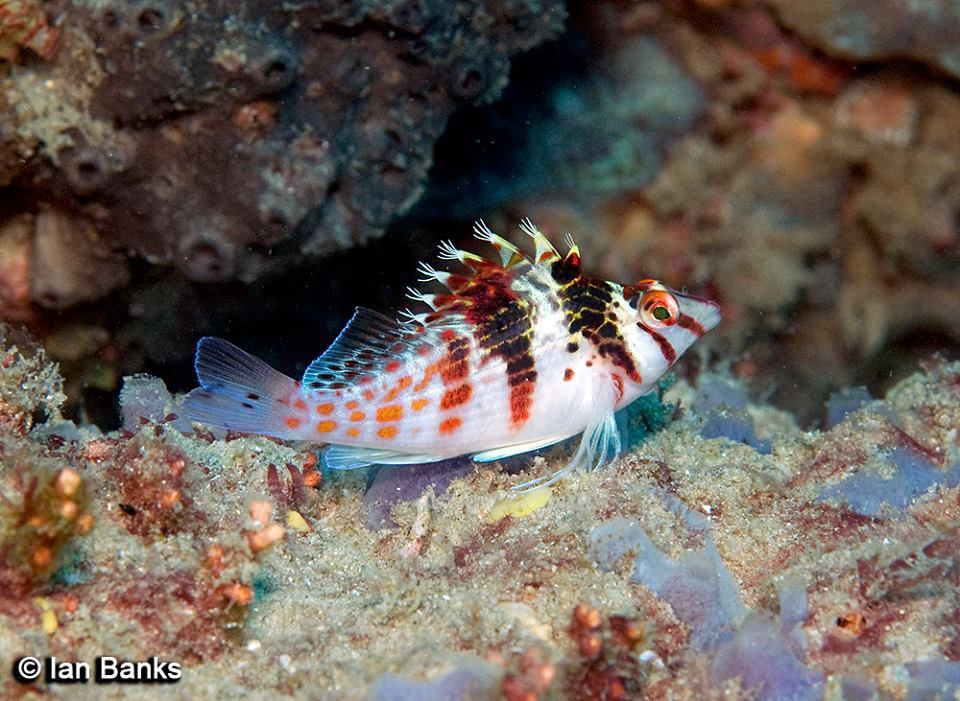
Dwarf hawkfish display a distinctive appearance characterized by their bright red and orange shades adorned with white spots. Their body is slightly elongated, and they possess large, expressive eyes which enhance their visual acuity, aiding in hunting small prey. This species is known for its unique behavior of perching on coral and rocks, allowing it to survey its surroundings for potential food and threats. They exhibit a bold personality and can often be seen engaging in territorial displays, making them a fascinating addition to marine tanks.
In their natural habitat, Dwarf hawkfish prefer to inhabit areas rich in coral cover. They are typically found at depths of up to 30 meters, where they can easily hide from predators while also hunting small invertebrates. Their reliance on coral structures for both shelter and hunting makes them an integral part of the reef ecosystem, contributing to the biodiversity of their environments. As they mature, these fish become more territorial, establishing dominance over specific perches in their chosen habitats.
As social creatures, Dwarf hawkfish can often be seen in pairs or small groups within their territories. They communicate through body language and can exhibit a range of behaviors to assert dominance or court potential mates. Their vibrant colors and unique behaviors make them a desirable species for marine aquarium setups, where they can thrive under the right conditions.
Dwarf hawkfish display a distinctive appearance characterized by their bright red and orange shades adorned with white spots. Their body is slightly elongated, and they possess large, expressive eyes which enhance their visual acuity, aiding in hunting small prey. This species is known for its unique behavior of perching on coral and rocks, allowing it to survey its surroundings for potential food and threats. They exhibit a bold personality and can often be seen engaging in territorial displays, making them a fascinating addition to marine tanks.
In their natural habitat, Dwarf hawkfish prefer to inhabit areas rich in coral cover. They are typically found at depths of up to 30 meters, where they can easily hide from predators while also hunting small invertebrates. Their reliance on coral structures for both shelter and hunting makes them an integral part of the reef ecosystem, contributing to the biodiversity of their environments. As they mature, these fish become more territorial, establishing dominance over specific perches in their chosen habitats.
As social creatures, Dwarf hawkfish can often be seen in pairs or small groups within their territories. They communicate through body language and can exhibit a range of behaviors to assert dominance or court potential mates. Their vibrant colors and unique behaviors make them a desirable species for marine aquarium setups, where they can thrive under the right conditions.
Caring for Dwarf hawkfish requires attention to specific water parameters to ensure their health and longevity. Ideal water temperature ranges from 24°C to 28°C, with a salinity level between 1.020 and 1.025 ppt. The pH should be maintained between 8.1 and 8.4 for optimal conditions. It is recommended to have a minimum tank size of 100 liters to provide ample space for swimming and territorial behavior.
Feeding Dwarf hawkfish is relatively straightforward, as they are carnivorous and thrive on a diet of small meaty foods. A mix of high-quality frozen or live foods such as brine shrimp, mysis shrimp, and small crustaceans will ensure they receive the necessary nutrients. Regular feeding, about 2 to 3 times a day, is essential to maintain their health and vibrancy.
When introducing Dwarf hawkfish to a new aquarium, acclimation is crucial. A slow acclimation process over several hours will help reduce stress and ensure a smooth transition. Quarantine procedures are also highly recommended to prevent the introduction of potential diseases to the main tank. Compatibility-wise, Dwarf hawkfish can coexist with a variety of reef-safe species, although caution should be exercised with more aggressive fish that could challenge their territorial nature.
Feeding Dwarf hawkfish is relatively straightforward, as they are carnivorous and thrive on a diet of small meaty foods. A mix of high-quality frozen or live foods such as brine shrimp, mysis shrimp, and small crustaceans will ensure they receive the necessary nutrients. Regular feeding, about 2 to 3 times a day, is essential to maintain their health and vibrancy.
When introducing Dwarf hawkfish to a new aquarium, acclimation is crucial. A slow acclimation process over several hours will help reduce stress and ensure a smooth transition. Quarantine procedures are also highly recommended to prevent the introduction of potential diseases to the main tank. Compatibility-wise, Dwarf hawkfish can coexist with a variety of reef-safe species, although caution should be exercised with more aggressive fish that could challenge their territorial nature.
Dwarf hawkfish are suitable for shipping, provided they are carefully packed to minimize stress. A packing density of 1 fish per 5 liters is recommended to ensure adequate space during transport. They are sensitive to temperature fluctuations, so maintaining a stable temperature between 24°C and 28°C during shipping is crucial. This species is not listed under CITES, making it easier for exporters to manage legalities.
Species Parameters
Max Adult Size
8.0 cm
Origin
Indo-Pacific
Diet
carnivore
Temp Min
24.0 °C
Temp Max
28.0 °C
Salinity Min
35.000
Salinity Max
37.000
pH Min
8.10
pH Max
8.40
Min Tank
100 L