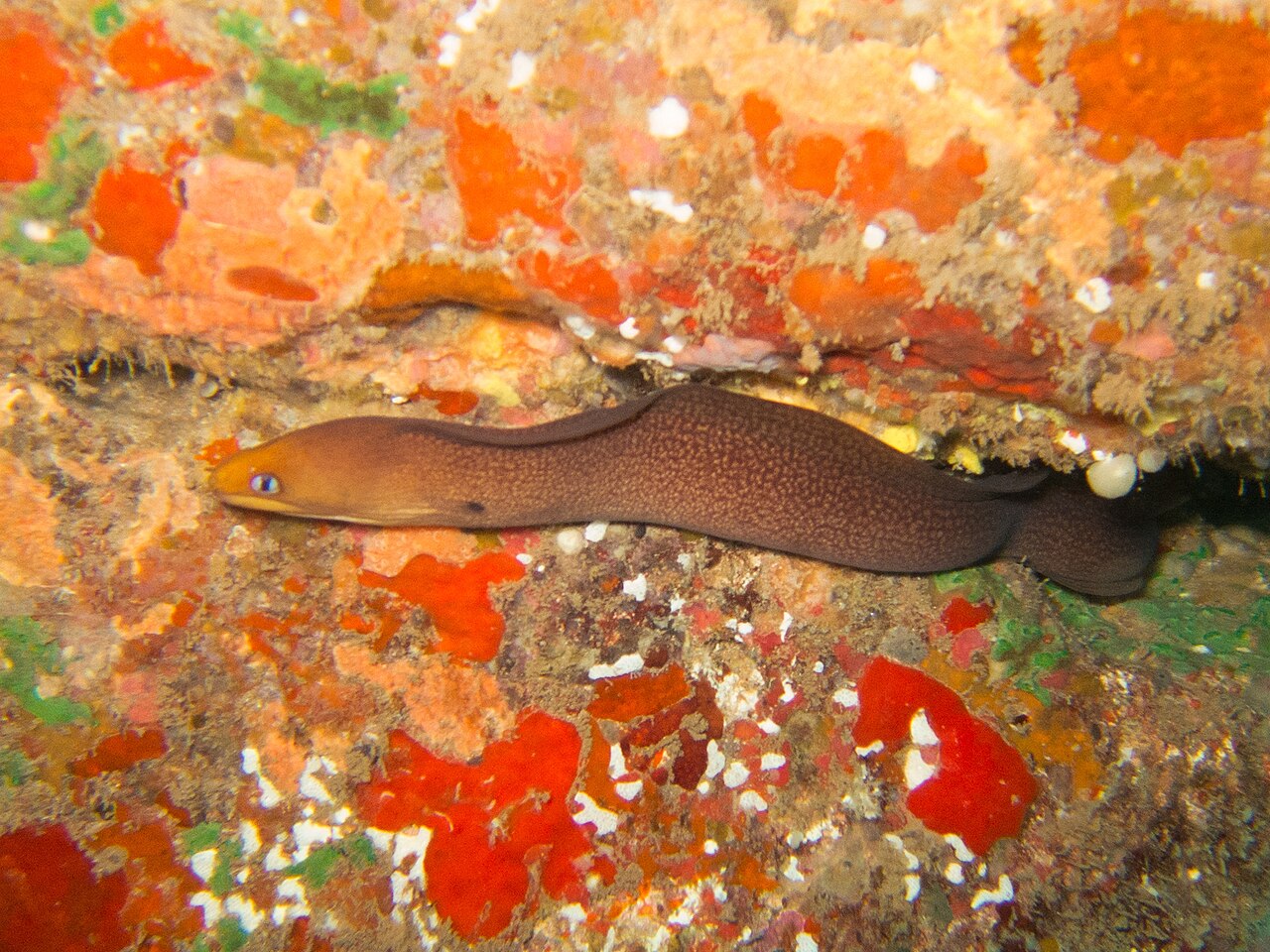
Golden Dwarf Moray
gymnothorax melatremus
In Stock
Common stock
Wild Caught
Moderate care
With Caution
SKU: ML-MF-0190
The Golden Dwarf Moray is a captivating marine fish with vibrant coloration and a unique personality.
Pricing for Verified Importers
Log in to see wholesale prices and order.
Export Size
up to 40.0 cm
Origin
Indo-Pacific
Temperature
24.0–28.0°C
Min. Tank Size
200 L
Salinity
1.020–1.025 ppt
pH
8.10–8.40
Diet
carnivore
The Golden Dwarf Moray, scientifically known as Gymnothorax melatremus, is a striking species of moray eel found in the warm waters of the Indo-Pacific. This small eel typically inhabits coral reefs, where it plays a vital role in the marine ecosystem as both predator and prey. It is renowned for its brilliant golden-yellow coloration, which serves as a camouflage among the vibrant corals and rocky crevices of its habitat. Adult eels usually reach a maximum length of about 30 to 40 cm, making them one of the smaller species of moray eels.
In terms of behavior, the Golden Dwarf Moray is known for its curious and somewhat shy nature. It tends to hide in crevices and caves within the reef during the day, emerging primarily at dusk to hunt for small fish and crustaceans. This nocturnal feeding behavior allows it to avoid larger predators and take advantage of the abundance of smaller prey. Their elongated bodies and unique facial structure enable them to navigate through tight spaces in the reef, making them effective hunters in their environment.
The habitat of the Golden Dwarf Moray is typically characterized by rocky substrates and coral formations where it can find shelter and hunting grounds. They are often found at depths ranging from 1 to 30 meters, where the water is warm and rich in biodiversity. The presence of live rock and coral is essential to their survival, as these structures provide both food resources and protection from predators. As a species, they are sensitive to environmental changes, making their habitat conservation critical.
In the aquarium trade, the Golden Dwarf Moray is appreciated not only for its beauty but also for its relatively manageable care requirements compared to larger moray species. Their unique appearance and behavior make them a sought-after addition to marine aquariums, appealing to both novice and experienced aquarists alike.
In terms of behavior, the Golden Dwarf Moray is known for its curious and somewhat shy nature. It tends to hide in crevices and caves within the reef during the day, emerging primarily at dusk to hunt for small fish and crustaceans. This nocturnal feeding behavior allows it to avoid larger predators and take advantage of the abundance of smaller prey. Their elongated bodies and unique facial structure enable them to navigate through tight spaces in the reef, making them effective hunters in their environment.
The habitat of the Golden Dwarf Moray is typically characterized by rocky substrates and coral formations where it can find shelter and hunting grounds. They are often found at depths ranging from 1 to 30 meters, where the water is warm and rich in biodiversity. The presence of live rock and coral is essential to their survival, as these structures provide both food resources and protection from predators. As a species, they are sensitive to environmental changes, making their habitat conservation critical.
In the aquarium trade, the Golden Dwarf Moray is appreciated not only for its beauty but also for its relatively manageable care requirements compared to larger moray species. Their unique appearance and behavior make them a sought-after addition to marine aquariums, appealing to both novice and experienced aquarists alike.
To successfully care for the Golden Dwarf Moray, it is essential to maintain stable water parameters. The optimal temperature range is between 24°C and 28°C, with a salinity level of 1.020 to 1.025 ppt. The pH should be kept between 8.1 and 8.4 to mimic their natural habitat. A tank size of at least 200 liters is recommended to provide ample space for swimming and hiding, as they are known to be territorial.
Feeding the Golden Dwarf Moray involves a diet primarily consisting of meaty foods, such as shrimp, small fish, and other seafood. It is advisable to offer food multiple times a week to ensure they receive adequate nutrition. Compatibility with other species should be approached with caution; they can coexist with larger, non-aggressive fish but may show aggression towards smaller tank mates.
Acclimation is crucial when introducing the Golden Dwarf Moray to a new aquarium. A slow acclimation process over several hours is recommended to reduce stress and ensure a smooth transition. Quarantine for a minimum of two weeks is also advisable to monitor for any diseases before adding them to the main tank. This ensures a healthy environment for both the moray and other inhabitants of the aquarium.
Feeding the Golden Dwarf Moray involves a diet primarily consisting of meaty foods, such as shrimp, small fish, and other seafood. It is advisable to offer food multiple times a week to ensure they receive adequate nutrition. Compatibility with other species should be approached with caution; they can coexist with larger, non-aggressive fish but may show aggression towards smaller tank mates.
Acclimation is crucial when introducing the Golden Dwarf Moray to a new aquarium. A slow acclimation process over several hours is recommended to reduce stress and ensure a smooth transition. Quarantine for a minimum of two weeks is also advisable to monitor for any diseases before adding them to the main tank. This ensures a healthy environment for both the moray and other inhabitants of the aquarium.
The Golden Dwarf Moray is suitable for shipping, provided that proper care is taken during transit. Packing density should allow for adequate water circulation and space to minimize stress. The ideal shipping temperature is between 24°C and 26°C, as they are sensitive to temperature fluctuations. It is important to note that this species is not listed under CITES, making export relatively straightforward, but adherence to local regulations is essential.
Species Parameters
Max Adult Size
40.0 cm
Origin
Indo-Pacific
Diet
carnivore
Temp Min
24.0 °C
Temp Max
28.0 °C
Salinity Min
1.020
Salinity Max
1.025
pH Min
8.10
pH Max
8.40
Min Tank
200 L