Leopard Morray Eel
Gymnothorax favagineus
Limited
Scarce stock
Wild Caught
Moderate care
With Caution
SKU: D198C
The Leopard Morray Eel is a striking marine species known for its intricate patterns and unique behaviors.
Pricing for Verified Importers
Log in to see wholesale prices and order.
Export Size
up to 250.0 cm
Origin
Indo-Pacific
Temperature
24.0–28.0°C
Min. Tank Size
300 L
Salinity
30.000–35.000 ppt
pH
8.10–8.40
Diet
carnivore
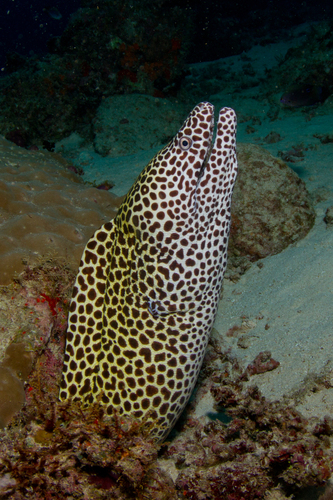
The Leopard Morray Eel (Gymnothorax favagineus) is an intriguing species found predominantly in the coral reefs of the Indo-Pacific region. This marine fish is easily recognized by its distinctive coloration, featuring a pattern of dark spots and lighter hues that resemble a leopard's coat. These intricate markings not only contribute to its beauty but also provide camouflage among the rocky crevices of its natural habitat, allowing it to evade predators effectively.
In terms of behavior, the Leopard Morray Eel is primarily nocturnal, emerging from its hiding spots during the night to hunt for prey. It possesses a long, slender body that can reach lengths of up to 2.5 meters, enabling it to navigate through narrow crevices with ease. This species is known for its inquisitive nature, often peering out from its lair to investigate its surroundings. The Leopard Morray Eel is also a solitary creature, typically preferring to live alone or in pairs, and it displays territorial behavior when it comes to its den.
Leopard Morray Eels inhabit a variety of environments, including coral reefs, rocky substrates, and sandy bottoms, primarily at depths ranging from 5 to 40 meters. They are often found hiding in crevices or under ledges during the day, emerging at night to hunt for fish, crustaceans, and other small marine animals. The species plays a vital role in maintaining the balance of the reef ecosystem by controlling the populations of its prey.
Overall, the Leopard Morray Eel is a fascinating species that not only adds aesthetic value to marine displays but also contributes to the ecological health of its environment. Its unique adaptations and behaviors make it a captivating subject for both hobbyists and marine biologists alike.
In terms of behavior, the Leopard Morray Eel is primarily nocturnal, emerging from its hiding spots during the night to hunt for prey. It possesses a long, slender body that can reach lengths of up to 2.5 meters, enabling it to navigate through narrow crevices with ease. This species is known for its inquisitive nature, often peering out from its lair to investigate its surroundings. The Leopard Morray Eel is also a solitary creature, typically preferring to live alone or in pairs, and it displays territorial behavior when it comes to its den.
Leopard Morray Eels inhabit a variety of environments, including coral reefs, rocky substrates, and sandy bottoms, primarily at depths ranging from 5 to 40 meters. They are often found hiding in crevices or under ledges during the day, emerging at night to hunt for fish, crustaceans, and other small marine animals. The species plays a vital role in maintaining the balance of the reef ecosystem by controlling the populations of its prey.
Overall, the Leopard Morray Eel is a fascinating species that not only adds aesthetic value to marine displays but also contributes to the ecological health of its environment. Its unique adaptations and behaviors make it a captivating subject for both hobbyists and marine biologists alike.
When caring for the Leopard Morray Eel, it is essential to maintain suitable water parameters to promote its health and well-being. The ideal temperature range for this species is between 24°C and 28°C, with a salinity level of 30-35 ppt. The pH should be kept between 8.1 and 8.4. A minimum tank size of 300 liters is recommended to provide ample space for swimming and hiding, as these eels require sufficient room to thrive.
Feeding the Leopard Morray Eel should consist of a varied diet, primarily including meaty foods such as fish, shrimp, and squid. It is important to feed them regularly, ideally 2-3 times a week, to ensure their nutritional needs are met. Compatibility with other fish species may vary, and it is advisable to house them with larger, non-aggressive tank mates to reduce the risk of stress or territorial disputes.
Acclimation is crucial when introducing the Leopard Morray Eel to a new environment. It is best to use a slow acclimation process, allowing the eel to adjust gradually to the new water conditions. Quarantine procedures should also be followed to prevent the introduction of diseases to the main aquarium. A quarantine period of at least two weeks is recommended, during which the eel can be monitored for any signs of illness.
Feeding the Leopard Morray Eel should consist of a varied diet, primarily including meaty foods such as fish, shrimp, and squid. It is important to feed them regularly, ideally 2-3 times a week, to ensure their nutritional needs are met. Compatibility with other fish species may vary, and it is advisable to house them with larger, non-aggressive tank mates to reduce the risk of stress or territorial disputes.
Acclimation is crucial when introducing the Leopard Morray Eel to a new environment. It is best to use a slow acclimation process, allowing the eel to adjust gradually to the new water conditions. Quarantine procedures should also be followed to prevent the introduction of diseases to the main aquarium. A quarantine period of at least two weeks is recommended, during which the eel can be monitored for any signs of illness.
The Leopard Morray Eel is suitable for shipping with proper care. It should be packed in insulated containers with sufficient water and oxygen to maintain optimal conditions during transit. Temperature sensitivity is a concern, so maintaining a stable temperature between 24°C and 28°C is vital. Ensure that packing density does not exceed one eel per 20 liters of water to minimize stress. This species is not listed under CITES, making it easier for export.
Species Parameters
Max Adult Size
250.0 cm
Origin
Indo-Pacific
Habitat
reef
Diet
carnivore
Temp Min
24.0 °C
Temp Max
28.0 °C
Salinity Min
30.000
Salinity Max
35.000
pH Min
8.10
pH Max
8.40
Min Tank
300 L