Longspine Cardinal
Apogon leptacanthus
In Stock
Common stock
Wild Caught
Moderate care
With Caution
SKU: D193E
The Longspine Cardinal is a stunning marine fish, known for its vibrant colors and unique spine structure.
Pricing for Verified Importers
Log in to see wholesale prices and order.
Export Size
up to 10.0 cm
Origin
Indo-Pacific
Temperature
24.0–28.0°C
Min. Tank Size
100 L
Salinity
20.000–25.000 ppt
pH
8.10–8.40
Diet
carnivore
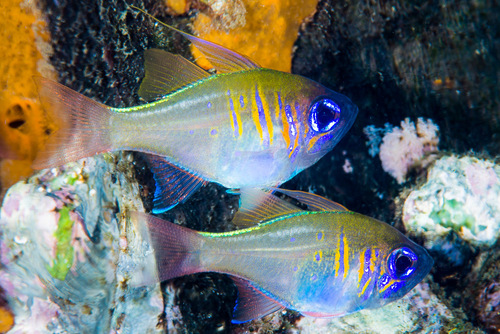
The Longspine Cardinal (Apogon leptacanthus), also known as the threadfin cardinalfish or bluestreak cardinalfish, is a captivating species belonging to the cardinalfish family Apogonidae. This tropical marine ray-finned fish is primarily found in the warm waters of the Indo-Pacific region, particularly around coral reefs, where it thrives in the rich biodiversity of these ecosystems. The Longspine Cardinal is distinguished by its elongated body, which can reach up to 10 cm in length, and its notable long spines that extend from its dorsal fin, providing both a striking appearance and a means of defense against predators.
In terms of coloration, the Longspine Cardinal exhibits a beautiful blend of blue and yellow hues, with a prominent dark stripe running along its side. This vibrant coloration not only makes it an attractive addition to aquariums but also plays a role in its mating rituals and social interactions. These fish are typically nocturnal, often spending their days hiding in crevices among the coral, and becoming more active during the night when they forage for food.
Longspine Cardinals are known for their unique social behavior, often forming small schools in the wild. They communicate through a series of subtle body movements and shading changes, which enhances their social structure. Their habitat usually consists of shallow coral reefs and lagoons, where they find shelter and ample food resources. This species is also known for its ability to adapt to varying water conditions, making it a resilient addition to any marine aquarium.
As a species that thrives in a community setting, the Longspine Cardinal is an excellent candidate for mixed-species tanks, particularly with other peaceful marine fish. Their intriguing behavior and vibrant appearance make them a favorite among hobbyists and importers alike, contributing to their popularity in the aquarium trade.
In terms of coloration, the Longspine Cardinal exhibits a beautiful blend of blue and yellow hues, with a prominent dark stripe running along its side. This vibrant coloration not only makes it an attractive addition to aquariums but also plays a role in its mating rituals and social interactions. These fish are typically nocturnal, often spending their days hiding in crevices among the coral, and becoming more active during the night when they forage for food.
Longspine Cardinals are known for their unique social behavior, often forming small schools in the wild. They communicate through a series of subtle body movements and shading changes, which enhances their social structure. Their habitat usually consists of shallow coral reefs and lagoons, where they find shelter and ample food resources. This species is also known for its ability to adapt to varying water conditions, making it a resilient addition to any marine aquarium.
As a species that thrives in a community setting, the Longspine Cardinal is an excellent candidate for mixed-species tanks, particularly with other peaceful marine fish. Their intriguing behavior and vibrant appearance make them a favorite among hobbyists and importers alike, contributing to their popularity in the aquarium trade.
To ensure the well-being of Longspine Cardinals in captivity, it is crucial to maintain stable water parameters. The ideal temperature range for these fish is between 24°C to 28°C, with a salinity of 1.020 to 1.025 ppt. The pH should be maintained between 8.1 and 8.4 to mimic their natural habitat. A minimum tank size of 100 liters is recommended to provide ample space for swimming and hiding.
Feeding Longspine Cardinals is relatively straightforward, as they are primarily carnivorous. A varied diet of high-quality flakes, frozen or live brine shrimp, and small marine pellets should be provided to ensure proper nutrition. It is advisable to feed them multiple small meals throughout the day to mimic their natural foraging behaviors.
Compatibility is another key aspect of their care. Longspine Cardinals are generally peaceful and can coexist with various marine species, including other small fish and invertebrates. However, care should be taken to avoid aggressive tank mates that may stress them. Acclimation should be done slowly, introducing them to their new environment over several hours to reduce shock. Quarantine is also recommended for new arrivals to prevent the spread of disease and ensure the health of the entire aquarium.
Feeding Longspine Cardinals is relatively straightforward, as they are primarily carnivorous. A varied diet of high-quality flakes, frozen or live brine shrimp, and small marine pellets should be provided to ensure proper nutrition. It is advisable to feed them multiple small meals throughout the day to mimic their natural foraging behaviors.
Compatibility is another key aspect of their care. Longspine Cardinals are generally peaceful and can coexist with various marine species, including other small fish and invertebrates. However, care should be taken to avoid aggressive tank mates that may stress them. Acclimation should be done slowly, introducing them to their new environment over several hours to reduce shock. Quarantine is also recommended for new arrivals to prevent the spread of disease and ensure the health of the entire aquarium.
Longspine Cardinals are suitable for shipping, provided that appropriate measures are taken to maintain their health during transit. Packing density should be moderate to ensure adequate oxygen levels, and temperatures should be kept stable between 24°C and 28°C. These fish are sensitive to drastic temperature changes, so thermal insulation is essential. Longspine Cardinals are not listed under CITES, making them easier to export legally.
Species Parameters
Max Adult Size
10.0 cm
Origin
Indo-Pacific
Habitat
reef
Diet
carnivore
Temp Min
24.0 °C
Temp Max
28.0 °C
Salinity Min
20.000
Salinity Max
25.000
pH Min
8.10
pH Max
8.40
Min Tank
100 L