Spotted Sea Hare
aplysia dactylomela
In Stock
Common stock
Wild Caught
Moderate care
With Caution
SKU: ML-MF-0508
Discover the Spotted Sea Hare, a unique marine mollusk with vibrant colors and fascinating behaviors.
Pricing for Verified Importers
Log in to see wholesale prices and order.
Export Size
up to 30.0 cm
Origin
Indo-Pacific
Temperature
22.0–28.0°C
Min. Tank Size
100 L
Salinity
30.000–35.000 ppt
pH
7.80–8.40
Diet
herbivore
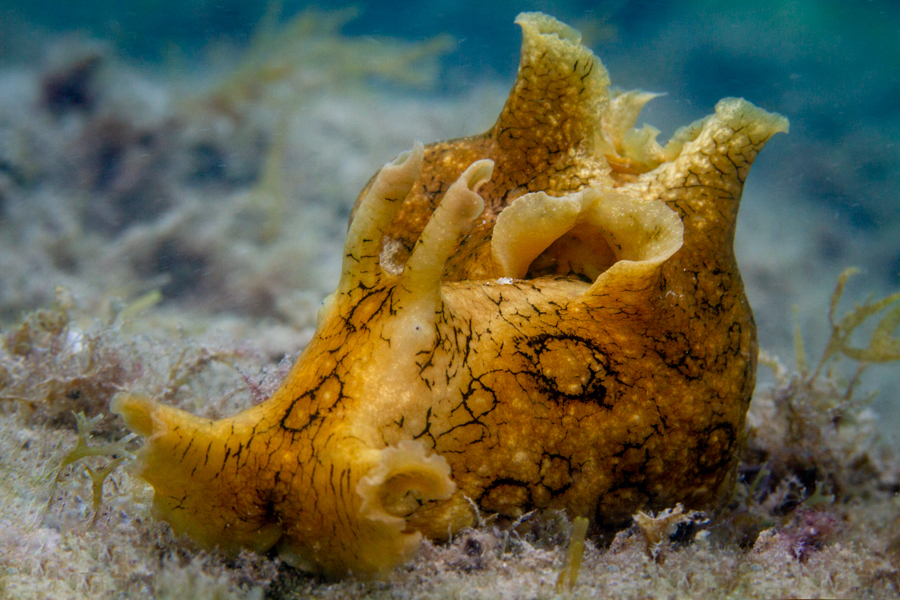
The Spotted Sea Hare (Aplysia dactylomela) is a striking marine mollusk known for its distinctive appearance and intriguing behaviors. This species is characterized by its soft, elongated body adorned with intricate patterns of green, brown, and purple spots, which serve as effective camouflage in its natural habitat. The vibrant coloration is not just for show; it is also a defense mechanism, as the sea hare can release a purple ink when threatened, similar to a squid, to deter predators.
In terms of natural history, the Spotted Sea Hare is primarily found in shallow coastal waters, typically inhabiting areas rich in algae where it feeds. This herbivorous mollusk plays a vital role in its ecosystem by grazing on algae, which helps maintain the balance of marine vegetation. The Spotted Sea Hare is known for its fascinating behavior, including its ability to glide gracefully through the water using its large, ear-like parapodia, which also serve to increase its surface area and assist in respiration.
Socially, these sea hares are generally solitary creatures, although they may be found in small groups during mating seasons. Their reproductive habits are particularly interesting, as they are hermaphroditic, possessing both male and female reproductive organs, which allows them to mate with any suitable partner they encounter.
Overall, the Spotted Sea Hare is not only a visually stunning addition to marine environments but also an important part of the ocean's ecosystem, showcasing the diversity and complexity of marine life.
In terms of natural history, the Spotted Sea Hare is primarily found in shallow coastal waters, typically inhabiting areas rich in algae where it feeds. This herbivorous mollusk plays a vital role in its ecosystem by grazing on algae, which helps maintain the balance of marine vegetation. The Spotted Sea Hare is known for its fascinating behavior, including its ability to glide gracefully through the water using its large, ear-like parapodia, which also serve to increase its surface area and assist in respiration.
Socially, these sea hares are generally solitary creatures, although they may be found in small groups during mating seasons. Their reproductive habits are particularly interesting, as they are hermaphroditic, possessing both male and female reproductive organs, which allows them to mate with any suitable partner they encounter.
Overall, the Spotted Sea Hare is not only a visually stunning addition to marine environments but also an important part of the ocean's ecosystem, showcasing the diversity and complexity of marine life.
For importers and retailers looking to maintain the Spotted Sea Hare, it is essential to replicate its natural habitat as closely as possible. Optimal water parameters include a temperature range of 22-28°C, a salinity of 30-35 ppt, and a pH between 7.8 and 8.4. Regular water changes and proper filtration are crucial to ensure a stable environment.
Feeding the Spotted Sea Hare should primarily consist of a diet rich in algae, particularly red and green varieties. They can also be supplemented with dried seaweed or commercially available herbivore pellets. It is important to monitor their eating habits closely, as a lack of appropriate food can lead to health issues.
Compatibility-wise, these sea hares are generally peaceful but may be preyed upon by larger fish; thus, they are best kept in a community tank with similar-sized, non-aggressive species. When introducing new sea hares into an aquarium, acclimation should be carried out slowly over several hours to minimize stress. Quarantine procedures are recommended for new arrivals to prevent the spread of potential diseases.
Feeding the Spotted Sea Hare should primarily consist of a diet rich in algae, particularly red and green varieties. They can also be supplemented with dried seaweed or commercially available herbivore pellets. It is important to monitor their eating habits closely, as a lack of appropriate food can lead to health issues.
Compatibility-wise, these sea hares are generally peaceful but may be preyed upon by larger fish; thus, they are best kept in a community tank with similar-sized, non-aggressive species. When introducing new sea hares into an aquarium, acclimation should be carried out slowly over several hours to minimize stress. Quarantine procedures are recommended for new arrivals to prevent the spread of potential diseases.
The Spotted Sea Hare is suitable for shipping, provided that proper care is taken during transport. Packing density should be moderate to ensure sufficient space and water quality. These mollusks are sensitive to temperature fluctuations; therefore, maintaining a stable temperature between 20-24°C during shipping is crucial. Currently, there are no CITES restrictions on this species, making it easier for export operations.
Species Parameters
Max Adult Size
30.0 cm
Origin
Indo-Pacific
Diet
herbivore
Temp Min
22.0 °C
Temp Max
28.0 °C
Salinity Min
30.000
Salinity Max
35.000
pH Min
7.80
pH Max
8.40
Min Tank
100 L