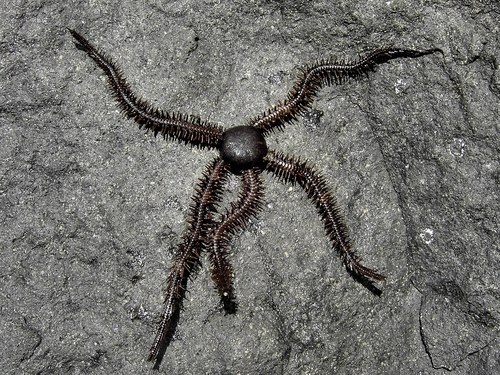
Blunt-Spined Brittle Star
Ophiocoma echinata
In Stock
Common stock
Wild Caught
Moderate care
SKU: CB-SC-0008
The Blunt-Spined Brittle Star is a unique and fascinating invertebrate known for its striking appearance and exceptional adaptability.
Pricing for Verified Importers
Log in to see wholesale prices and order.
Export Size
up to 15.0 cm
Origin
Caribbean Sea
Temperature
24.0–28.0°C
Min. Tank Size
50 L
pH
8.10–8.40
Diet
omnivore
Ophiocoma echinata, commonly known as the Blunt-Spined Brittle Star, is an intriguing species of brittle star that belongs to the family Ophiocomidae. This species is primarily found in the tropical waters of the West Atlantic Ocean, including the Caribbean Sea and the Gulf of Mexico. As the type species of its genus, it showcases the typical characteristics of brittle stars, with a distinctive star-like shape and long, slender arms that radiate from a central disc.
In terms of appearance, the Blunt-Spined Brittle Star features a robust, disc-like body covered with small spiny structures that provide protection against predators. Its arms are flexible and can be quite long relative to the size of its central disc, allowing it to navigate through its environment with ease. The coloration of Ophiocoma echinata can vary, often ranging from muted browns to vibrant hues, which helps it blend into the rocky and coral-dominated habitats it prefers.
Behaviorally, the Blunt-Spined Brittle Star is primarily nocturnal, using its long arms to forage for food during the night. It feeds on detritus, microorganisms, and small planktonic organisms, playing an essential role in its ecosystem by recycling nutrients. This species is known for its ability to regenerate lost limbs, making it resilient in the face of predation and environmental challenges. Inhabiting sandy and rocky substrates, it often hides in crevices or under rubble during the day, emerging at night to feed.
The habitat of Ophiocoma echinata typically includes shallow waters with plenty of structure, such as reefs and rocky bottoms, where it can find shelter and food. This adaptability to different substrates and environments contributes to its widespread distribution in the tropical regions of the Atlantic Ocean, making it a valuable species for aquarists and researchers alike.
In terms of appearance, the Blunt-Spined Brittle Star features a robust, disc-like body covered with small spiny structures that provide protection against predators. Its arms are flexible and can be quite long relative to the size of its central disc, allowing it to navigate through its environment with ease. The coloration of Ophiocoma echinata can vary, often ranging from muted browns to vibrant hues, which helps it blend into the rocky and coral-dominated habitats it prefers.
Behaviorally, the Blunt-Spined Brittle Star is primarily nocturnal, using its long arms to forage for food during the night. It feeds on detritus, microorganisms, and small planktonic organisms, playing an essential role in its ecosystem by recycling nutrients. This species is known for its ability to regenerate lost limbs, making it resilient in the face of predation and environmental challenges. Inhabiting sandy and rocky substrates, it often hides in crevices or under rubble during the day, emerging at night to feed.
The habitat of Ophiocoma echinata typically includes shallow waters with plenty of structure, such as reefs and rocky bottoms, where it can find shelter and food. This adaptability to different substrates and environments contributes to its widespread distribution in the tropical regions of the Atlantic Ocean, making it a valuable species for aquarists and researchers alike.
For those importing or retailing the Blunt-Spined Brittle Star, maintaining suitable water parameters is crucial for its health and longevity. The ideal temperature range for Ophiocoma echinata is between 24°C to 28°C, with a pH level maintained between 8.1 and 8.4. While salinity is not applicable, ensuring stable and clean water is essential to prevent stress and disease.
Feeding the Blunt-Spined Brittle Star requires a varied diet, including high-quality marine pellets, small pieces of shrimp, and other meaty foods. It is advisable to feed it multiple times a week to support its nutritional needs. Compatibility with tank mates is generally favorable, as they can coexist with a variety of marine species, but caution should be taken with larger fish that may see them as prey.
Acclimation should be conducted gradually to minimize shock. The brittle star should be introduced to the aquarium after a slow acclimation process, ideally over a couple of hours, to allow it to adjust to the new environment. A quarantine period of at least two weeks is recommended before introducing it to a display tank, ensuring that it is free from parasites and diseases that could affect other inhabitants.
Feeding the Blunt-Spined Brittle Star requires a varied diet, including high-quality marine pellets, small pieces of shrimp, and other meaty foods. It is advisable to feed it multiple times a week to support its nutritional needs. Compatibility with tank mates is generally favorable, as they can coexist with a variety of marine species, but caution should be taken with larger fish that may see them as prey.
Acclimation should be conducted gradually to minimize shock. The brittle star should be introduced to the aquarium after a slow acclimation process, ideally over a couple of hours, to allow it to adjust to the new environment. A quarantine period of at least two weeks is recommended before introducing it to a display tank, ensuring that it is free from parasites and diseases that could affect other inhabitants.
Shipping the Blunt-Spined Brittle Star requires careful consideration, as they are sensitive to temperature fluctuations. Packing should ensure that the temperature remains stable between 24°C to 28°C during transit. A density of 1 brittle star per 2 liters is advisable to minimize stress. Currently, Ophiocoma echinata is not listed under CITES regulations, simplifying export processes.
Species Parameters
Max Adult Size
15.0 cm
Origin
Caribbean Sea
Diet
omnivore
Temp Min
24.0 °C
Temp Max
28.0 °C
pH Min
8.10
pH Max
8.40
Min Tank
50 L