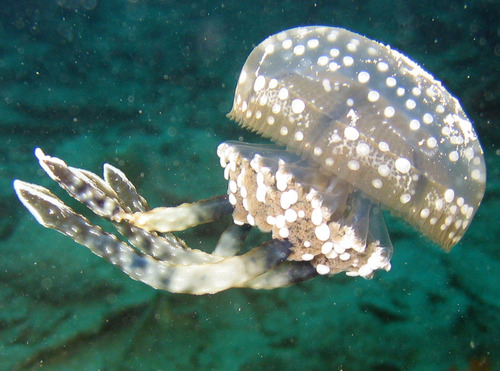
Spotted Jelly Fish
Mastigias papua
In Stock
Common stock
Wild Caught
Moderate care
With Caution
SKU: D224
Discover the mesmerizing beauty of the Spotted Jelly Fish, a unique inhabitant of Bali's waters.
Pricing for Verified Importers
Log in to see wholesale prices and order.
Export Size
up to 30.0 cm
Origin
Coral Triangle
Temperature
24.0–28.0°C
Min. Tank Size
200 L
pH
7.50–8.50
The Spotted Jelly Fish, scientifically known as Mastigias papua, is a captivating species found predominantly in the warm, shallow waters of the Coral Triangle, particularly around Indonesia. These jellyfish are known for their striking appearance, characterized by a translucent bell that features numerous dark spots, giving them an ethereal look. They can often be observed gracefully pulsating through the water, creating a stunning visual display that enchants divers and snorkelers alike.
In terms of behavior, Mastigias papua is a relatively docile species and is often seen in large blooms, sometimes numbering in the thousands. These jellyfish play a crucial role in their ecosystem, serving as both predator and prey. They primarily feed on plankton, which they capture using their specialized tentacles. Their unique diet allows them to thrive in nutrient-rich waters, often in lagoons and coastal areas.
The habitat of the Spotted Jelly Fish includes both shallow and deeper waters, where they can be found drifting near the surface or in deeper zones depending on the time of day and environmental conditions. They prefer warm waters with a stable temperature and salinity, making them well-suited for aquarium environments that replicate these conditions.
Overall, the Spotted Jelly Fish is not only a beautiful addition to any aquatic collection but also an important species for maintaining the balance of marine life in its native habitat. Their captivating presence and ecological significance make them a sought-after species for aquarium enthusiasts and professionals alike.
In terms of behavior, Mastigias papua is a relatively docile species and is often seen in large blooms, sometimes numbering in the thousands. These jellyfish play a crucial role in their ecosystem, serving as both predator and prey. They primarily feed on plankton, which they capture using their specialized tentacles. Their unique diet allows them to thrive in nutrient-rich waters, often in lagoons and coastal areas.
The habitat of the Spotted Jelly Fish includes both shallow and deeper waters, where they can be found drifting near the surface or in deeper zones depending on the time of day and environmental conditions. They prefer warm waters with a stable temperature and salinity, making them well-suited for aquarium environments that replicate these conditions.
Overall, the Spotted Jelly Fish is not only a beautiful addition to any aquatic collection but also an important species for maintaining the balance of marine life in its native habitat. Their captivating presence and ecological significance make them a sought-after species for aquarium enthusiasts and professionals alike.
When caring for Spotted Jelly Fish, it's essential to maintain stable water parameters. Ideal temperatures range between 24°C to 28°C, with a pH level of 7.5 to 8.5. Given their nature, they thrive in well-aerated tanks with low water flow, which helps prevent stress and injury from strong currents. It's crucial to ensure that the tank has ample space for them to float and move freely, with a minimum size of 200 liters recommended.
Feeding should consist of high-quality plankton-based foods, which can include both live and frozen options. It's important to ensure that the food particles are small enough for the jellyfish to capture effectively. Regular feeding, approximately every other day, will help maintain their health and vibrancy.
Compatibility with other aquatic species should be approached with caution, as jellyfish can be sensitive to aggressive tank mates. They are best housed with non-aggressive fish or invertebrates that won’t compete for food or disturb them. Acclimation should be done slowly to minimize shock, introducing them to the tank environment over a period of several hours.
Quarantine is also recommended prior to introducing them into a display tank to prevent the potential spread of disease. Observing them for signs of stress or illness will ensure that they remain healthy and vibrant as they adapt to their new environment.
Feeding should consist of high-quality plankton-based foods, which can include both live and frozen options. It's important to ensure that the food particles are small enough for the jellyfish to capture effectively. Regular feeding, approximately every other day, will help maintain their health and vibrancy.
Compatibility with other aquatic species should be approached with caution, as jellyfish can be sensitive to aggressive tank mates. They are best housed with non-aggressive fish or invertebrates that won’t compete for food or disturb them. Acclimation should be done slowly to minimize shock, introducing them to the tank environment over a period of several hours.
Quarantine is also recommended prior to introducing them into a display tank to prevent the potential spread of disease. Observing them for signs of stress or illness will ensure that they remain healthy and vibrant as they adapt to their new environment.
The Spotted Jelly Fish is sensitive to temperature fluctuations, necessitating careful shipping practices. It is recommended to pack them in insulated containers with adequate water volume to minimize movement and stress. A packing density of one jellyfish per 10 liters is advisable. Ideal shipping temperatures should be maintained between 24°C and 26°C. As of now, there are no CITES restrictions on Mastigias papua, making them easier to export.
Species Parameters
Max Adult Size
30.0 cm
Origin
Coral Triangle
Habitat
reef
Temp Min
24.0 °C
Temp Max
28.0 °C
pH Min
7.50
pH Max
8.50
Min Tank
200 L