Reef odontodactylid Mantis Shrimp
odontodactylus scyllarus
In Stock
Common stock
Wild Caught
Moderate care
With Caution
SKU: ML-MF-0459
Discover the vibrant Reef Odontodactylid Mantis Shrimp, a colorful marvel of the ocean.
Pricing for Verified Importers
Log in to see wholesale prices and order.
Export Size
up to 18.0 cm
Origin
Indo-Pacific
Temperature
24.0–28.0°C
Min. Tank Size
50 L
Salinity
32.000–35.000 ppt
pH
8.10–8.40
Diet
carnivore
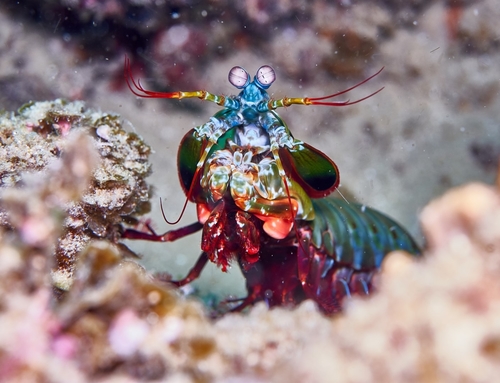
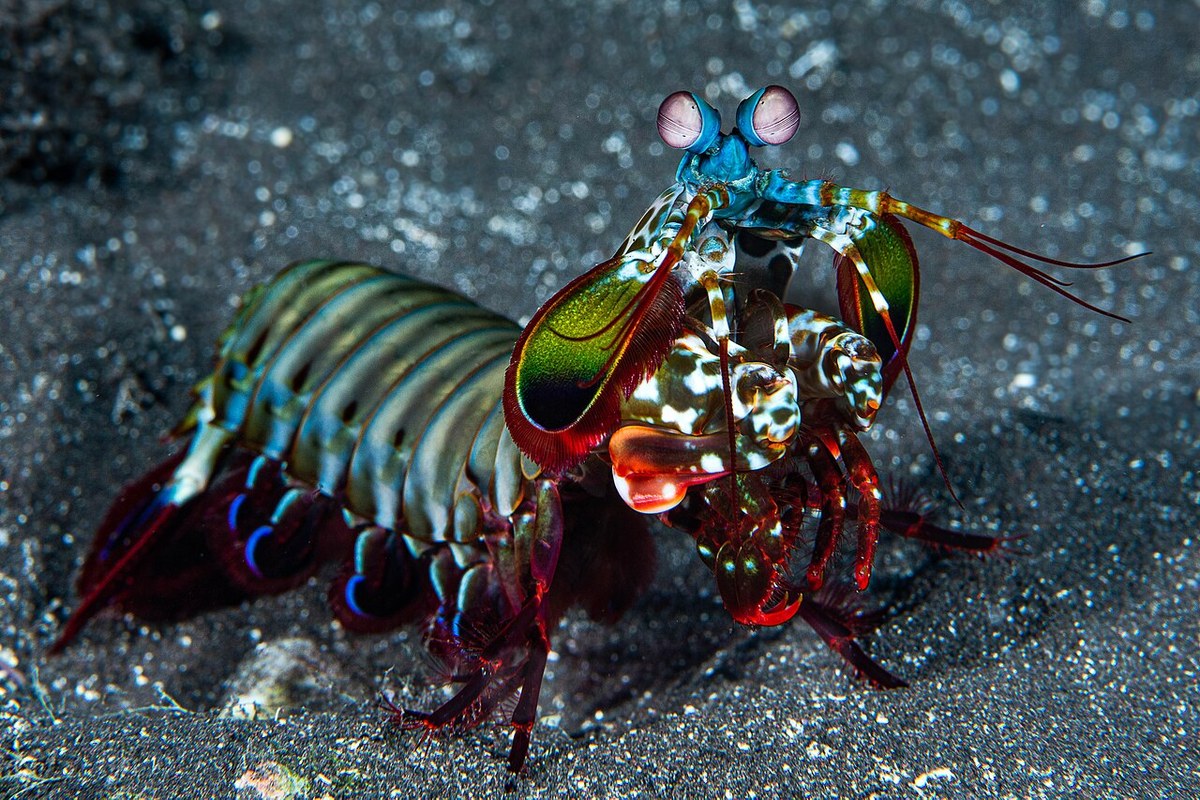
The Reef Odontodactylid Mantis Shrimp (Odontodactylus scyllarus) is renowned for its striking coloration and complex behavior. Known as peacock mantis shrimp, these marine crustaceans exhibit a vivid array of colors, including bright blues, greens, and reds. Their eyes are among the most advanced in the animal kingdom, capable of seeing polarized light and detecting a spectrum of colors beyond human capability. This extraordinary vision aids in hunting and navigating the vibrant reef environment in which they reside.
In terms of natural history, the Reef Odontodactylid Mantis Shrimp is primarily found in the shallow waters of the Indo-Pacific region, particularly in coral reefs where they create burrows in the substrate. These burrows serve as both a home and a strategic vantage point for ambushing prey. Mantis shrimp are territorial and exhibit fascinating social behaviors, often engaging in displays of strength and color to assert dominance over their territory.
Behaviorally, these mantis shrimp are known for their remarkable predatory skills. They possess powerful raptorial appendages that can strike with incredible speed, delivering a punch that can break aquarium glass or crack shells of prey like mollusks and crustaceans. Their hunting technique is not just about brute force; they also exhibit strategic intelligence when approaching prey or defending their territory.
Overall, the Reef Odontodactylid Mantis Shrimp exemplifies the vibrant and dynamic life found in tropical marine ecosystems, making it a coveted species for both aquarists and researchers interested in marine biodiversity.
In terms of natural history, the Reef Odontodactylid Mantis Shrimp is primarily found in the shallow waters of the Indo-Pacific region, particularly in coral reefs where they create burrows in the substrate. These burrows serve as both a home and a strategic vantage point for ambushing prey. Mantis shrimp are territorial and exhibit fascinating social behaviors, often engaging in displays of strength and color to assert dominance over their territory.
Behaviorally, these mantis shrimp are known for their remarkable predatory skills. They possess powerful raptorial appendages that can strike with incredible speed, delivering a punch that can break aquarium glass or crack shells of prey like mollusks and crustaceans. Their hunting technique is not just about brute force; they also exhibit strategic intelligence when approaching prey or defending their territory.
Overall, the Reef Odontodactylid Mantis Shrimp exemplifies the vibrant and dynamic life found in tropical marine ecosystems, making it a coveted species for both aquarists and researchers interested in marine biodiversity.
To successfully care for the Reef Odontodactylid Mantis Shrimp, it is essential to replicate their natural habitat as closely as possible. The ideal water temperature should be maintained between 24°C and 28°C, with a salinity level of 32-35 ppt. The pH should range from 8.1 to 8.4 to create a stable and healthy environment. A minimum tank size of 50 liters is recommended to provide ample space for territorial behavior and burrowing activities.
Feeding these mantis shrimp requires a diet rich in protein. They thrive on a varied diet of live or frozen foods, such as small fish, shrimp, and other marine invertebrates. It’s crucial to monitor their feeding habits, as these shrimp can be aggressive eaters and may compete with tank mates for food. Compatibility with other species can be challenging; they are best kept alone or with similarly sized and robust species to prevent aggressive interactions.
Acclimation is critical when introducing these mantis shrimp to a new tank. Use a slow drip method over several hours to reduce stress and ensure a smoother transition. Quarantine is also recommended for new arrivals to avoid introducing any potential pathogens into established aquariums. Providing hiding spots and a sandy substrate will enhance their comfort and encourage natural behaviors.
Feeding these mantis shrimp requires a diet rich in protein. They thrive on a varied diet of live or frozen foods, such as small fish, shrimp, and other marine invertebrates. It’s crucial to monitor their feeding habits, as these shrimp can be aggressive eaters and may compete with tank mates for food. Compatibility with other species can be challenging; they are best kept alone or with similarly sized and robust species to prevent aggressive interactions.
Acclimation is critical when introducing these mantis shrimp to a new tank. Use a slow drip method over several hours to reduce stress and ensure a smoother transition. Quarantine is also recommended for new arrivals to avoid introducing any potential pathogens into established aquariums. Providing hiding spots and a sandy substrate will enhance their comfort and encourage natural behaviors.
Reef Odontodactylid Mantis Shrimp are sensitive to temperature fluctuations during shipping. Ideal shipping temperatures should be maintained between 24°C and 26°C. Packing density should allow for adequate oxygen exchange, typically one shrimp per liter of water. As a marine species, they are not listed under CITES, simplifying shipping regulations.
Species Parameters
Max Adult Size
18.0 cm
Origin
Indo-Pacific
Diet
carnivore
Temp Min
24.0 °C
Temp Max
28.0 °C
Salinity Min
32.000
Salinity Max
35.000
pH Min
8.10
pH Max
8.40
Min Tank
50 L