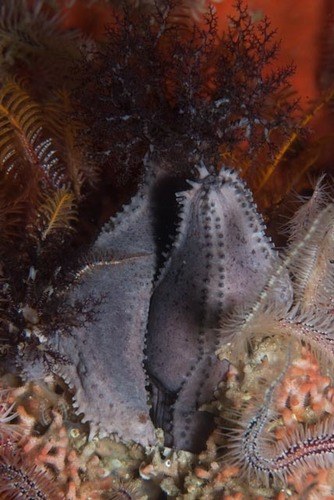
Yellow Sea Cucumber
Pentacta anceps
In Stock
Common stock
Wild Caught
Moderate care
SKU: CB-SC-0164
Discover the unique Yellow Sea Cucumber, a captivating invertebrate from Bali's waters.
Pricing for Verified Importers
Log in to see wholesale prices and order.
Origin
Indo-Pacific
Temperature
24.0–28.0°C
pH
7.50–8.50
The Yellow Sea Cucumber (Pentacta anceps) is an intriguing invertebrate found in the shallow waters of the Indo-Pacific region, particularly around Bali, Indonesia. This species is notable for its elongated, cylindrical body, which is covered in a vibrant yellow hue. The distinct coloration serves as a warning to potential predators and enhances its appeal to aquarium enthusiasts. The surface of the sea cucumber is dotted with tiny, tube-like structures known as tubefeet, which play a critical role in locomotion and feeding.
In its natural habitat, the Yellow Sea Cucumber thrives on sandy and muddy substrates, often burrowing into the sediment where it plays an essential role in the ecosystem. As a detritivore, it feeds on organic matter, contributing to nutrient cycling in marine environments. Its behavior is generally slow and deliberate, allowing it to filter the substrate for food. While typically solitary, these sea cucumbers can sometimes be found in small groups, especially during breeding seasons when they release their gametes into the water.
The Yellow Sea Cucumber is also recognized for its ecological importance, as it helps to aerate the sea floor and maintain the health of benthic communities. Due to its unique appearance and vital role in the marine ecosystem, this species has garnered interest among aquarists and researchers alike, making it a desirable addition to marine aquariums.
Although not widely studied, the Yellow Sea Cucumber is believed to have a relatively resilient nature, allowing it to adapt to varying conditions within its habitat. As interest in marine biodiversity continues to grow, the importance of species like the Yellow Sea Cucumber becomes increasingly evident, showcasing the need for sustainable practices in marine life exportation.
In its natural habitat, the Yellow Sea Cucumber thrives on sandy and muddy substrates, often burrowing into the sediment where it plays an essential role in the ecosystem. As a detritivore, it feeds on organic matter, contributing to nutrient cycling in marine environments. Its behavior is generally slow and deliberate, allowing it to filter the substrate for food. While typically solitary, these sea cucumbers can sometimes be found in small groups, especially during breeding seasons when they release their gametes into the water.
The Yellow Sea Cucumber is also recognized for its ecological importance, as it helps to aerate the sea floor and maintain the health of benthic communities. Due to its unique appearance and vital role in the marine ecosystem, this species has garnered interest among aquarists and researchers alike, making it a desirable addition to marine aquariums.
Although not widely studied, the Yellow Sea Cucumber is believed to have a relatively resilient nature, allowing it to adapt to varying conditions within its habitat. As interest in marine biodiversity continues to grow, the importance of species like the Yellow Sea Cucumber becomes increasingly evident, showcasing the need for sustainable practices in marine life exportation.
For importers and retailers handling the Yellow Sea Cucumber, maintaining optimal water conditions is crucial for their health. Ideal water temperatures range between 24°C to 28°C, with stable pH levels between 7.5 and 8.5. While this species is not a freshwater inhabitant, it is important to maintain low salinity levels to prevent stress. Although specific salinity preferences are not well documented, a general marine environment is recommended.
Feeding the Yellow Sea Cucumber should involve a diet rich in detritus, including decomposing organic matter and specially formulated sinking foods. Regularly providing a variety of food sources will ensure their health and vitality. Compatibility with other tank mates is generally good; however, it is advisable to avoid aggressive species that may pose a threat to their slow-moving nature.
Acclimation should be gradual, allowing the sea cucumber to adjust to new conditions without shock. Quarantine procedures should be implemented to prevent the introduction of pests or diseases into established systems. Observing the sea cucumber for any signs of stress during acclimation will help ensure a smooth transition into the aquarium environment.
Feeding the Yellow Sea Cucumber should involve a diet rich in detritus, including decomposing organic matter and specially formulated sinking foods. Regularly providing a variety of food sources will ensure their health and vitality. Compatibility with other tank mates is generally good; however, it is advisable to avoid aggressive species that may pose a threat to their slow-moving nature.
Acclimation should be gradual, allowing the sea cucumber to adjust to new conditions without shock. Quarantine procedures should be implemented to prevent the introduction of pests or diseases into established systems. Observing the sea cucumber for any signs of stress during acclimation will help ensure a smooth transition into the aquarium environment.
The Yellow Sea Cucumber is suitable for shipping, provided that specific care is taken to maintain stable temperatures during transit. Packing density should be low to prevent stress, with adequate water and oxygen provided in the shipping container. It is sensitive to temperature fluctuations, so maintaining a range of 24°C to 28°C is essential during transport. Currently, there are no CITES restrictions on this species, facilitating easier export processes.
Species Parameters
Origin
Indo-Pacific
Temp Min
24.0 °C
Temp Max
28.0 °C
pH Min
7.50
pH Max
8.50