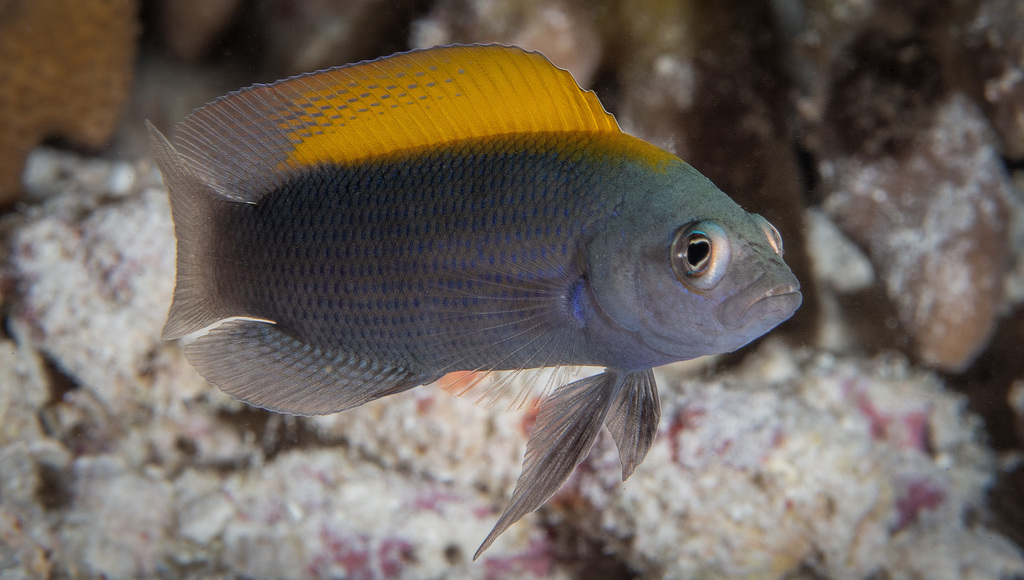
Brown dottyback/Dusky Dottyback
pseudochromis fuscus
In Stock
Common stock
Wild Caught
Moderate care
With Caution
SKU: ML-MF-0082
The Brown dottyback is a vibrant marine fish, known for its striking colors and territorial behavior.
Pricing for Verified Importers
Log in to see wholesale prices and order.
Export Size
up to 8.0 cm
Origin
Indo-Pacific
Temperature
24.0–28.0°C
Min. Tank Size
100 L
Salinity
1.020–1.025 ppt
pH
8.10–8.40
Diet
carnivore
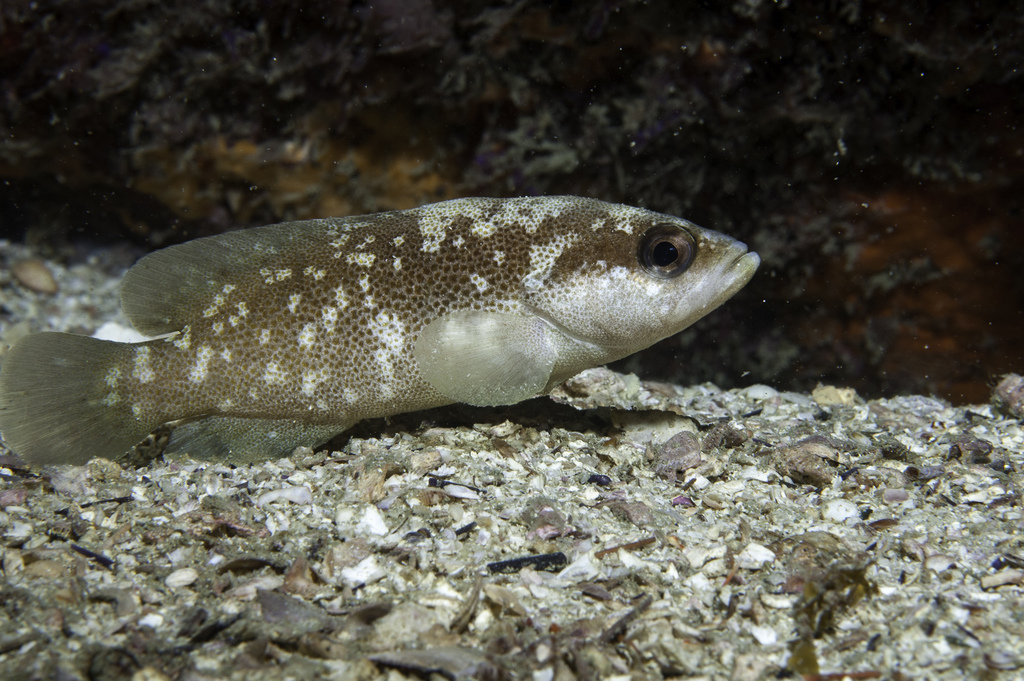
The Brown dottyback, or Dusky Dottyback (pseudochromis fuscus), is a small but striking marine fish native to the coral reefs of the Indo-Pacific region. This species typically showcases a rich brown or dusky coloration with a slightly lighter underbelly, making it an attractive addition to any reef aquarium. Adult dottybacks can reach a maximum size of about 8 cm, and their elongated bodies are complemented by a prominent dorsal fin that extends along their back, giving them a streamlined appearance.
In terms of behavior, the Brown dottyback is known for its assertive and territorial nature. They are often found hiding among the crevices of coral reefs, where they establish their territory and defend it vigorously against intruders. These fish are usually solitary or found in pairs, and their bold disposition makes them an interesting species to observe in an aquarium setting. They are also known to exhibit curious behaviors, often peering out from their hiding spots to watch the surrounding environment.
The natural habitat of the Brown dottyback includes shallow coral reefs and rocky substrates, where they can find ample hiding spots and plenty of food sources. They thrive in environments rich in coral structures, which provide both shelter and breeding grounds. These fish are primarily found at depths ranging from 5 to 30 meters, where they can forage for small invertebrates and zooplankton, their main food sources in the wild. Their preference for specific habitats underscores the importance of maintaining a suitable environment in captivity to ensure their health and well-being.
Overall, the Brown dottyback is a captivating species that adds vibrancy and activity to marine aquariums. Its unique coloration, bold personality, and specific habitat requirements make it a sought-after choice for both importers and aquarium enthusiasts alike.
In terms of behavior, the Brown dottyback is known for its assertive and territorial nature. They are often found hiding among the crevices of coral reefs, where they establish their territory and defend it vigorously against intruders. These fish are usually solitary or found in pairs, and their bold disposition makes them an interesting species to observe in an aquarium setting. They are also known to exhibit curious behaviors, often peering out from their hiding spots to watch the surrounding environment.
The natural habitat of the Brown dottyback includes shallow coral reefs and rocky substrates, where they can find ample hiding spots and plenty of food sources. They thrive in environments rich in coral structures, which provide both shelter and breeding grounds. These fish are primarily found at depths ranging from 5 to 30 meters, where they can forage for small invertebrates and zooplankton, their main food sources in the wild. Their preference for specific habitats underscores the importance of maintaining a suitable environment in captivity to ensure their health and well-being.
Overall, the Brown dottyback is a captivating species that adds vibrancy and activity to marine aquariums. Its unique coloration, bold personality, and specific habitat requirements make it a sought-after choice for both importers and aquarium enthusiasts alike.
To successfully care for the Brown dottyback, it is essential to replicate their natural habitat as closely as possible. Ideal water parameters for this species include a temperature range of 24-28°C, pH levels between 8.1 and 8.4, and salinity levels of 1.020 to 1.025 ppt. A minimum tank size of 100 liters is recommended to provide adequate swimming space and territory for these territorial fish.
Feeding should consist of a varied diet that includes high-quality frozen or live foods such as brine shrimp, mysis shrimp, and small pellets designed for carnivorous fish. It is vital to ensure that they receive a balanced diet to promote vibrant colors and overall health. When introducing new dottybacks to an aquarium, a slow acclimation process is crucial to reduce stress and prevent shock. It is advisable to use a quarantine tank for new arrivals to monitor for diseases before adding them to the main display.
Compatibility is an important consideration when housing Brown dottybacks; they may exhibit aggressive behavior towards similar-sized or shaped fish. It is best to keep them with larger, more passive species to minimize territorial disputes while ensuring a well-structured environment with plenty of hiding spots to help reduce stress.
Feeding should consist of a varied diet that includes high-quality frozen or live foods such as brine shrimp, mysis shrimp, and small pellets designed for carnivorous fish. It is vital to ensure that they receive a balanced diet to promote vibrant colors and overall health. When introducing new dottybacks to an aquarium, a slow acclimation process is crucial to reduce stress and prevent shock. It is advisable to use a quarantine tank for new arrivals to monitor for diseases before adding them to the main display.
Compatibility is an important consideration when housing Brown dottybacks; they may exhibit aggressive behavior towards similar-sized or shaped fish. It is best to keep them with larger, more passive species to minimize territorial disputes while ensuring a well-structured environment with plenty of hiding spots to help reduce stress.
The Brown dottyback is suitable for shipping due to its hardiness, but care must be taken to maintain appropriate water temperatures during transit, ideally between 24-26°C. Packing density should allow for sufficient water volume and space to prevent stress. It is crucial to monitor temperature closely as these fish can be sensitive to extreme fluctuations. The species is not listed under CITES, simplifying export regulations.
Species Parameters
Max Adult Size
8.0 cm
Origin
Indo-Pacific
Diet
carnivore
Temp Min
24.0 °C
Temp Max
28.0 °C
Salinity Min
1.020
Salinity Max
1.025
pH Min
8.10
pH Max
8.40
Min Tank
100 L