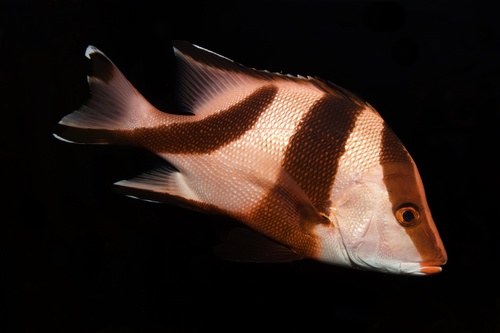
Emperor Snapper
Lutjanus sebae
In Stock
Common stock
Wild Caught
Moderate care
With Caution
SKU: CB-MF-0358
The Emperor Snapper is a prized catch known for its striking colors and delicious flavor.
Pricing for Verified Importers
Log in to see wholesale prices and order.
Export Size
up to 120.0 cm
Origin
Indo-Pacific
Temperature
24.0–28.0°C
Min. Tank Size
400 L
Salinity
30.000–35.000 ppt
pH
7.80–8.40
Diet
carnivore
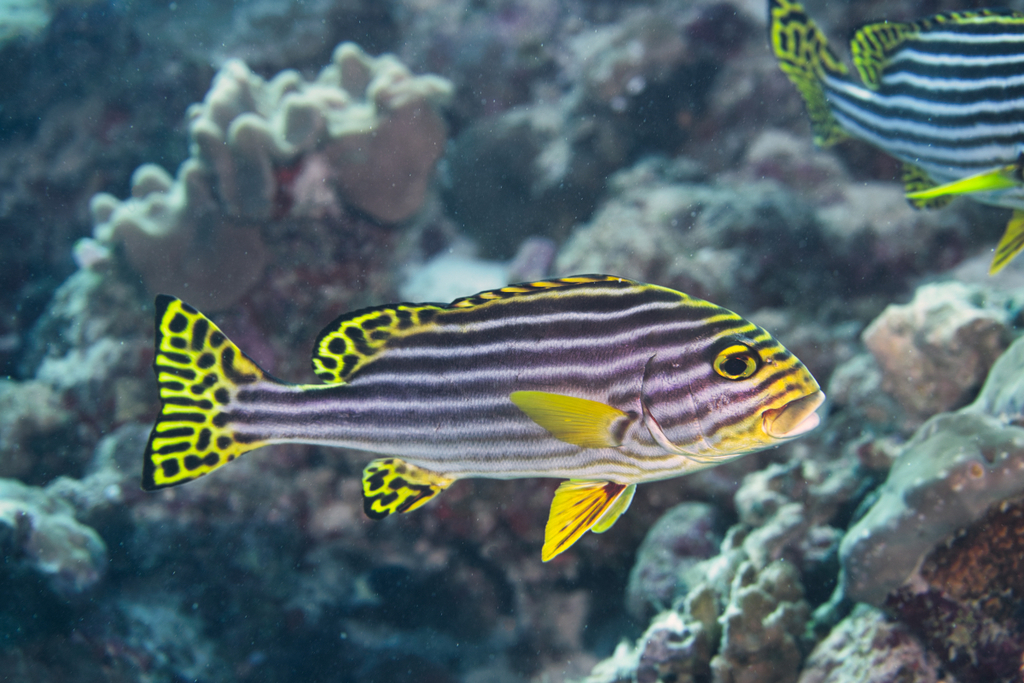
The Emperor Snapper (Lutjanus sebae) is a highly sought-after marine fish native to the Indo-Pacific region. Recognized for its vibrant coloration, this species typically exhibits a reddish-pink body with a distinctive yellow stripe running along its side. Adults can grow up to 120 cm in length, making them one of the larger species in the Lutjanidae family. Their large, prominent eyes and elongated bodies contribute to their striking appearance, which makes them popular among aquarium enthusiasts and chefs alike.
In their natural habitat, Emperor Snappers are found in coral reefs and rocky substrates, where they hunt for prey. They are predominantly solitary fish but may form small groups during spawning. These fish are opportunistic predators, feeding primarily on smaller fish, crustaceans, and cephalopods. Their keen eyesight and agility allow them to ambush prey effectively, making them adept hunters in their environment.
Emperor Snappers prefer warm waters and are typically found in depths ranging from 10 to 100 meters. Juveniles often inhabit shallower waters, hiding among coral and rock formations, while adults tend to venture into deeper offshore habitats. This adaptability to various marine environments contributes to their widespread distribution across the Coral Triangle and beyond.
Due to their size and striking appearance, Emperor Snappers are also of economic importance in commercial fisheries. They are a favorite among local fishermen and are often harvested for both local consumption and export, making them a critical species for the fishing industry in regions like Bali, Indonesia.
In their natural habitat, Emperor Snappers are found in coral reefs and rocky substrates, where they hunt for prey. They are predominantly solitary fish but may form small groups during spawning. These fish are opportunistic predators, feeding primarily on smaller fish, crustaceans, and cephalopods. Their keen eyesight and agility allow them to ambush prey effectively, making them adept hunters in their environment.
Emperor Snappers prefer warm waters and are typically found in depths ranging from 10 to 100 meters. Juveniles often inhabit shallower waters, hiding among coral and rock formations, while adults tend to venture into deeper offshore habitats. This adaptability to various marine environments contributes to their widespread distribution across the Coral Triangle and beyond.
Due to their size and striking appearance, Emperor Snappers are also of economic importance in commercial fisheries. They are a favorite among local fishermen and are often harvested for both local consumption and export, making them a critical species for the fishing industry in regions like Bali, Indonesia.
For successful importation and care of Emperor Snappers, maintaining optimal water parameters is crucial. The ideal temperature range is between 24°C to 28°C, with a salinity of 30 to 35 ppt. The pH should be kept between 7.8 and 8.4 to replicate their natural environment. A minimum tank size of 400 liters is recommended to accommodate their size and swimming behavior.
Feeding Emperor Snappers requires a diet rich in protein, as they are carnivorous. High-quality pellets, live or frozen foods such as shrimp, fish, and squid will help ensure their health and vitality. It is essential to feed them several times a day in smaller portions to prevent overfeeding.
Compatibility is key when housing Emperor Snappers with other species. They may exhibit territorial behavior, especially as they mature, so caution should be taken when introducing them to community tanks. Acclimation should be gradual to minimize stress, and a quarantine period of at least two weeks is advised to monitor for any signs of disease before adding them to the main display tank.
Feeding Emperor Snappers requires a diet rich in protein, as they are carnivorous. High-quality pellets, live or frozen foods such as shrimp, fish, and squid will help ensure their health and vitality. It is essential to feed them several times a day in smaller portions to prevent overfeeding.
Compatibility is key when housing Emperor Snappers with other species. They may exhibit territorial behavior, especially as they mature, so caution should be taken when introducing them to community tanks. Acclimation should be gradual to minimize stress, and a quarantine period of at least two weeks is advised to monitor for any signs of disease before adding them to the main display tank.
Emperor Snappers are suitable for shipping; however, careful handling is required to ensure their health during transit. Packing density should not exceed 1 fish per 5 liters of water. They are sensitive to temperature fluctuations, so maintaining a stable range of 24°C to 28°C during shipping is essential. This species is not listed under CITES, allowing for easier trade regulations.
Species Parameters
Max Adult Size
120.0 cm
Origin
Indo-Pacific
Diet
carnivore
Temp Min
24.0 °C
Temp Max
28.0 °C
Salinity Min
30.000
Salinity Max
35.000
pH Min
7.80
pH Max
8.40
Min Tank
400 L