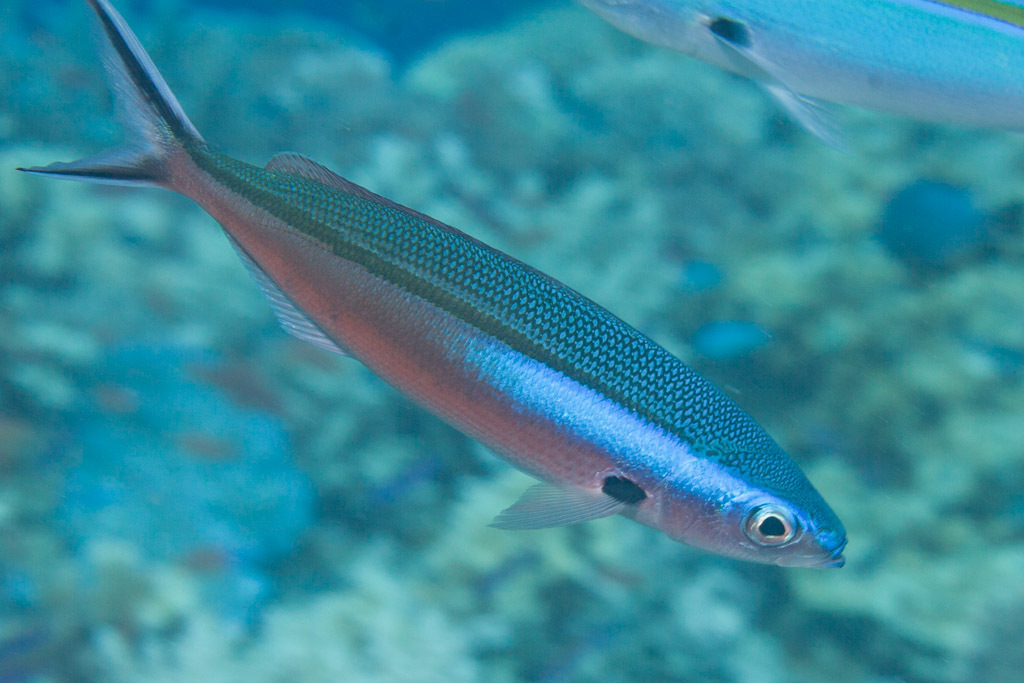
goldband fusilier
pterocaesio chrysozona
In Stock
Common stock
Wild Caught
Moderate care
With Caution
SKU: ML-MF-0310
The goldband fusilier is a vibrant marine fish known for its striking colors and schooling behavior.
Pricing for Verified Importers
Log in to see wholesale prices and order.
Export Size
up to 20.0 cm
Origin
Indo-Pacific
Temperature
24.0–28.0°C
Min. Tank Size
200 L
Salinity
1.020–1.025 ppt
pH
8.10–8.40
Diet
omnivore
The goldband fusilier (Pterocaesio chrysozona) is a stunning marine species that inhabits the clear, warm waters of the Indo-Pacific region, particularly around coral reefs. This species is easily recognizable by its elongated body that showcases a brilliant blue-green hue with distinctive golden bands running along its sides. These bands not only enhance its visual appeal but also serve as a form of communication among members of the species, especially when schooling.
Goldband fusiliers are highly social fish, often found in large, coordinated schools that move gracefully through the water column. This schooling behavior provides safety in numbers, as they evade predators such as larger fish and sharks. Their diet consists mainly of zooplankton, which they actively forage for in the open water. The species is known for its swift swimming capabilities and can often be seen darting about in search of food or to escape threats.
These fish typically inhabit shallow waters, usually at depths of up to 50 meters, where they find shelter among coral reefs and rocky substrates. The presence of coral formations is crucial for their survival, as it provides both food sources and protection from predators. The goldband fusilier plays an important ecological role in its habitat, contributing to the balance of the reef ecosystem by controlling zooplankton populations.
In terms of reproduction, goldband fusiliers are known to spawn in large groups, releasing eggs and sperm into the water column during specific lunar phases. This synchronized spawning behavior increases the chances of fertilization and is a fascinating aspect of their life cycle.
Goldband fusiliers are highly social fish, often found in large, coordinated schools that move gracefully through the water column. This schooling behavior provides safety in numbers, as they evade predators such as larger fish and sharks. Their diet consists mainly of zooplankton, which they actively forage for in the open water. The species is known for its swift swimming capabilities and can often be seen darting about in search of food or to escape threats.
These fish typically inhabit shallow waters, usually at depths of up to 50 meters, where they find shelter among coral reefs and rocky substrates. The presence of coral formations is crucial for their survival, as it provides both food sources and protection from predators. The goldband fusilier plays an important ecological role in its habitat, contributing to the balance of the reef ecosystem by controlling zooplankton populations.
In terms of reproduction, goldband fusiliers are known to spawn in large groups, releasing eggs and sperm into the water column during specific lunar phases. This synchronized spawning behavior increases the chances of fertilization and is a fascinating aspect of their life cycle.
When caring for goldband fusiliers, maintaining optimal water parameters is essential for their health and well-being. Ideal temperature ranges from 24°C to 28°C, with a salinity level between 1.020 and 1.025 ppt. A pH level should be maintained between 8.1 and 8.4 to mimic their natural habitat. It’s recommended to keep them in a minimum tank size of 200 liters to provide ample swimming space and to accommodate their schooling nature.
Feeding these fish is relatively straightforward; they thrive on a diet rich in zooplankton, making high-quality flakes, pellets, and frozen foods suitable options. It is advisable to feed them multiple times a day in small portions to ensure they receive adequate nutrition. Compatibility-wise, goldband fusiliers are generally peaceful and can be kept with other reef-safe species, though they may exhibit territorial behavior in confined spaces.
Acclimation is crucial to minimize stress during the introduction to a new environment. A slow drip acclimation method is recommended to gradually adjust them to the new water conditions. Quarantine practices should also be employed for at least two weeks before introducing them to the main tank to prevent any potential diseases from being transferred to other inhabitants.
Feeding these fish is relatively straightforward; they thrive on a diet rich in zooplankton, making high-quality flakes, pellets, and frozen foods suitable options. It is advisable to feed them multiple times a day in small portions to ensure they receive adequate nutrition. Compatibility-wise, goldband fusiliers are generally peaceful and can be kept with other reef-safe species, though they may exhibit territorial behavior in confined spaces.
Acclimation is crucial to minimize stress during the introduction to a new environment. A slow drip acclimation method is recommended to gradually adjust them to the new water conditions. Quarantine practices should also be employed for at least two weeks before introducing them to the main tank to prevent any potential diseases from being transferred to other inhabitants.
Goldband fusiliers are suitable for shipping due to their hardy nature. During transit, it is important to maintain stable temperatures between 24°C and 28°C to avoid thermal shock. Packing density should be moderate to allow for sufficient oxygen exchange, and the use of oxygen-infused bags can enhance their survival rates. As of now, this species is not listed under CITES, ensuring easier exportation.
Species Parameters
Max Adult Size
20.0 cm
Origin
Indo-Pacific
Diet
omnivore
Temp Min
24.0 °C
Temp Max
28.0 °C
Salinity Min
1.020
Salinity Max
1.025
pH Min
8.10
pH Max
8.40
Min Tank
200 L