Indian Starfish
Fromia Indica
In Stock
Common stock
Wild Caught
Moderate care
SKU: CB-SC-0006
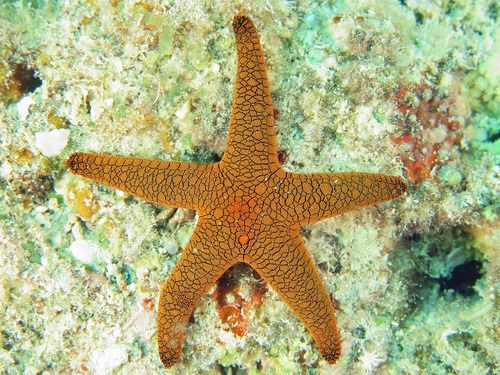
The Indian Starfish is a stunning invertebrate known for its unique star-shaped appearance and vibrant colors.
Pricing for Verified Importers
Log in to see wholesale prices and order.
Export Size
up to 25.0 cm
Origin
Indian Ocean
Temperature
24.0–28.0°C
Min. Tank Size
150 L
pH
8.10–8.40
Diet
omnivore
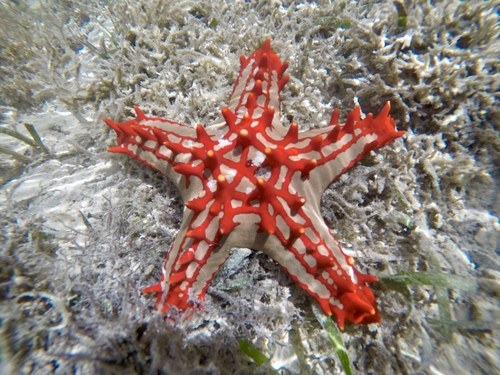
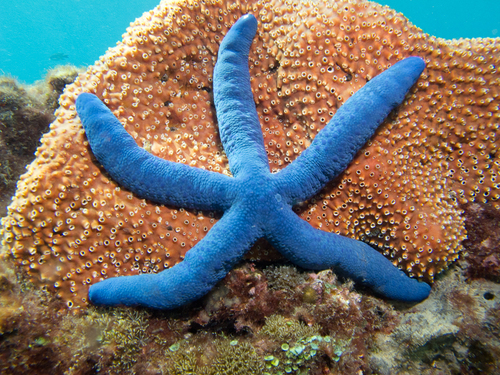
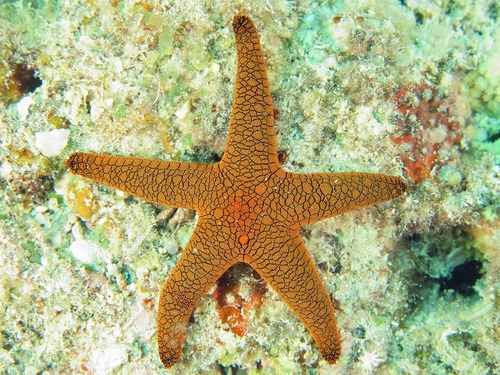
The Indian Starfish (Fromia Indica) is a captivating marine invertebrate found predominantly in the shallow waters of the Indian Ocean and surrounding regions. This starfish is characterized by its distinctive star shape, featuring five or more arms that radiate from a central disc. Its vibrant coloration, which typically includes hues of orange, red, and purple, enhances its appeal, making it a popular choice for aquarium enthusiasts and marine biologists alike.
In terms of natural history, the Indian Starfish primarily inhabits coral reefs and rocky substrates where it can easily camouflage itself among the crevices. This species is known for its unique feeding habits, utilizing its tube feet to grasp and consume small mollusks, coral polyps, and detritus. As a slow-moving creature, the Indian Starfish exhibits a fascinating behavior of regeneration, allowing it to regrow lost arms over time, a crucial adaptation for survival in its natural habitat.
Behaviorally, the Indian Starfish is generally considered peaceful and can coexist with various marine species, although care should be taken to avoid tank mates that may view it as food. Its relatively low activity level makes it a suitable addition to community tanks, where it can thrive without disrupting the ecosystem. Additionally, the Indian Starfish plays a vital role in maintaining the health of coral reefs by controlling the population of certain invertebrates.
Overall, the Indian Starfish is not only an attractive addition to any aquarium but also an essential component of its ecological community. Its striking appearance and fascinating behaviors make it a subject of interest for both hobbyists and researchers, highlighting the importance of sustainable practices in marine life exportation.
In terms of natural history, the Indian Starfish primarily inhabits coral reefs and rocky substrates where it can easily camouflage itself among the crevices. This species is known for its unique feeding habits, utilizing its tube feet to grasp and consume small mollusks, coral polyps, and detritus. As a slow-moving creature, the Indian Starfish exhibits a fascinating behavior of regeneration, allowing it to regrow lost arms over time, a crucial adaptation for survival in its natural habitat.
Behaviorally, the Indian Starfish is generally considered peaceful and can coexist with various marine species, although care should be taken to avoid tank mates that may view it as food. Its relatively low activity level makes it a suitable addition to community tanks, where it can thrive without disrupting the ecosystem. Additionally, the Indian Starfish plays a vital role in maintaining the health of coral reefs by controlling the population of certain invertebrates.
Overall, the Indian Starfish is not only an attractive addition to any aquarium but also an essential component of its ecological community. Its striking appearance and fascinating behaviors make it a subject of interest for both hobbyists and researchers, highlighting the importance of sustainable practices in marine life exportation.
For optimal care, the Indian Starfish requires stable water parameters. The ideal temperature range is between 24°C and 28°C, with a pH level of 8.1 to 8.4. While salinity is not applicable as this species is found in marine environments, maintaining appropriate conditions is crucial for its health. Providing a minimum tank size of 150 liters is recommended to accommodate their growth and natural behavior.
Feeding the Indian Starfish involves offering a varied diet of meaty foods such as chopped shrimp, mussels, and specialized starfish pellets. It is essential to ensure that the food is small enough for the starfish to consume easily. Compatibility wise, this starfish can be housed with a range of peaceful marine species; however, caution should be exercised when introducing it to aggressive tank mates or other starfish species that may compete for food.
Acclimation to a new environment should be done gradually, ideally over a period of several hours to minimize stress. Quarantine procedures are also advisable to prevent the introduction of diseases to the main tank. A period of 2-4 weeks in a separate tank will help ensure the health of the Indian Starfish before it is introduced into a community aquarium.
Feeding the Indian Starfish involves offering a varied diet of meaty foods such as chopped shrimp, mussels, and specialized starfish pellets. It is essential to ensure that the food is small enough for the starfish to consume easily. Compatibility wise, this starfish can be housed with a range of peaceful marine species; however, caution should be exercised when introducing it to aggressive tank mates or other starfish species that may compete for food.
Acclimation to a new environment should be done gradually, ideally over a period of several hours to minimize stress. Quarantine procedures are also advisable to prevent the introduction of diseases to the main tank. A period of 2-4 weeks in a separate tank will help ensure the health of the Indian Starfish before it is introduced into a community aquarium.
The Indian Starfish is suitable for shipping, provided that proper care is taken during transport. It should be packed with adequate cushioning to prevent damage, ideally in a temperature-controlled environment to maintain stability. The recommended packing density is 1 starfish per 5 liters of water. Temperature sensitivity is a consideration, as fluctuations can affect its health. The Indian Starfish is not listed under CITES, making export practices simpler.
Species Parameters
Max Adult Size
25.0 cm
Origin
Indian Ocean
Diet
omnivore
Temp Min
24.0 °C
Temp Max
28.0 °C
pH Min
8.10
pH Max
8.40
Min Tank
150 L