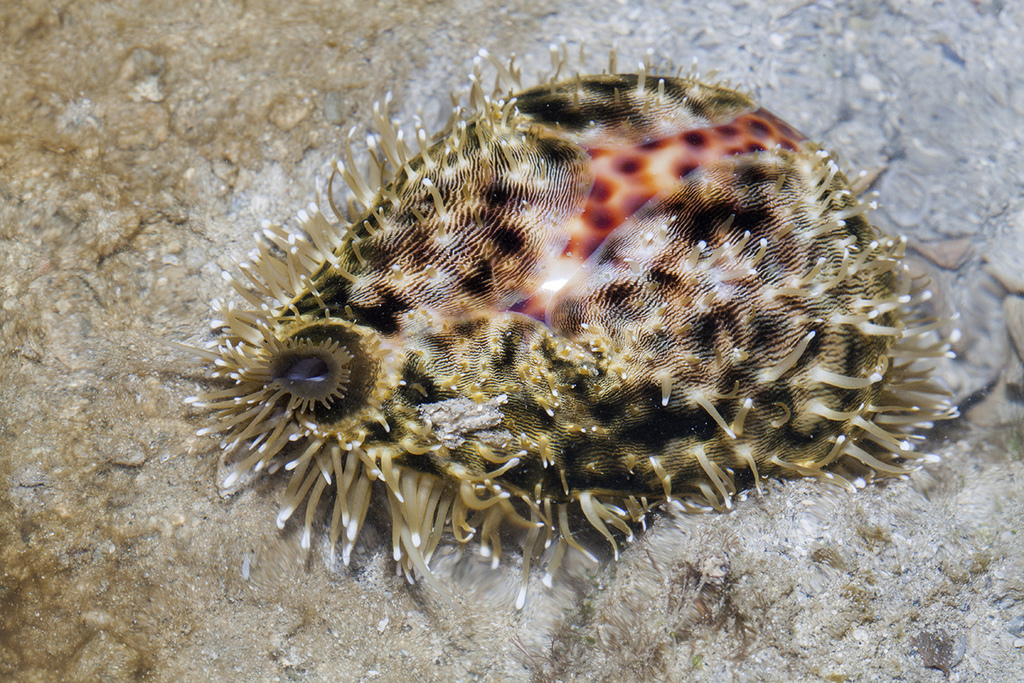
tiger cowrie
cypraea tigris
In Stock
Common stock
Wild Caught
Moderate care
With Caution
SKU: ML-MF-0563
The tiger cowrie (cypraea tigris) is a striking marine mollusk, known for its vibrant shell patterns.
Pricing for Verified Importers
Log in to see wholesale prices and order.
Export Size
up to 10.0 cm
Origin
Indo-Pacific
Temperature
24.0–28.0°C
Min. Tank Size
100 L
Salinity
30.000–35.000 ppt
pH
8.10–8.40
Diet
herbivore
The tiger cowrie, scientifically known as cypraea tigris, is a marine mollusk belonging to the family Cypraeidae. This species is renowned for its distinctive and beautifully patterned shell, featuring bold, tiger-like stripes that can vary in color from beige to dark brown. The shell is smooth and glossy, providing a striking contrast to the typically duller hues of the ocean floor. Adult tiger cowries can reach lengths of up to 10 cm, making them a noticeable inhabitant in their native habitats.
In terms of behavior, tiger cowries are primarily nocturnal, emerging at night to feed on algae and detritus. During the day, they often hide under rocks or in crevices to protect themselves from predators. Their unique adaptations, including a foot that can extend to secure them in place, help prevent displacement by currents and waves. They also possess a retractable mantle that can cover their shells, further enhancing their camouflage.
Tiger cowries inhabit a variety of marine environments, including coral reefs, rocky substrates, and sandy bottoms in warm, shallow waters. They are commonly found in the Indo-Pacific region, thriving at depths ranging from intertidal zones to around 30 meters. These mollusks play an essential role in their ecosystem, contributing to the health of coral reefs by grazing on algae that could otherwise smother corals.
Due to their appealing appearance and unique behaviors, tiger cowries have become popular among aquarium enthusiasts. Their striking shells and interesting lifestyles make them a sought-after species for marine collections, yet sustainable practices are essential to ensure their populations remain healthy in the wild.
In terms of behavior, tiger cowries are primarily nocturnal, emerging at night to feed on algae and detritus. During the day, they often hide under rocks or in crevices to protect themselves from predators. Their unique adaptations, including a foot that can extend to secure them in place, help prevent displacement by currents and waves. They also possess a retractable mantle that can cover their shells, further enhancing their camouflage.
Tiger cowries inhabit a variety of marine environments, including coral reefs, rocky substrates, and sandy bottoms in warm, shallow waters. They are commonly found in the Indo-Pacific region, thriving at depths ranging from intertidal zones to around 30 meters. These mollusks play an essential role in their ecosystem, contributing to the health of coral reefs by grazing on algae that could otherwise smother corals.
Due to their appealing appearance and unique behaviors, tiger cowries have become popular among aquarium enthusiasts. Their striking shells and interesting lifestyles make them a sought-after species for marine collections, yet sustainable practices are essential to ensure their populations remain healthy in the wild.
Tiger cowries require specific water parameters to thrive in captivity. Ideal temperature ranges from 24°C to 28°C, with salinity levels between 30 to 35 ppt. The pH should be maintained between 8.1 and 8.4 to mimic their natural environment. An aquarium of at least 100 liters is recommended to provide adequate space and stability for these mollusks.
Feeding tiger cowries involves a diet rich in algae, detritus, and sometimes commercial herbivore flakes. Care should be taken to ensure they are not overfed, as this can lead to water quality issues. Compatibility with other tank inhabitants is generally good; however, caution should be exercised when housing them with aggressive species that may disturb or prey on them.
Acclimation is crucial when introducing tiger cowries into a new environment. A slow drip acclimation method is recommended to prevent shock. Quarantine new arrivals for at least 2 weeks to monitor for any signs of disease or parasites, ensuring the health of the overall tank community. Regular tank maintenance and monitoring of water parameters will help maintain a suitable environment for these beautiful mollusks.
Feeding tiger cowries involves a diet rich in algae, detritus, and sometimes commercial herbivore flakes. Care should be taken to ensure they are not overfed, as this can lead to water quality issues. Compatibility with other tank inhabitants is generally good; however, caution should be exercised when housing them with aggressive species that may disturb or prey on them.
Acclimation is crucial when introducing tiger cowries into a new environment. A slow drip acclimation method is recommended to prevent shock. Quarantine new arrivals for at least 2 weeks to monitor for any signs of disease or parasites, ensuring the health of the overall tank community. Regular tank maintenance and monitoring of water parameters will help maintain a suitable environment for these beautiful mollusks.
Tiger cowries are suitable for shipping, provided they are packed securely and with enough space to prevent damage to their shells. Ideal shipping temperatures should be maintained between 24°C and 28°C. Packing density should allow for proper ventilation and moisture retention. As a CITES Appendix II species, exporters must ensure compliance with international trade regulations to promote sustainable practices.
Species Parameters
Max Adult Size
10.0 cm
Origin
Indo-Pacific
Diet
herbivore
Temp Min
24.0 °C
Temp Max
28.0 °C
Salinity Min
30.000
Salinity Max
35.000
pH Min
8.10
pH Max
8.40
Min Tank
100 L