Red Tail Catfish
Phractocephalus hemioliopterus
In Stock
Common stock
Tank Bred
Moderate care
Not Reef Safe
SKU: 01-A-08-038-02
The Red Tail Catfish is a striking freshwater species known for its vibrant coloration and impressive size.
Pricing for Verified Importers
Log in to see wholesale prices and order.
Export Size
up to 150.0 cm
Origin
Amazon Basin
Temperature
24.0–28.0°C
Min. Tank Size
500 L
pH
6.50–7.50
Diet
carnivore
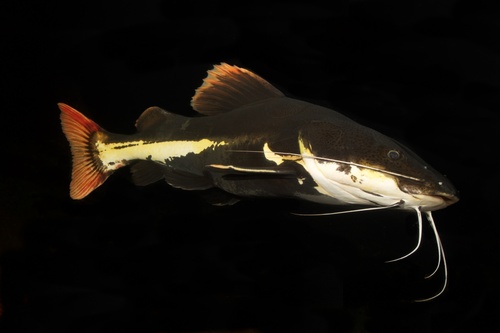
The Red Tail Catfish (Phractocephalus hemioliopterus) is a captivating freshwater species native to the Amazon Basin. Renowned for its distinctive appearance, this catfish showcases a striking contrast of black and orange-red hues, with a long, streamlined body and a prominent forked tail. Adult individuals can reach impressive lengths of up to 1.5 meters, making them one of the larger catfish species sought after by aquarists.
In the wild, Red Tail Catfish inhabit slow-moving rivers, floodplains, and lakes, preferring areas with dense vegetation that provide both shelter and breeding grounds. They are nocturnal hunters, exhibiting a predatory behavior that is characteristic of their species. These fish are known to be social in the wild, often forming loose aggregations, which can lead to interesting dynamics in a well-sized aquarium setup.
Behaviorally, Red Tail Catfish are curious and intelligent, often interacting with their environment and other tank mates. However, due to their size and predatory nature, they require careful consideration when selecting tank mates. Suitable companions are typically larger fish or species that can withstand their more boisterous personality.
In terms of habitat, a spacious aquarium with ample swimming space and hiding spots is crucial for their well-being. They thrive in warm, well-oxygenated waters rich in organic material, making proper filtration and maintenance essential in a captive setting.
In the wild, Red Tail Catfish inhabit slow-moving rivers, floodplains, and lakes, preferring areas with dense vegetation that provide both shelter and breeding grounds. They are nocturnal hunters, exhibiting a predatory behavior that is characteristic of their species. These fish are known to be social in the wild, often forming loose aggregations, which can lead to interesting dynamics in a well-sized aquarium setup.
Behaviorally, Red Tail Catfish are curious and intelligent, often interacting with their environment and other tank mates. However, due to their size and predatory nature, they require careful consideration when selecting tank mates. Suitable companions are typically larger fish or species that can withstand their more boisterous personality.
In terms of habitat, a spacious aquarium with ample swimming space and hiding spots is crucial for their well-being. They thrive in warm, well-oxygenated waters rich in organic material, making proper filtration and maintenance essential in a captive setting.
To keep Red Tail Catfish healthy, it is essential to maintain specific water parameters. Ideal temperature ranges from 24°C to 28°C, with a pH level between 6.5 and 7.5. The tank should have a minimum volume of 500 liters to accommodate their growth and swimming needs. Regular water changes are important to ensure optimal water quality.
Feeding these fish is relatively straightforward, as they are carnivorous and thrive on a diet of high-quality pellets, live or frozen foods such as fish, shrimp, and worms. It's crucial to provide a varied diet to ensure proper nutrition. Be cautious with overfeeding, as this can lead to health complications.
When selecting tank mates, consider larger fish that can coexist peacefully, as smaller fish may become prey. Acclimation is essential; introduce them gradually to prevent stress. Quarantine new arrivals for at least two weeks to monitor for any signs of disease before adding them to the main tank. Proper acclimation and quarantine help maintain a healthy aquarium environment.
Feeding these fish is relatively straightforward, as they are carnivorous and thrive on a diet of high-quality pellets, live or frozen foods such as fish, shrimp, and worms. It's crucial to provide a varied diet to ensure proper nutrition. Be cautious with overfeeding, as this can lead to health complications.
When selecting tank mates, consider larger fish that can coexist peacefully, as smaller fish may become prey. Acclimation is essential; introduce them gradually to prevent stress. Quarantine new arrivals for at least two weeks to monitor for any signs of disease before adding them to the main tank. Proper acclimation and quarantine help maintain a healthy aquarium environment.
Red Tail Catfish are suitable for shipping, but careful packing is essential to ensure their well-being during transport. A packing density of one fish per 20 liters is recommended to prevent stress. Maintain temperatures between 24°C and 28°C during transit, as they are sensitive to temperature fluctuations. This species is not listed under CITES, simplifying the export process.
Species Parameters
Max Adult Size
150.0 cm
Origin
Amazon Basin
Diet
carnivore
Temp Min
24.0 °C
Temp Max
28.0 °C
pH Min
6.50
pH Max
7.50
Min Tank
500 L