Purple Climber Crab
Geosesarma sp.
Out of Stock
Scarce stock
Wild Caught
Moderate care
Not Reef Safe
SKU: 01-F-01-038-20
The Purple Climber Crab is a vibrant and unique freshwater invertebrate, perfect for specialized aquariums.
Pricing for Verified Importers
Log in to see wholesale prices and order.
Export Size
up to 5.0 cm
Origin
Southeast Asia
Temperature
24.0–28.0°C
Min. Tank Size
20 L
pH
6.50–7.50
Diet
omnivore
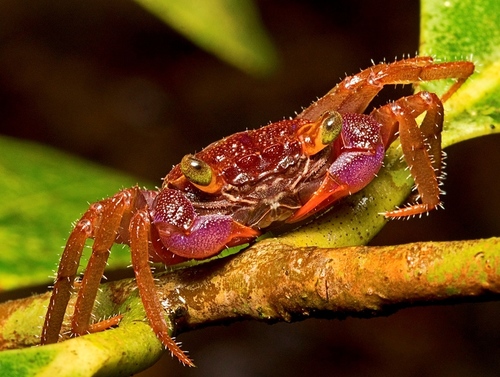
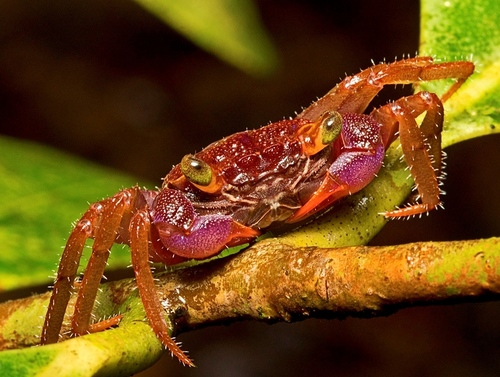
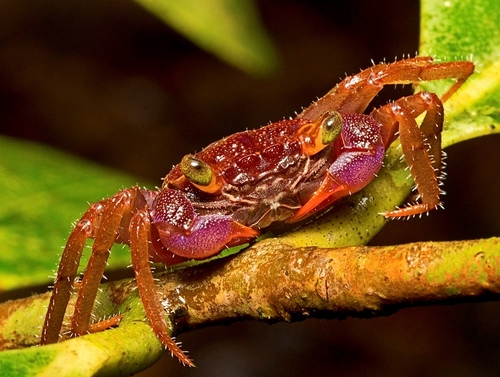
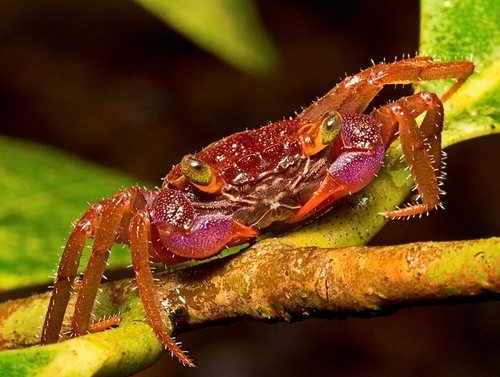
The Purple Climber Crab (Geosesarma sp.) is a striking freshwater invertebrate native to the tropical regions of Southeast Asia, particularly in the mangrove and freshwater habitats of Indonesia. This crab is known for its vivid purple coloration, which serves as both a camouflage among the colorful flora and a display of health. As an arboreal species, it is often found climbing on rocks, branches, and other structures above the waterline, showcasing its remarkable adaptability to both terrestrial and aquatic environments.
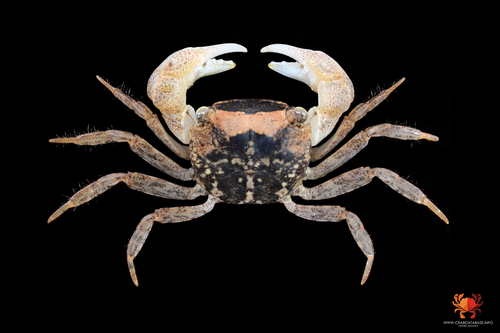
In terms of appearance, the Purple Climber Crab boasts a compact body with elongated legs and a wide carapace adorned with intricate patterns. Its claws are not only functional for feeding but also play a crucial role in territorial displays and mating rituals. The vibrant colors and unique patterns vary among individuals, making each crab visually distinct, which can appeal to collectors and aquarists alike.
Behaviorally, these crabs are semi-terrestrial and exhibit interesting social interactions, often seen engaging in climbing and foraging activities. They are primarily nocturnal, coming out at night to search for food and explore their environment. Their behavior, alongside their unique appearance, makes them a fascinating addition to any freshwater aquarium, providing both movement and visual interest.
In their natural habitat, Purple Climber Crabs thrive in brackish and freshwater environments, often in areas rich with vegetation. They prefer environments where they can both swim and climb, making them an ideal candidate for aquarists who want to create a diverse and stimulating habitat. Proper understanding of their natural history is essential for maintaining their health in captivity.
In terms of appearance, the Purple Climber Crab boasts a compact body with elongated legs and a wide carapace adorned with intricate patterns. Its claws are not only functional for feeding but also play a crucial role in territorial displays and mating rituals. The vibrant colors and unique patterns vary among individuals, making each crab visually distinct, which can appeal to collectors and aquarists alike.
Behaviorally, these crabs are semi-terrestrial and exhibit interesting social interactions, often seen engaging in climbing and foraging activities. They are primarily nocturnal, coming out at night to search for food and explore their environment. Their behavior, alongside their unique appearance, makes them a fascinating addition to any freshwater aquarium, providing both movement and visual interest.
In their natural habitat, Purple Climber Crabs thrive in brackish and freshwater environments, often in areas rich with vegetation. They prefer environments where they can both swim and climb, making them an ideal candidate for aquarists who want to create a diverse and stimulating habitat. Proper understanding of their natural history is essential for maintaining their health in captivity.
To successfully care for the Purple Climber Crab, importers and retailers should provide a minimum tank size of 20 liters to accommodate their climbing behavior. Water parameters should be maintained at a temperature between 24°C to 28°C, with a pH level ranging from 6.5 to 7.5. As a freshwater species, they require stable water conditions, so regular testing and maintenance are critical.
Feeding the Purple Climber Crab involves a varied diet. They are omnivorous and thrive on a mix of high-quality pellets, algae wafers, and occasional protein sources such as frozen brine shrimp or bloodworms. It is important to ensure that all food is small enough for them to consume easily.
When introducing these crabs into a community tank, caution is advised. They can coexist with smaller, peaceful species but may be territorial towards their own kind. Acclimation should be done slowly to prevent shock; ideally, use a drip acclimation method over several hours. Quarantine new arrivals for at least two weeks to monitor for any signs of illness before introducing them to a main display tank.
Feeding the Purple Climber Crab involves a varied diet. They are omnivorous and thrive on a mix of high-quality pellets, algae wafers, and occasional protein sources such as frozen brine shrimp or bloodworms. It is important to ensure that all food is small enough for them to consume easily.
When introducing these crabs into a community tank, caution is advised. They can coexist with smaller, peaceful species but may be territorial towards their own kind. Acclimation should be done slowly to prevent shock; ideally, use a drip acclimation method over several hours. Quarantine new arrivals for at least two weeks to monitor for any signs of illness before introducing them to a main display tank.
The Purple Climber Crab is suitable for shipping, provided that optimal conditions are maintained. Packing density should be kept low to allow for adequate air exchange, while temperatures should be stable between 22°C and 26°C during transit. As a non-CITES species, they do not require special permits for export, but adherence to local and international shipping regulations is essential.
Species Parameters
Max Adult Size
5.0 cm
Origin
Southeast Asia
Diet
omnivore
Temp Min
24.0 °C
Temp Max
28.0 °C
pH Min
6.50
pH Max
7.50
Min Tank
20 L