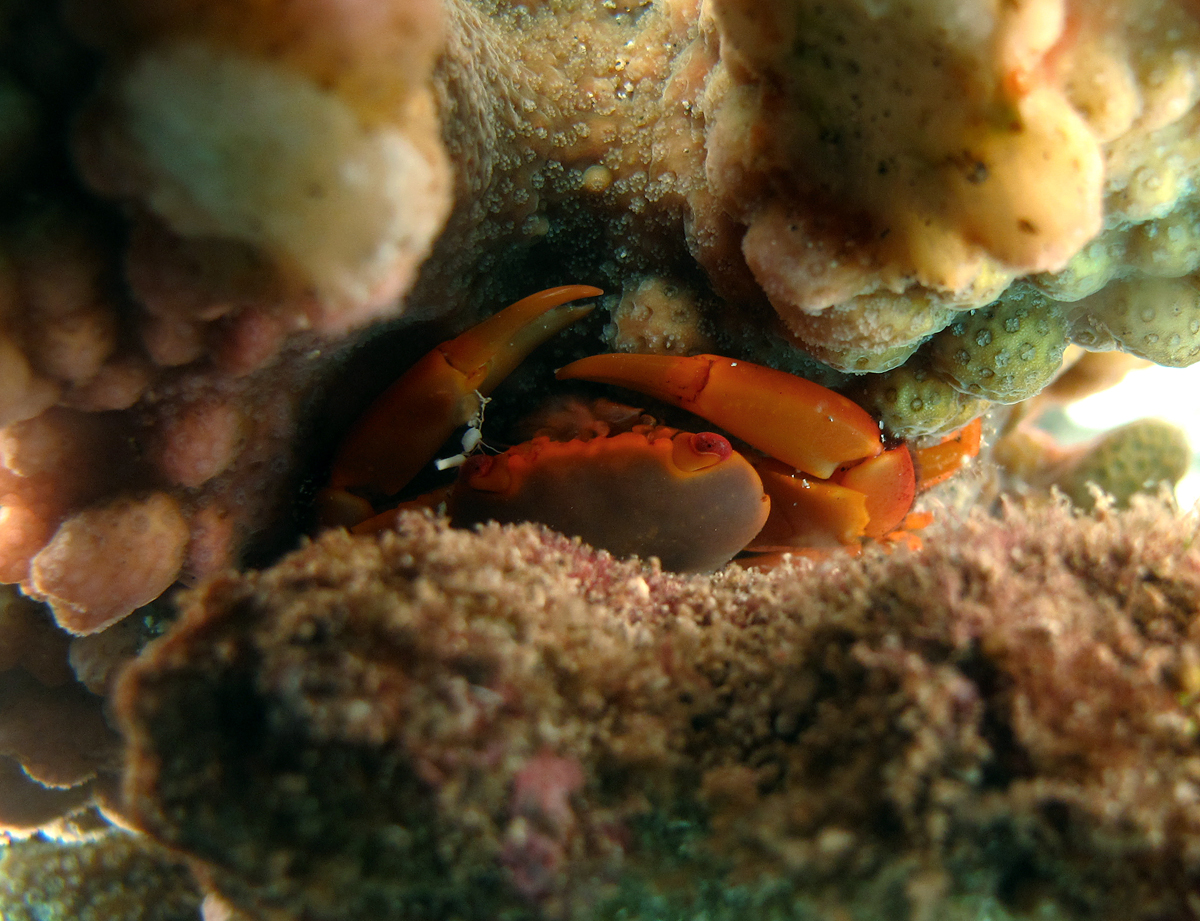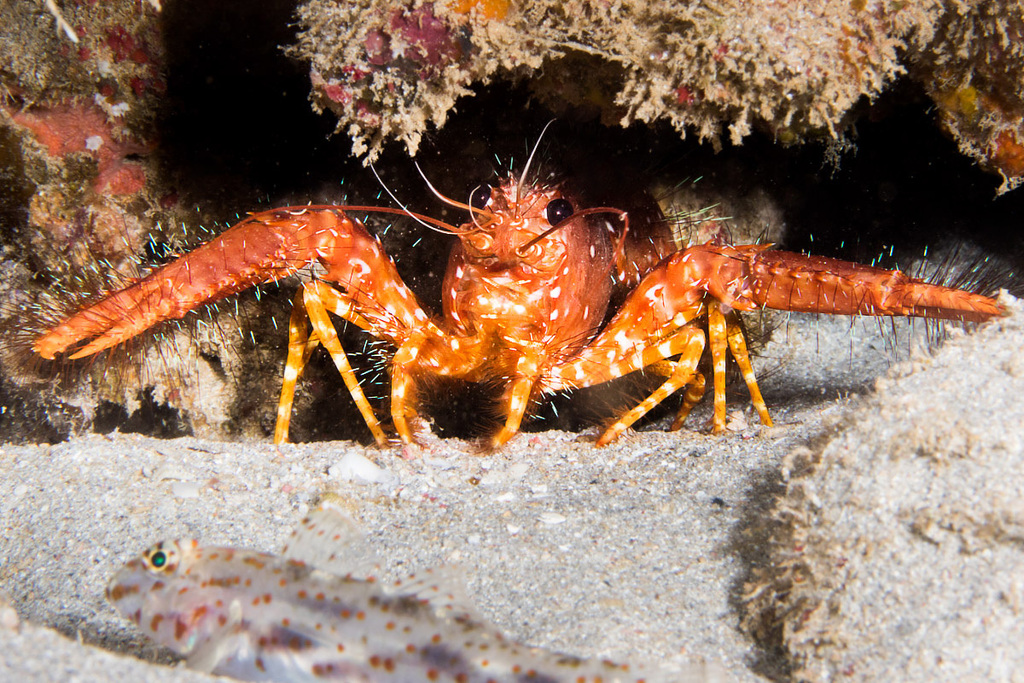
Red Reef Lobster/Red Majestic Shrimp
enoplometopus occidentalis
In Stock
Common stock
Wild Caught
Moderate care
With Caution
SKU: ML-MF-0452
The Red Reef Lobster is a striking marine inhabitant known for its vibrant coloration and unique behaviors.
Pricing for Verified Importers
Log in to see wholesale prices and order.
Export Size
up to 15.0 cm
Origin
Indo-Pacific
Temperature
24.0–28.0°C
Min. Tank Size
100 L
Salinity
35.000–35.000 ppt
pH
8.10–8.40
Diet
carnivore
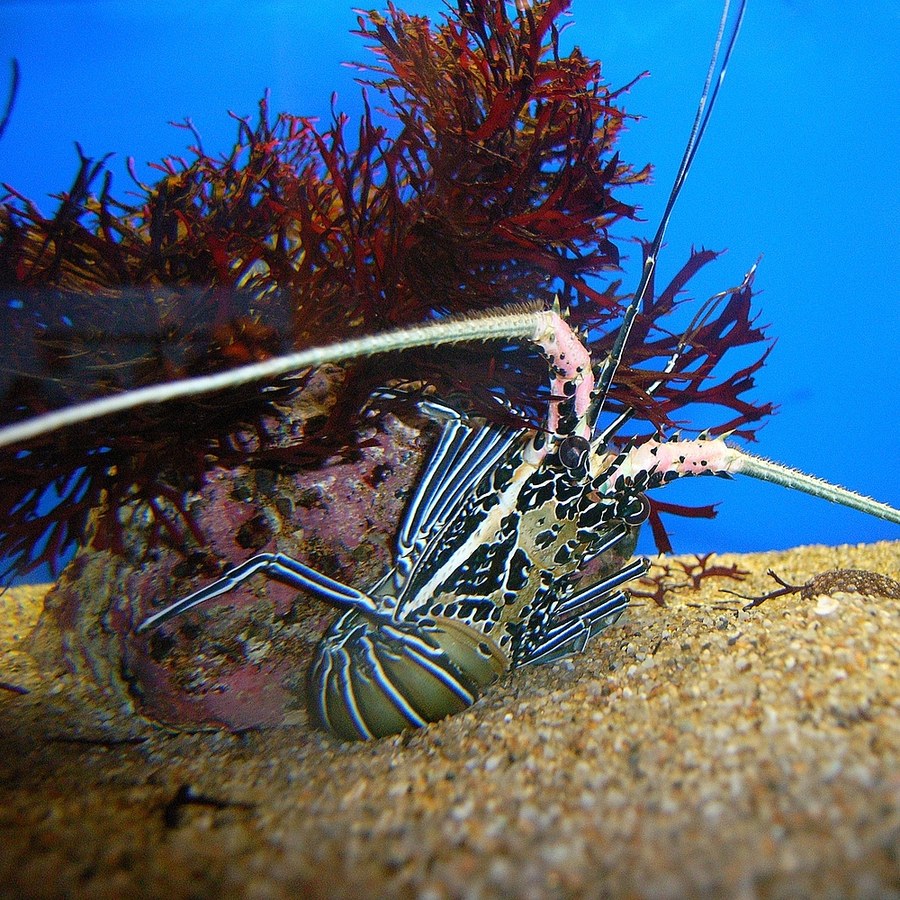
The Red Reef Lobster, scientifically known as Enoplometopus occidentalis, is a captivating marine species that thrives in the coral reefs of the Indo-Pacific region. This lobster is particularly renowned for its vivid red hue, often accentuated by blue and purple markings, which not only serve as a warning to potential predators but also make it a favorite among aquarium enthusiasts. Mature specimens can reach up to 15 cm in length, showcasing their robust bodies and long, slender antennae that enhance their sensory perception in their natural habitat.
In the wild, Red Reef Lobsters are primarily nocturnal, emerging from their crevices and hiding spots after sunset to forage for food. They exhibit a fascinating behavior of climbing and exploring the rocky substrates and coral formations, using their large claws to manipulate their environment. This species typically resides at depths ranging from 5 to 30 meters, where they find ample shelter among the coral and rocks, providing safety from predators and a rich source of food.
Socially, these lobsters can be territorial, often establishing dominance over a specific area or hiding spot. Their interactions with other marine species are primarily predatory, as they feed on small invertebrates and detritus. Unlike many crustaceans, Red Reef Lobsters do not undergo extensive molting, which allows them to maintain their striking appearance over time, further adding to their allure as aquarium specimens.
The habitat of Enoplometopus occidentalis is crucial for its well-being. Coral reefs not only provide shelter and food but also play a significant role in their reproductive behavior, as they engage in elaborate courtship displays during mating season. Understanding their natural history and habitat preferences is essential for successful care and breeding in captivity.
In the wild, Red Reef Lobsters are primarily nocturnal, emerging from their crevices and hiding spots after sunset to forage for food. They exhibit a fascinating behavior of climbing and exploring the rocky substrates and coral formations, using their large claws to manipulate their environment. This species typically resides at depths ranging from 5 to 30 meters, where they find ample shelter among the coral and rocks, providing safety from predators and a rich source of food.
Socially, these lobsters can be territorial, often establishing dominance over a specific area or hiding spot. Their interactions with other marine species are primarily predatory, as they feed on small invertebrates and detritus. Unlike many crustaceans, Red Reef Lobsters do not undergo extensive molting, which allows them to maintain their striking appearance over time, further adding to their allure as aquarium specimens.
The habitat of Enoplometopus occidentalis is crucial for its well-being. Coral reefs not only provide shelter and food but also play a significant role in their reproductive behavior, as they engage in elaborate courtship displays during mating season. Understanding their natural history and habitat preferences is essential for successful care and breeding in captivity.
When caring for Red Reef Lobsters in an aquarium setting, it is essential to replicate their natural environment as closely as possible. Water parameters should be maintained within the range of 24-28°C for temperature, with salinity levels between 1.020 and 1.025 ppt. The pH should ideally be kept between 8.1 and 8.4 to support the health of both the lobsters and any accompanying coral.
Feeding should consist of a varied diet that includes high-quality frozen or live foods such as shrimp, krill, and other small marine invertebrates. It's important to provide food that mimics their natural prey to promote healthy growth and behavior. Compatibility with other species can be tricky, as their territorial nature may lead to conflicts with similar-sized crustaceans or fish. It's advisable to house them in a species-specific tank or with larger fish that won't provoke aggression.
Acclimation should be a slow process, ideally lasting several hours to prevent shock. Use a drip acclimation method to gradually introduce them to the tank's water parameters. Quarantine procedures are recommended for at least two weeks to monitor for any signs of disease or stress before introducing them to the main display tank. This careful approach ensures the health and longevity of the Red Reef Lobster in your aquarium.
Feeding should consist of a varied diet that includes high-quality frozen or live foods such as shrimp, krill, and other small marine invertebrates. It's important to provide food that mimics their natural prey to promote healthy growth and behavior. Compatibility with other species can be tricky, as their territorial nature may lead to conflicts with similar-sized crustaceans or fish. It's advisable to house them in a species-specific tank or with larger fish that won't provoke aggression.
Acclimation should be a slow process, ideally lasting several hours to prevent shock. Use a drip acclimation method to gradually introduce them to the tank's water parameters. Quarantine procedures are recommended for at least two weeks to monitor for any signs of disease or stress before introducing them to the main display tank. This careful approach ensures the health and longevity of the Red Reef Lobster in your aquarium.
Red Reef Lobsters are suitable for shipping, provided they are packed securely with adequate water and oxygen. The recommended packing density is one lobster per liter of water to ensure ample space and minimize stress during transport. These lobsters are sensitive to temperature fluctuations, so maintaining a stable temperature between 24°C and 28°C during shipping is critical. There are currently no CITES restrictions on this species, allowing for hassle-free export.
Species Parameters
Max Adult Size
15.0 cm
Origin
Indo-Pacific
Diet
carnivore
Temp Min
24.0 °C
Temp Max
28.0 °C
Salinity Min
35.000
Salinity Max
35.000
pH Min
8.10
pH Max
8.40
Min Tank
100 L